

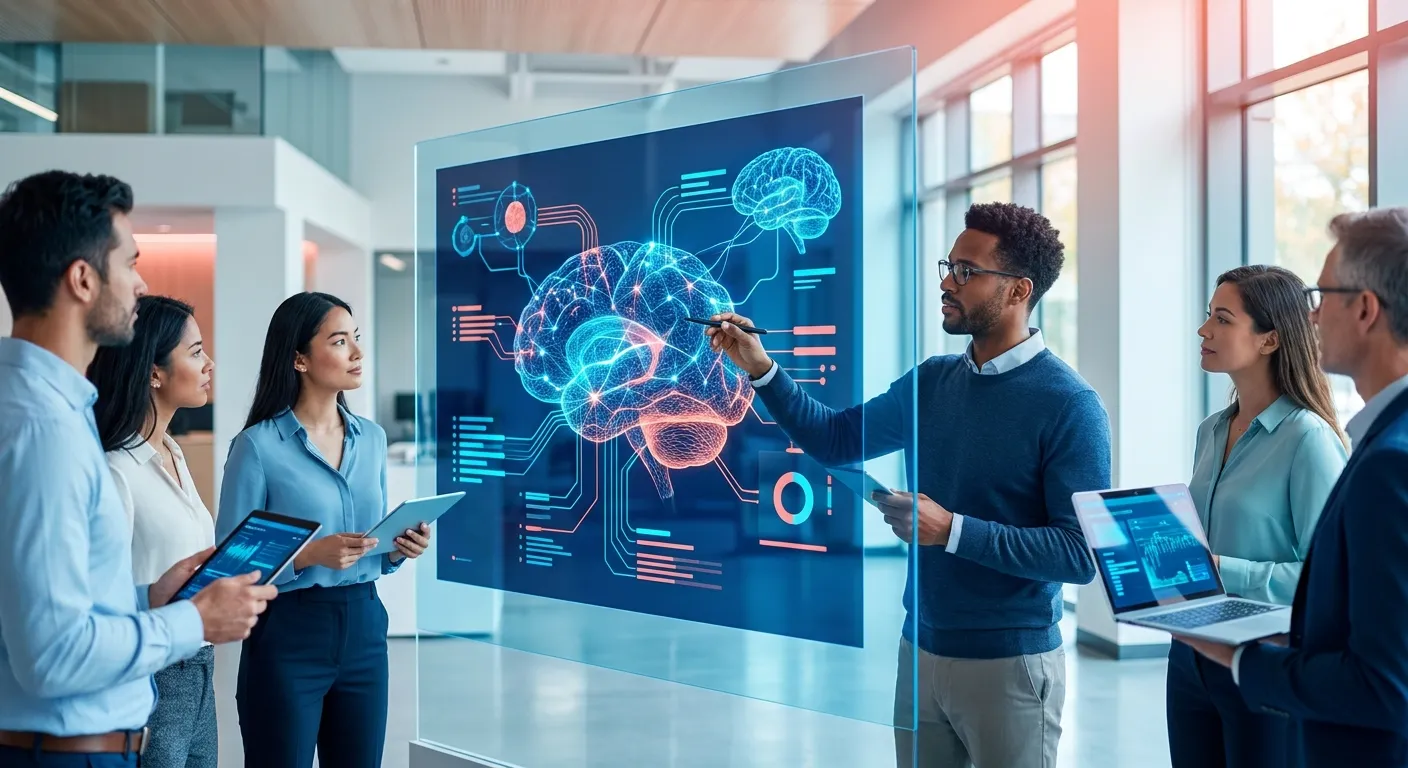
The landscape of artificial intelligence is transforming at an unprecedented pace. The period between 2025 and 2026 marks a pivotal shift from experimental AI applications to widespread, scaled deployment and truly intelligent transformation. At the forefront of this evolution is the rapid rise of agentic AI enterprise adoption, fundamentally reshaping how businesses operate, from core processes to strategic decision-making.
This isn’t merely about digital upgrades; it’s about embracing systems that can autonomously learn, adapt, and execute complex, multi-step tasks without constant human intervention. TechZone AI’s analysis indicates that AI is evolving from a mere instrument to a genuine partner, redefining work, fostering creativity, and enhancing problem-solving capabilities across the board. Consequently, enterprises are keen to integrate these advanced systems.
The Rise of Autonomous Intelligence in Business
Agentic AI is defined by autonomous agents capable of reasoning, planning, and executing intricate tasks across various applications. These systems are designed to operate with a high degree of independence, a characteristic that makes them incredibly valuable in dynamic enterprise environments. Our latest industry data reveals the staggering speed of this adoption: by mid-2025, a significant 79% of organizations were already running AI agents in production. This trend underscores the immediate, practical value these agents bring to business operations. For a deeper understanding of these foundational concepts, explore our insights on Agentic AI Systems: Navigating the Future of Autonomous Intelligence.
The market for AI agents is mirroring this rapid deployment. Valued at over $7.9 billion in early 2026, projections indicate explosive growth, with estimates reaching between $52 billion and $236 billion by the early 2030s. This trajectory signals a clear commitment from enterprises to integrate sophisticated autonomous capabilities into their operational DNA. In fact, many companies view this as a competitive imperative.
Agentic AI as the Enterprise Backbone
AI is no longer an ancillary tool; it is rapidly becoming the backbone of enterprise architecture. This integration is redefining cloud consumption models and fundamentally reshaping the software lifecycle development process. The strategic focus for enterprises is now on rebuilding operations to allow AI to handle everything it can, thereby empowering humans to concentrate on oversight, creativity, and complex judgment. This division of labor maximizes both human potential and AI efficiency.
Scaled Deployment and Maturity of AI Agents
The year 2025 largely focused on proving AI’s capabilities through successful pilot projects and initial implementations. However, 2026 has seen a decisive shift towards deployment at scale. This maturation is largely driven by significant advancements in enterprise tooling, which now provides robust solutions for security, compliance, auditability, and cost management. These tools are critical for ensuring that large-scale AI deployments are not only effective but also governable and secure. Furthermore, the increasing sophistication of these tools facilitates broader agentic AI enterprise adoption.
Practical Applications and Future Outlook of Autonomous Agents
The practical applications of agentic AI span numerous sectors, demonstrating its versatility and impact. In finance, AI agents are performing complex algorithmic trading, fraud detection, and personalized customer service. They can analyze vast datasets to identify anomalies and execute transactions with remarkable speed and accuracy. In healthcare, these agents assist with diagnostic processes, drug discovery, and patient management, optimizing resource allocation and improving patient outcomes. Moreover, autonomous systems are streamlining supply chain logistics by predicting demand, optimizing routes, and managing inventory dynamically. Consequently, this leads to significant operational efficiencies.
Manufacturing benefits immensely from agentic AI through predictive maintenance, quality control, and robotic process automation. These agents monitor machinery, anticipate failures, and even self-correct processes, minimizing downtime and enhancing productivity. Retail, similarly, employs AI agents for personalized marketing, inventory optimization, and intelligent customer support, creating more seamless and engaging shopping experiences. These examples highlight the pervasive nature of this technological shift.
Looking ahead, the evolution of agentic AI will likely involve even greater integration with other emerging technologies. Consider, for instance, the synergy with AI Robotics Foundation Models, which promise to bring advanced physical autonomy to enterprise operations. This convergence will enable highly sophisticated robotic systems capable of performing intricate tasks in unstructured environments. Furthermore, as discussed in our article on Decoding Machine Learning Advancements 2025-2026, the underlying machine learning models are becoming increasingly powerful, fueling the capabilities of these agents. The future will undoubtedly see agentic AI becoming an even more integral component of business strategy.
Overcoming Challenges in Agentic AI Deployment
Despite the undeniable benefits, the widespread agentic AI enterprise adoption presents several challenges. One primary concern is data privacy and security. Autonomous agents often require access to sensitive enterprise data to function effectively. Therefore, robust security protocols and stringent data governance frameworks are essential to prevent breaches and ensure compliance. Furthermore, the ethical implications of autonomous decision-making cannot be overlooked. As AI agents gain more independence, questions arise regarding accountability, bias, and transparency. TechZone AI regularly explores these critical issues, including in our discussion on AI Ethics Regulation: Navigating Responsible AI Deployment.
Another significant hurdle involves integration complexities. Enterprises often operate with legacy systems and diverse IT infrastructures. Integrating new agentic AI platforms seamlessly into these existing ecosystems requires careful planning, significant technical expertise, and often substantial investment. Moreover, the talent gap in AI specialists remains a pressing issue. Organizations need skilled professionals who can develop, deploy, and manage these sophisticated systems. Consequently, many businesses are investing in upskilling their workforce or partnering with specialized AI firms.
Scalability also poses a challenge. While pilot projects may demonstrate success, scaling AI agents across an entire enterprise demands robust infrastructure, efficient resource management, and flexible architectural designs. Ensuring that these systems can handle increased workloads and adapt to evolving business needs is crucial for long-term success. Addressing these challenges systematically is paramount for successful enterprise AI agent integration.
The Impact on Workforce and Human-AI Collaboration
The rise of agentic AI is fundamentally altering the nature of work. Rather than replacing human workers entirely, these systems are redefining roles and fostering new forms of human-AI collaboration. Repetitive, data-intensive, and rule-based tasks are increasingly being offloaded to AI agents, freeing up human employees to focus on higher-value activities that require creativity, critical thinking, emotional intelligence, and complex problem-solving. This shift allows for a more strategic allocation of human capital.
For example, in customer service, AI agents can handle routine inquiries and provide immediate support, while human agents can concentrate on complex customer issues that require empathy and nuanced understanding. In software development, AI can automate code generation and testing, enabling developers to focus on architectural design and innovative feature development. This symbiotic relationship enhances overall productivity and job satisfaction. Moreover, continuous learning and adaptation are key to navigating this evolving landscape, as human workers will need to acquire new skills to collaborate effectively with AI systems. The future workforce will be one where humans and intelligent agents work in concert, each contributing their unique strengths.
Strategic Implications for Business Leaders
For business leaders, understanding and strategically responding to the trend of agentic AI enterprise adoption is critical. It necessitates a re-evaluation of business models, operational strategies, and talent management. Leaders must champion a culture of innovation and continuous learning, encouraging their teams to embrace AI as a tool for augmentation rather than a threat. Furthermore, investing in AI literacy across the organization will be crucial for successful integration and maximizing the benefits of these technologies.
Decision-making processes will also be profoundly impacted. AI agents can provide real-time insights, predict market trends, and simulate various scenarios, enabling more informed and data-driven strategic choices. This enhanced analytical capability can lead to more agile and responsive organizations. However, leaders must also establish clear governance frameworks for AI, ensuring that ethical considerations are at the forefront of every deployment. This includes defining accountability structures and mitigating potential biases in AI systems. The successful navigation of this new technological frontier will distinguish leading enterprises from their competitors.
The Future Landscape: Pervasive Agentic AI
As we advance towards the late 2020s and early 2030s, the pervasive nature of agentic AI will become even more pronounced. We anticipate a future where AI agents are not just integrated into specific workflows but form an interconnected network of autonomous systems managing entire enterprise functions. This will lead to highly optimized, self-managing organizations capable of rapid adaptation to market changes and unforeseen disruptions. The evolution of these systems is also tied to advancements in core AI technologies like Transformer Models Explained, which power many of the sophisticated language and reasoning capabilities of modern agents.
Furthermore, the development of Vertical AI Solutions will see agentic AI tailored even more specifically to the unique needs and regulatory environments of individual industries, offering highly specialized and compliant autonomous capabilities. This customization will accelerate the value realization for businesses across diverse sectors. The increasing sophistication of AI agents will also necessitate ongoing discussions around regulatory frameworks and societal impacts, ensuring that these powerful technologies are developed and deployed responsibly. For more insights on the broader implications of AI, refer to reputable sources such as McKinsey & Company’s reports on the state of AI, which provide a comprehensive overview of the market and trends. Similarly, the Gartner Top Strategic Technology Trends often highlight the growing importance of adaptive AI systems.
Ultimately, the journey towards full agentic AI enterprise adoption is a continuous process of innovation, adaptation, and ethical consideration. TechZone AI remains committed to providing timely analysis and insights into this transformative era, helping businesses navigate the complexities and harness the immense potential of autonomous intelligence.
Conclusion: The Autonomous Enterprise Era Has Arrived
The era of autonomous intelligence is not a distant vision; it is here. The rapid pace of agentic AI enterprise adoption underscores a fundamental shift in how businesses approach operations, innovation, and strategic growth. From automating complex workflows to enhancing human decision-making, AI agents are proving to be indispensable partners in the modern enterprise. While challenges related to security, ethics, and integration persist, the ongoing advancements in tooling and the strategic commitment from business leaders are paving the way for a future where intelligent autonomy is the norm. TechZone AI will continue to monitor and report on these developments, providing the insights needed to thrive in this new autonomous enterprise era.
FAQ
What defines an autonomous AI agent?
An autonomous AI agent is a system capable of reasoning, planning, and executing complex, multi-step tasks independently. These agents can learn and adapt to dynamic environments, performing actions without constant human oversight, thus making them highly valuable for business automation.
How is the business world embracing intelligent automation?
Businesses are embracing intelligent automation by deploying AI agents across various functions, including finance, healthcare, manufacturing, and retail. These systems automate routine tasks, optimize processes, and provide data-driven insights, leading to increased efficiency and competitive advantage.
What are the primary benefits of using AI agents in organizations?
The primary benefits include enhanced operational efficiency, reduced costs through automation, improved decision-making based on advanced analytics, greater scalability of operations, and the ability to free human employees for more creative and strategic tasks.
What challenges do companies face when implementing autonomous AI systems?
Companies often face challenges such as ensuring data privacy and security, integrating AI agents with existing legacy systems, addressing ethical considerations like bias and accountability, and bridging the talent gap for skilled AI professionals. These require careful planning and investment.
How will intelligent agents impact the future workforce?
Intelligent agents are expected to redefine work roles, fostering human-AI collaboration. They will automate repetitive tasks, allowing humans to focus on high-value activities requiring creativity and critical thinking. This will necessitate upskilling and a shift towards a more symbiotic working relationship.






Leave feedback about this