

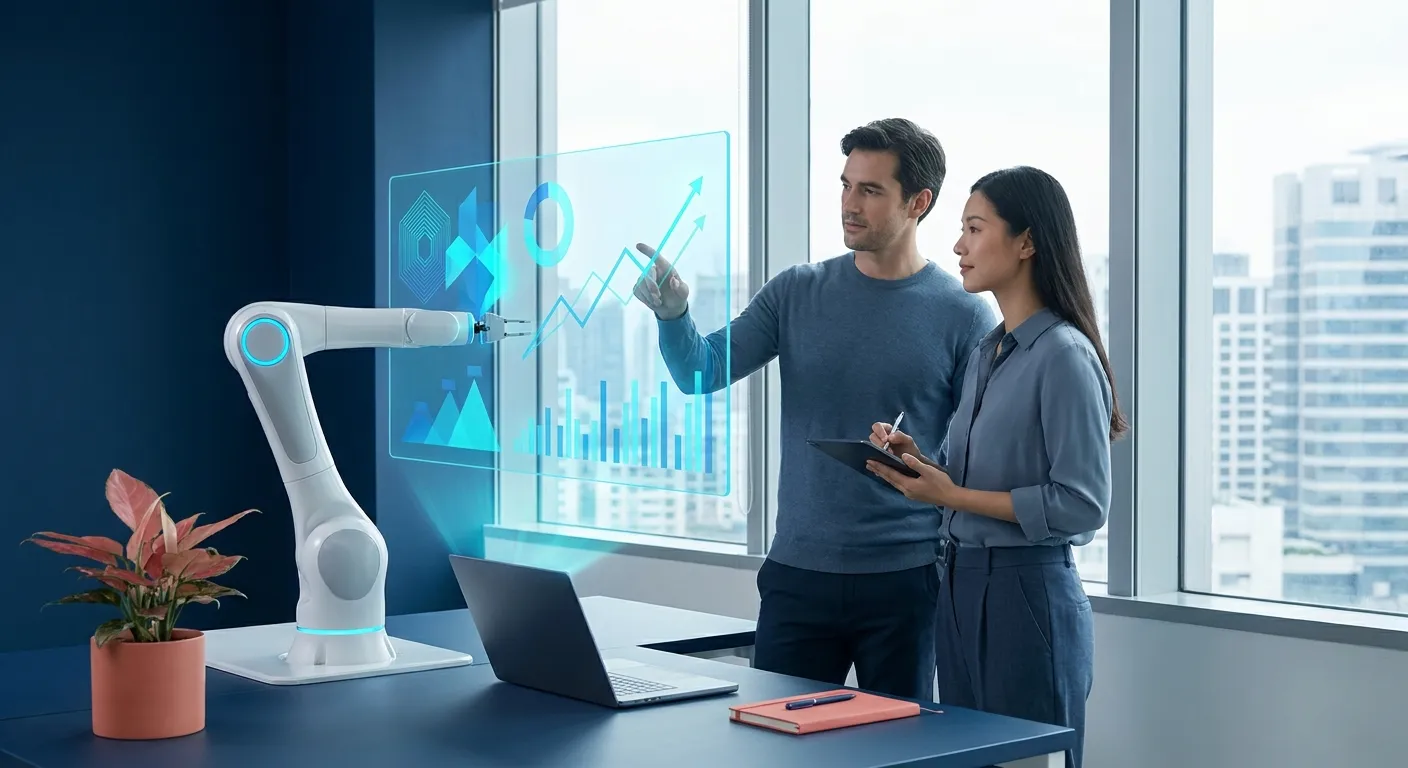
The integration of artificial intelligence into the workplace has rapidly moved from theoretical discussions to tangible reality, profoundly impacting AI workforce productivity. This isn’t just about automating repetitive tasks; it’s about a fundamental redefinition of roles, a significant boost in output, and a reshaping of how professionals interact with their daily responsibilities. Data from 2025-2026 clearly indicates a dramatic acceleration in AI adoption among workers. Consequently, understanding these shifts is crucial for any forward-thinking organization.
The Surge in AI-Driven Productivity
The statistics are compelling: the share of workers using AI on the job more than doubled from 26% in 2024 to 41% in 2025, reaching an impressive 52% in 2026. Furthermore, 89% of workers now report using AI for work in some capacity, with 38% integrating it into their daily routines. This widespread adoption directly correlates with enhanced AI-driven productivity gains; 80% of respondents report that AI has improved their individual productivity, and 50% state it helps them make better decisions. This rapid employee AI adoption underscores a significant shift in professional capabilities. Moreover, these trends highlight a proactive embrace of intelligent tools across various sectors.
Organizations are increasingly recognizing the profound benefits. For instance, AI algorithms can analyze vast datasets in minutes, a task that would take human teams weeks. This efficiency translates directly into faster decision-making and quicker project completion. Therefore, the impact on overall operational efficiency is undeniable. Many businesses are also implementing Vertical AI Solutions to tailor intelligence for specific industry needs, further optimizing their operations and enhancing their team’s output.
Redefining Roles: AI as a Partner, Not Just a Tool
AI is evolving from a mere instrument to a true partner, fundamentally reshaping work, creativity, and problem-solving. This aligns with the broader ‘Intelligent Transformation’ trend, where AI systems autonomously learn, adapt, and make decisions. By handling everything it can, AI frees humans to concentrate on oversight, creativity, and complex judgment. This dynamic redefines the future of work with AI, fostering a collaborative environment where technology augments human potential rather than merely replacing it. The rise of Agentic AI Systems, capable of executing complex, multi-step tasks, further exemplifies this shift, allowing workers to delegate intricate processes to intelligent systems. Consequently, human roles are becoming more strategic and less tactical.
Navigating Job Evolution and Creation
While the benefits of AI in professional roles are clear, concerns about job displacement persist. By 2025, AI was projected to eliminate 85 million jobs but create 97 million new ones, resulting in a net gain of 12 million jobs. However, the landscape is continuously shifting; 18% of U.S. workers now believe their job is likely to be eliminated within five years due to AI or automation, up from 15% in 2025. This highlights the crucial need for continuous upskilling and reskilling to adapt to the evolving demands of an AI-integrated workforce. Understanding the workforce AI impact is vital for strategic planning. Therefore, educational institutions and employers must collaborate to prepare the workforce for these new demands.
Strategic Integration for Maximum Impact on AI Workforce Productivity
The widespread embrace of AI is not accidental. By 2026, 94% of companies globally are utilizing AI in at least one business function, and 83% consider AI a top priority in their business plans. This prioritization reflects a strategic understanding that successful AI integration requires careful planning, robust enterprise tooling, and a culture of continuous learning. Organizations that fail to adapt risk falling behind competitors. Furthermore, the strategic deployment of AI ensures that its benefits are realized across all levels of an organization, enhancing overall AI workforce productivity.
Implementing AI effectively involves several key steps. First, identifying specific business challenges where AI can provide significant value is essential. Second, investing in the right AI infrastructure and platforms is crucial. Third, providing adequate training and support for employees to use AI tools effectively is paramount. This holistic approach ensures that AI becomes an enabler rather than a source of frustration. In fact, many organizations are now focusing on ethical considerations to ensure responsible deployment, often consulting resources on AI Ethics Regulation.
Overcoming Implementation Challenges
Despite the clear advantages, implementing AI at scale presents challenges. Data quality, integration with existing systems, and the need for specialized skills are common hurdles. Companies must invest in data governance to ensure AI models are trained on accurate and unbiased information. Additionally, seamless integration of AI tools into existing workflows is critical to avoid disruption and maximize adoption. A phased approach, starting with pilot projects and gradually scaling up, can mitigate many of these risks. Consequently, careful planning and execution are vital for achieving significant gains in AI workforce productivity.
Another challenge involves the psychological aspect of change. Employees may initially resist new technologies due to fear of the unknown or concerns about job security. Open communication, transparent policies, and demonstrating the benefits of AI to individual roles can help alleviate these fears. Providing opportunities for employees to participate in the AI adoption process, perhaps through feedback sessions or co-creation initiatives, can foster a sense of ownership. Therefore, cultural readiness is as important as technological readiness.
The Future of Work: Augmented Intelligence and AI Workforce Productivity
The future of work is undeniably intertwined with augmented intelligence. This paradigm shifts the focus from AI replacing human jobs to AI enhancing human capabilities. Humans and AI will collaborate, each bringing their unique strengths to the table. AI excels at processing vast amounts of data, identifying patterns, and performing repetitive tasks with precision. Humans, on the other hand, bring creativity, emotional intelligence, critical thinking, and complex problem-solving skills that AI cannot replicate. This synergy promises unprecedented levels of AI workforce productivity.
Consider the role of data analysts. With AI, they can process petabytes of information, identifying trends and anomalies much faster than before. Their role evolves from manual data crunching to interpreting AI-generated insights and formulating strategic recommendations. Similarly, in creative fields, AI can generate initial drafts, brainstorm ideas, or even produce entire marketing campaigns, allowing human creatives to refine, personalize, and add their unique artistic touch. This is evident in the advancements seen with Transformer Models Explained, which are powering the future of NLP and beyond.
Upskilling and Reskilling for the AI Era
To fully capitalize on enhanced AI workforce productivity, continuous learning is non-negotiable. Governments, educational institutions, and corporations must collaborate to create robust upskilling and reskilling programs. These programs should focus not only on technical AI skills but also on ‘human’ skills like critical thinking, creativity, adaptability, and emotional intelligence. These are the skills that will differentiate human workers in an AI-augmented world. Moreover, fostering a growth mindset among employees will encourage them to embrace new tools and methodologies.
Online learning platforms, corporate training initiatives, and vocational schools all have a crucial role to play. Micro-credentials and certifications in AI-related fields are becoming increasingly valuable. Furthermore, companies can implement internal mentorship programs where experienced AI users guide their colleagues. This multi-pronged approach ensures that the workforce remains agile and capable of adapting to technological advancements. This proactive stance on skill development is paramount for sustained AI workforce productivity.
Ethical Considerations and Responsible AI Deployment
As AI becomes more pervasive, ethical considerations surrounding its deployment become increasingly critical. Bias in AI algorithms, data privacy concerns, and the potential for misuse are serious issues that require careful attention. Organizations must develop clear ethical guidelines and ensure their AI systems are transparent, fair, and accountable. This involves rigorous testing, continuous monitoring, and adherence to emerging regulatory frameworks. Responsible AI deployment is not just a matter of compliance but a fundamental aspect of building trust and ensuring long-term success. For more on this, exploring topics around Navigating the AI Ethics Regulation Challenges in an Agentic World is highly recommended.
Transparency in AI decision-making is particularly important. Users should understand how an AI system arrived at a particular conclusion, especially in critical applications like healthcare or finance. Furthermore, robust data protection measures are essential to safeguard sensitive information. Companies must invest in cybersecurity infrastructure and adhere to global data privacy regulations. By addressing these ethical challenges proactively, organizations can build public confidence and ensure that AI serves humanity responsibly. This commitment to ethical AI practices will ultimately bolster public acceptance and foster greater AI workforce productivity.
Global Impact and Competitive Advantage
Nations and companies that embrace AI strategically will gain a significant competitive advantage in the global economy. Investing in AI research and development, fostering an AI-friendly regulatory environment, and developing a skilled AI workforce are key pillars of this strategy. Countries like China and the United States are already leading the charge, but many others are rapidly catching up. The race for AI dominance is not just about technological prowess but also about economic leadership and social progress. Therefore, a national strategy for AI is becoming increasingly vital.
For businesses, staying ahead means continuously evaluating and integrating the latest AI advancements. This includes exploring new models, experimenting with cutting-edge tools, and fostering a culture of innovation. Companies that view AI as a continuous journey of improvement, rather than a one-time implementation, will be best positioned for long-term success. This proactive approach ensures sustained growth and enhanced AI workforce productivity. According to a recent report by PwC, AI could contribute up to $15.7 trillion to the global economy by 2030, underscoring its immense potential. (Source: PwC Global Artificial Intelligence Study: Sizing the prize)
Moreover, the ability to attract and retain AI talent will be a critical differentiator. Companies offering engaging AI projects, opportunities for professional development, and a supportive work environment will be more successful in building high-performing AI teams. This human capital aspect is just as important as the technological infrastructure. Ultimately, the successful deployment of AI is a collaborative effort between technology, strategy, and human talent, all contributing to superior AI workforce productivity.
Conclusion
The rise of AI in the workplace is an undeniable force, fundamentally reshaping how we work, innovate, and grow. From significantly boosting individual and organizational output to redefining professional roles, AI is proving to be an indispensable partner. While challenges like job evolution and ethical considerations exist, strategic integration, continuous upskilling, and a commitment to responsible deployment can mitigate these risks. The future of work is one where augmented intelligence empowers humans, fostering unprecedented levels of AI workforce productivity. Organizations that proactively embrace this transformation will not only thrive but also lead the charge in the evolving technological landscape. Embracing this shift ensures a more efficient, innovative, and human-centric future.
FAQ
How does artificial intelligence enhance employee output?
Artificial intelligence enhances employee output by automating repetitive tasks, analyzing large datasets quickly, and providing insights that help workers make better decisions. This allows employees to focus on more complex, creative, and strategic aspects of their roles.
What are the main ways AI is changing job roles?
AI is changing job roles by shifting the focus from manual execution to oversight, interpretation, and strategic application of AI-generated insights. It also creates new roles in AI development, maintenance, and ethical governance, while augmenting existing positions.
Are there concerns about job displacement due to AI?
Yes, concerns about job displacement persist. However, many studies suggest that AI will create more new jobs than it eliminates, leading to a net gain. The key is continuous upskilling and reskilling to adapt to the evolving demands of the AI-integrated workforce.
What are the critical factors for successful AI integration in a business?
Successful AI integration requires identifying specific business challenges, investing in robust AI infrastructure, providing adequate employee training, and fostering a culture of continuous learning. Ethical considerations and responsible deployment are also crucial for long-term success.
How can companies prepare their workforce for AI adoption?
Companies can prepare their workforce by offering comprehensive upskilling and reskilling programs focused on both technical AI skills and human-centric abilities. Transparent communication about AI’s benefits, employee involvement in the adoption process, and a supportive learning environment are also vital.

Leave feedback about this