

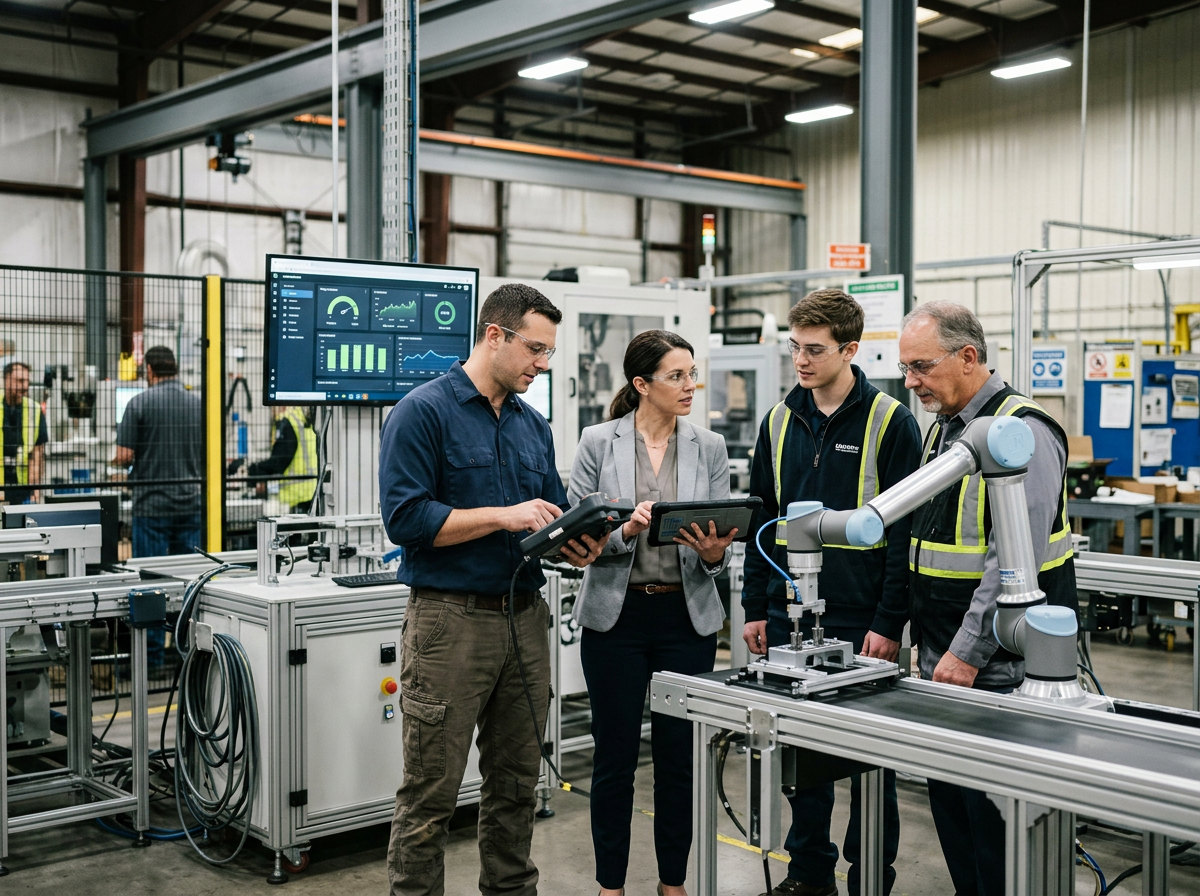
Manufacturing industries continue evolving as businesses seek smarter and more sustainable production strategies. Companies now face growing pressure to improve operational efficiency while reducing environmental impact and energy consumption. Because of these changing priorities, energy efficient robotics has become a critical component of modern manufacturing integration and industrial automation.
Traditional manufacturing environments often rely on energy-intensive machinery, repetitive manual workflows, and outdated production systems that increase operational costs over time. However, intelligent robotics systems now help manufacturers automate processes while using energy more effectively. As a result, organizations improve both productivity and sustainability simultaneously.
Energy efficient robotics combines advanced automation technologies with optimized energy management strategies. Modern robotic systems can perform repetitive manufacturing tasks while minimizing power usage, reducing waste, and improving workflow precision. Consequently, manufacturers gain stronger operational control and lower long-term operating expenses.
Sustainability goals also continue influencing industrial decision-making worldwide. Governments, investors, and consumers increasingly expect businesses to adopt environmentally responsible production practices. Therefore, companies are investing more heavily in automation systems that support reduced emissions and energy conservation.
Manufacturing integration strategies now focus not only on speed and productivity but also on long-term operational resilience. Businesses that prioritize sustainable automation often improve competitiveness while preparing more effectively for future environmental regulations and market expectations.
Why Energy Efficiency Matters in Manufacturing
Manufacturing operations consume significant amounts of electricity, fuel, and industrial resources every day. Production lines, heavy machinery, climate systems, and operational equipment all contribute to rising energy demands across industrial facilities. Consequently, businesses increasingly search for technologies that improve efficiency without sacrificing productivity.
Energy efficient robotics helps manufacturers reduce unnecessary energy consumption during repetitive operational tasks. Intelligent robotic systems optimize movement patterns, manage power usage more effectively, and reduce idle operational periods. These improvements support lower electricity costs and stronger resource management.
Operational sustainability additionally influences customer expectations and corporate reputation. Many consumers now prefer businesses that demonstrate environmental responsibility and sustainable manufacturing practices. Therefore, companies that invest in energy-saving automation often strengthen brand credibility and market positioning.
Energy costs also continue fluctuating globally, creating financial uncertainty for manufacturers. Organizations that improve energy efficiency usually gain stronger long-term operational stability and reduced exposure to rising utility expenses.
Governments worldwide increasingly introduce environmental regulations related to emissions, waste reduction, and industrial energy usage. Consequently, manufacturers adopting sustainable automation strategies often adapt more easily to evolving compliance requirements.
Efficient operations additionally support broader sustainability initiatives within organizations. Reduced energy usage often lowers carbon emissions while helping businesses achieve long-term environmental goals more effectively.
How Robotics Improves Energy Management
Modern automation systems do far more than complete repetitive manufacturing tasks. Energy efficient robotics technologies now include intelligent monitoring tools, AI-powered optimization systems, and real-time operational analytics that improve energy management significantly.
Smart robotic systems can automatically adjust power usage based on production demands. Instead of operating continuously at maximum energy levels, modern robots optimize performance according to workload requirements. Consequently, businesses reduce unnecessary energy waste during slower production periods.
Precision movement also contributes to operational efficiency. Traditional machinery sometimes uses excess energy because of inconsistent movement patterns or inefficient operational designs. However, robotics systems execute tasks with highly controlled accuracy that minimizes wasted motion and unnecessary power consumption.
Automated shutdown and standby features further improve energy conservation. Intelligent robotics systems can enter low-power states during inactivity while restarting quickly when operations resume. These capabilities help manufacturers lower overall electricity usage without reducing productivity.
Data analytics additionally strengthen energy management strategies. Connected robotics platforms collect real-time information regarding power usage, machine performance, and operational efficiency. Companies can analyze this data to identify inefficiencies and optimize workflows continuously.
Predictive maintenance systems also support energy conservation. Malfunctioning equipment often consumes more energy because of operational strain or mechanical inefficiencies. Robotics platforms with predictive monitoring capabilities can detect maintenance issues early, helping organizations maintain efficient performance levels.
The Role of Smart Manufacturing Integration
Manufacturing integration continues evolving through Industry 4.0 technologies and intelligent automation systems. Energy efficient robotics plays a major role within these connected industrial environments because businesses increasingly rely on data-driven operational strategies.
Integrated manufacturing systems allow robotics platforms to communicate with sensors, analytics software, cloud infrastructure, and production management systems simultaneously. This connectivity improves operational visibility while supporting more efficient resource allocation.
Real-time monitoring capabilities help manufacturers manage production environments more effectively. Businesses can track energy usage across multiple systems while identifying operational bottlenecks and performance inefficiencies quickly.
Artificial intelligence further enhances manufacturing integration efforts. AI-powered robotics systems analyze operational patterns continuously while recommending workflow improvements that reduce energy waste and improve productivity.
Supply chain operations also benefit from connected automation systems. Intelligent robotics can optimize inventory movement, warehouse operations, and logistics processes while minimizing unnecessary transportation energy usage.
Flexible manufacturing environments become easier to manage through integrated robotics platforms as well. Companies can adjust production schedules, customize workflows, and scale operations more efficiently while maintaining energy optimization standards.
Cross-department collaboration additionally improves through connected manufacturing systems. Production managers, maintenance teams, and operational analysts gain access to shared performance data that supports stronger decision-making and long-term planning.
Reducing Waste Through Intelligent Automation
Manufacturing waste affects both operational costs and environmental sustainability. Excess materials, defective products, inefficient workflows, and unnecessary energy consumption all contribute to industrial waste generation. Fortunately, intelligent automation systems help organizations reduce these inefficiencies significantly.
Energy efficient robotics improves production accuracy through consistent and precise operational performance. Automated systems reduce human error during repetitive manufacturing tasks, which helps minimize defective products and wasted materials.
Material handling also becomes more efficient through robotics integration. Intelligent systems optimize movement patterns, storage organization, and production coordination while reducing unnecessary resource usage.
Automated inspection technologies further strengthen waste reduction efforts. Vision-enabled robotics systems can identify product defects in real time, preventing defective items from progressing through production workflows. Consequently, businesses reduce waste while improving quality control.
Resource optimization additionally improves through predictive analytics and real-time monitoring systems. Manufacturers can identify inefficiencies earlier while adjusting workflows proactively to prevent operational losses.
Packaging and logistics processes benefit from automation as well. Robotics systems improve packaging precision, reduce excess material usage, and optimize shipment organization more effectively than many traditional workflows.
Waste reduction strategies ultimately strengthen both environmental and financial performance. Businesses that minimize operational inefficiencies often lower production costs while supporting sustainability objectives simultaneously.
The Financial Benefits of Sustainable Automation
Many manufacturers initially hesitate to adopt advanced robotics systems because of implementation costs. However, energy efficient robotics often produces significant long-term financial benefits that outweigh initial investment expenses.
Lower energy consumption directly reduces operational utility costs over time. Businesses using optimized automation systems often experience measurable savings related to electricity usage and industrial resource management.
Maintenance expenses may also decrease significantly. Intelligent robotics systems often include predictive maintenance capabilities that identify equipment problems before major failures occur. This proactive approach reduces repair costs and operational downtime.
Productivity improvements further strengthen financial performance. Automated systems operate consistently with minimal interruptions, helping organizations increase output while maintaining quality standards.
Workforce efficiency additionally improves through automation support. Employees can focus more heavily on strategic responsibilities, quality oversight, and operational management rather than repetitive manual tasks.
Environmental compliance costs may also become easier to manage. Sustainable manufacturing systems often align more effectively with regulatory requirements related to emissions, energy usage, and operational efficiency.
Investor confidence increasingly favors sustainable businesses as well. Companies demonstrating strong environmental responsibility and operational innovation often improve long-term market credibility and financial attractiveness.
Workforce Adaptation in Automated Manufacturing
Automation technologies frequently change workforce responsibilities within manufacturing environments. However, energy efficient robotics does not simply replace employees entirely. Instead, intelligent systems often reshape operational roles while creating new technical and analytical opportunities.
Employees increasingly manage robotics platforms, monitor operational analytics, and coordinate automated workflows rather than performing repetitive manual tasks exclusively. Consequently, workforce training becomes extremely important during automation integration projects.
Technical education programs help employees understand robotics management, predictive maintenance systems, and energy optimization strategies more effectively. Businesses that invest in workforce development usually achieve smoother implementation outcomes.
Collaborative robotics systems also support safer workplaces. Robots can handle physically demanding or hazardous tasks while employees focus on oversight, troubleshooting, and process improvement responsibilities.
Adaptability remains essential within modern manufacturing environments. Organizations that encourage continuous learning often create more innovative and resilient workforces capable of managing evolving technologies successfully.
Transparent communication additionally improves workforce engagement during automation transitions. Employees usually respond more positively when organizations explain modernization goals clearly and provide meaningful opportunities for professional growth.
Cross-functional collaboration strengthens operational efficiency as well. Production teams, maintenance specialists, engineers, and operational managers often work together more effectively within connected manufacturing environments.
Preparing Manufacturing for the Future
Industrial automation will continue evolving rapidly during the coming decades. Businesses increasingly recognize that long-term competitiveness depends heavily on operational sustainability, intelligent automation, and resource efficiency.
Energy efficient robotics will likely become even more important as manufacturers pursue carbon reduction goals and environmental compliance initiatives. Governments worldwide continue strengthening sustainability regulations that encourage greener industrial operations.
Artificial intelligence will also expand automation capabilities significantly. Future robotics systems may optimize energy usage more dynamically while improving predictive maintenance, operational forecasting, and autonomous decision-making.
Renewable energy integration may further transform manufacturing environments. Smart robotics systems could coordinate directly with renewable power sources and energy storage systems to improve sustainability performance.
Customer expectations will continue influencing industrial strategies as well. Businesses increasingly face pressure to demonstrate environmental responsibility and sustainable production practices throughout supply chains.
Organizations that adopt scalable and flexible automation systems today will remain better prepared for future technological changes and market demands. Sustainable manufacturing integration therefore represents both an operational strategy and a long-term competitive advantage.
Conclusion
Manufacturing industries continue adapting to rising energy costs, sustainability expectations, and growing operational complexity. Businesses now require smarter production strategies that improve efficiency while supporting environmental responsibility and long-term competitiveness.
Energy efficient robotics helps manufacturers reduce operational costs, optimize workflows, improve automation performance, and strengthen sustainability initiatives simultaneously. Intelligent robotics systems now play a major role within modern manufacturing integration strategies.
Successful automation projects depend on careful planning, workforce training, connected infrastructure, and continuous operational optimization. Businesses that balance productivity with sustainability often achieve stronger long-term manufacturing performance.
As Industry 4.0 technologies continue advancing, energy-efficient automation will remain essential for organizations seeking resilient, scalable, and environmentally responsible manufacturing operations. Companies investing in intelligent robotics today position themselves more effectively for future industrial growth and sustainability success.
FAQ
1. Why Is Energy Efficiency Important in Manufacturing?
Energy efficiency helps manufacturers reduce operational costs, lower emissions, and improve long-term sustainability performance.
2. How Do Robotics Systems Reduce Energy Consumption?
Modern robotics optimize movement, automate power management, and reduce unnecessary operational energy usage.
3. What Industries Benefit Most From Sustainable Automation?
Manufacturing, logistics, automotive, electronics, packaging, and warehousing industries commonly benefit from energy-efficient robotics.
4. How Does Predictive Maintenance Improve Efficiency?
Predictive maintenance identifies equipment issues early, reducing downtime and preventing energy waste from malfunctioning systems.
5. What Role Does AI Play in Smart Manufacturing?
Artificial intelligence supports workflow optimization, energy monitoring, predictive analytics, and automated operational decision-making.




Leave feedback about this