


The landscape of artificial intelligence is evolving at a breakneck pace. Among the most transformative developments is the rise of Agentic AI. This isn’t just another incremental upgrade; it represents a fundamental shift in how businesses can leverage AI. For companies formulating their Agentic AI in business strategy, understanding these systems as autonomous teammates rather than mere tools is crucial. What was once a buzzword is rapidly becoming real infrastructure, redefining operational paradigms across industries.
What Defines Agentic AI?
Agentic AI systems are designed to autonomously reason, plan, and execute complex, multi-step tasks. Unlike traditional AI models that respond to specific prompts, agentic systems can break down a high-level goal into smaller sub-tasks. They prioritize these tasks, learn from their environment, and adapt their approach to achieve the desired outcome. Companies like Anthropic with its “Computer Use” feature and OpenAI with its “Operator” product are at the forefront of this revolution. They demonstrate the practical capabilities of these advanced systems.
Strategic Applications Across the Enterprise
The implications of autonomous AI agents for business operations are vast. They extend far beyond simple automation. Here’s how Agentic AI is being deployed:
- Code Development & Software Engineering: Agentic AI can now handle significant portions of the software development lifecycle. From generating boilerplate code and suggesting optimizations to debugging complex systems, these agents accelerate development cycles. This frees human developers to focus on higher-level architectural challenges. This aligns with the trend of AI becoming a primary software development tool. Some estimate AI could handle 30% of code written, potentially rising to 80% by 2027.
- Legal Tasks & Compliance: In the legal sector, agentic systems can review vast quantities of documents. They identify relevant clauses, summarize cases, and even draft initial legal responses. This drastically reduces research time and ensures compliance with evolving regulations.
- Financial Operations & Analysis: Agentic AI can monitor financial markets, execute trades based on complex strategies, detect fraudulent activities, and generate comprehensive financial reports. Their ability to process and react to real-time data makes them invaluable for high-stakes financial environments.
- Administrative Support & Project Management: Beyond simple chatbots, agentic systems can manage complex administrative workflows. They coordinate project tasks, schedule meetings, and even proactively resolve scheduling conflicts. Consequently, they act as highly efficient virtual assistants for teams.
Integrating Agentic AI into Your Business Strategy
For businesses looking to capitalize on this trend, embedding Agentic AI into core business infrastructure and decision-making is the focus. This integration requires a thoughtful approach. First, identify specific areas where autonomous agents can deliver significant value. Second, begin with pilot programs to test and refine their implementation. This ensures a smooth transition and optimal performance. Furthermore, consider the ethical implications and governance frameworks necessary for responsible deployment. A well-defined Agentic AI in business strategy will focus on augmentation, not replacement, of human capabilities. This approach fosters collaboration between human and AI intelligence.
Defining Your Agentic AI Vision
Before deployment, a clear vision is paramount. What specific problems will these agents solve? How will they integrate with existing systems? Businesses should conduct a thorough assessment of their current workflows. They need to pinpoint repetitive, data-intensive, or time-consuming tasks that could benefit from automation. For instance, a customer service department might deploy agents to handle initial inquiries, triage complex issues, and even personalize responses. This frees human agents to address more nuanced customer needs. Moreover, this strategic planning ensures that the investment in autonomous AI systems yields tangible returns.
Building the Right Team and Infrastructure
Successful implementation of autonomous AI requires more than just technology. It demands a skilled team. Data scientists, AI engineers, and domain experts must collaborate. They will design, train, and oversee these advanced systems. Businesses also need robust infrastructure. This includes scalable cloud computing resources, secure data storage, and advanced monitoring tools. These elements are critical for maintaining the performance and reliability of agentic applications. Furthermore, ongoing training and development for the human workforce are essential. This ensures they can effectively collaborate with and manage their new AI teammates.
Navigating Challenges and Ensuring Ethical Deployment
While the benefits are substantial, challenges exist. Data privacy, algorithmic bias, and accountability are significant concerns. Companies must establish clear ethical guidelines and governance policies. These policies should address how autonomous agents make decisions and interact with sensitive data. Regular audits and transparent reporting mechanisms are also vital. They help ensure fairness and compliance. Moreover, a focus on human oversight remains critical. Humans must retain the ultimate decision-making authority. This ensures that agentic systems serve organizational goals responsibly.
Real-World Impact of Autonomous AI Agents
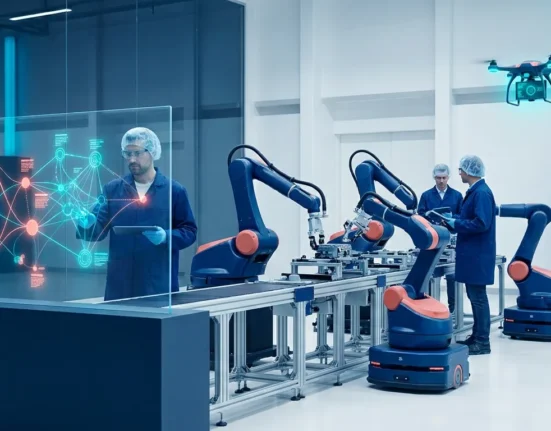
The impact of autonomous AI agents is already being felt across various industries. Consider the advancements in drug discovery. Pharmaceutical companies are using agentic systems to accelerate research and development. These agents analyze vast datasets of chemical compounds. They predict potential drug candidates and even design experiments. This dramatically reduces the time and cost associated with bringing new medicines to market. Nature reported on AI’s role in accelerating scientific discovery, highlighting its transformative potential. Similarly, in manufacturing, autonomous agents optimize supply chains. They predict equipment failures and manage inventory. This leads to increased efficiency and reduced operational costs. The adoption of a well-crafted Agentic AI in business strategy is becoming a competitive differentiator.
Transforming Customer Experience
Agentic AI is revolutionizing customer interactions. Beyond simple chatbots, these systems can offer personalized experiences. They anticipate customer needs, provide proactive support, and even tailor product recommendations. For example, an agentic system might monitor a customer’s usage patterns. It could then suggest relevant upgrades or troubleshooting steps before an issue arises. This level of proactive engagement significantly enhances customer satisfaction and loyalty. In fact, many companies are finding that integrating these agents improves their net promoter scores and reduces customer churn. The strategic implementation of autonomous AI agents can create a seamless and highly responsive customer journey.
Enhancing Cybersecurity Measures
In the realm of cybersecurity, autonomous AI agents are proving invaluable. They can continuously monitor network traffic, identify anomalies, and respond to threats in real-time. Unlike human analysts, these agents operate 24/7. They process massive amounts of data with unparalleled speed. This allows for rapid detection and mitigation of cyberattacks. For instance, an agent might identify a suspicious login attempt. It could then automatically lock the account and alert security personnel. This proactive defense mechanism strengthens an organization’s overall security posture. Therefore, incorporating agentic capabilities into cybersecurity protocols is a crucial aspect of a modern Agentic AI in business strategy.
The Future of Agentic AI: A Collaborative Ecosystem
The future of Agentic AI points towards increasingly sophisticated and collaborative ecosystems. We will see agents working together, forming complex networks to solve grander challenges. Imagine a scenario where multiple autonomous agents coordinate. One agent might handle market research, another focuses on product design, and a third manages manufacturing logistics. All of them work towards a common business objective. This multi-agent system approach promises even greater efficiencies and innovative outputs. The development of open standards and interoperability will be key to unlocking this potential. Companies that embrace this collaborative vision will be well-positioned to lead in the next wave of AI innovation. The emphasis will shift from individual agent capabilities to the collective intelligence of agent networks. This represents the next frontier in the evolution of Agentic AI.
Continuous Learning and Adaptation
A hallmark of advanced agentic systems is their capacity for continuous learning. These agents don’t just execute predefined rules. They learn from new data, adapt to changing environments, and refine their strategies over time. This iterative improvement is critical for maintaining relevance and effectiveness in dynamic business landscapes. For example, an agent optimizing supply chain logistics will learn from disruptions, adjust its planning, and improve its resilience with each new challenge. This adaptive quality ensures that the investment in autonomous AI agents continues to yield increasing returns. It also highlights the importance of feedback loops and data quality in their ongoing development. Moreover, this continuous learning capability makes them indispensable for long-term strategic planning.
Human-Agent Collaboration Models
The most effective implementations of agentic AI will involve robust human-agent collaboration models. This isn’t about replacing humans but augmenting their capabilities. Agents can handle routine, data-intensive tasks, freeing human employees to focus on creativity, critical thinking, and complex problem-solving. Consider a marketing team where agents analyze customer data and generate personalized campaign drafts. Human marketers then refine these drafts, adding their creative flair and strategic insights. This synergy allows for higher quality output and increased productivity. Building strong interfaces and communication protocols between humans and agents is therefore essential. This ensures a harmonious and productive working relationship. The success of an Agentic AI in business strategy ultimately hinges on this collaborative paradigm.
Conclusion
Agentic AI is rapidly transitioning from a theoretical concept to a practical, indispensable component of modern business operations. Its ability to autonomously reason, plan, and execute complex tasks offers unprecedented opportunities for efficiency, innovation, and strategic advantage. From accelerating software development and enhancing financial analysis to transforming customer experience and bolstering cybersecurity, the applications are diverse and impactful. Companies that proactively integrate Agentic AI in business strategy will redefine their operational paradigms. They will foster a new era of human-AI collaboration. This will not only drive growth but also secure a competitive edge in an increasingly AI-driven world. The journey requires careful planning, ethical considerations, and a commitment to continuous learning. However, the rewards of embracing these autonomous teammates are substantial. They promise a future where businesses operate with unparalleled intelligence and agility.
FAQ
What is the core difference between Agentic AI and traditional AI?
The main difference lies in autonomy and initiative. Traditional AI typically responds to direct prompts and executes specific functions. Agentic AI, however, can autonomously reason, plan, break down complex goals into sub-tasks, and adapt its approach to achieve desired outcomes without constant human intervention.
How can autonomous AI agents benefit small businesses?
Small businesses can benefit significantly from autonomous AI agents by automating repetitive tasks, improving customer service, optimizing marketing efforts, and gaining data-driven insights. This allows them to operate more efficiently and compete effectively with larger enterprises.
What are the primary challenges in deploying autonomous AI in an organization?
Key challenges include ensuring data privacy and security, mitigating algorithmic bias, establishing clear accountability for agent actions, integrating agents with existing legacy systems, and developing the necessary internal expertise to manage and oversee these systems.
Will autonomous AI agents replace human jobs?
While autonomous AI agents will automate many routine tasks, their primary role is expected to be augmentation rather than replacement. They will free human employees to focus on higher-level, creative, and strategic work, fostering new forms of collaboration and creating new job roles.
What ethical considerations are important when using autonomous AI?
Ethical considerations are crucial. These include ensuring transparency in decision-making, preventing unintended biases, maintaining human oversight, protecting data privacy, and establishing clear lines of accountability for the actions and impacts of AI agents.
Explore more: More from TechZone AI




Leave feedback about this