

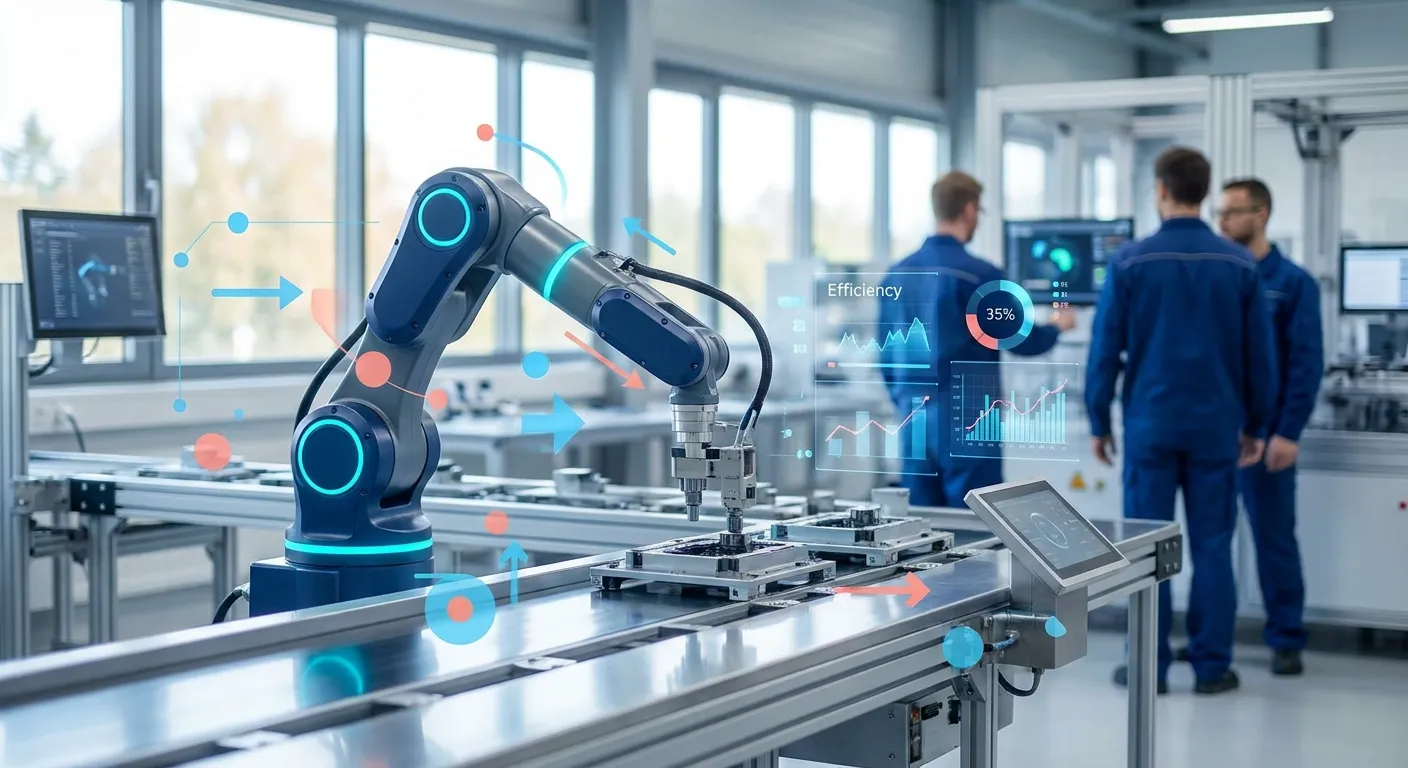
The manufacturing sector, traditionally reliant on precise but often manual processes, is undergoing a profound transformation. The integration of advanced artificial intelligence is no longer a futuristic concept but a present-day imperative, with a significant focus on AI in manufacturing efficiency. As the global AI market surges towards an estimated USD 900 billion in 2026, its widespread enterprise adoption is driving tangible benefits, particularly in industrial settings.
The Shift to AI-Powered Production
Recent data highlights a critical shift: 88% of organizations worldwide reported using AI in at least one function in 2025, a substantial increase from previous years. This adoption isn’t just for show; it’s delivering measurable efficiency gains of 20-40% across various operational areas. In manufacturing, these gains manifest in several key domains:
- Predictive Maintenance: AI algorithms analyze sensor data from machinery to predict equipment failures before they occur. This proactive approach drastically reduces downtime, extends asset lifespan, and optimizes maintenance schedules, moving from reactive repairs to strategic interventions.
- Quality Control & Anomaly Detection: Computer vision and machine learning models can inspect products at high speeds, identifying defects that human eyes might miss. This ensures consistent quality, reduces waste, and streamlines compliance, leading to higher customer satisfaction and lower recall rates.
- Supply Chain Optimization: AI predicts demand fluctuations, optimizes inventory levels, and identifies potential bottlenecks or disruptions in the supply chain. This leads to more resilient and agile operations, minimizing carrying costs and ensuring timely delivery of components and finished goods.
- Process Optimization & Robotics: AI-driven automation and collaborative robots (cobots) are enhancing production lines. AI can dynamically adjust parameters in real-time to maximize throughput, minimize energy consumption, and adapt to varying production requirements, making processes more flexible and responsive.
Case Study: Smart Factory Transformation
Consider a large automotive component manufacturer struggling with unexpected machine breakdowns and inconsistent product quality. By implementing an AI-powered predictive maintenance system, they integrated sensors across their assembly line machinery. The AI system learned normal operating parameters and began flagging anomalies indicative of impending failure. This resulted in a 30% reduction in unplanned downtime within the first year. Simultaneously, deploying AI-driven visual inspection systems led to a 25% improvement in defect detection rates, significantly enhancing product reliability and reducing scrap material.
Furthermore, the manufacturer leveraged AI for demand forecasting. By analyzing historical sales data, market trends, and external factors, the system provided more accurate predictions. Consequently, inventory holding costs decreased by 15%, and stockouts were nearly eliminated. This holistic implementation demonstrates the profound impact of improving industrial operational efficiency with AI.
Predictive Maintenance: Minimizing Downtime and Maximizing Uptime
Unplanned downtime represents a significant financial drain for manufacturers. Traditional maintenance schedules often involve either reactive repairs, which are costly and disruptive, or time-based preventative maintenance, which can result in unnecessary servicing of healthy equipment. However, AI-powered predictive maintenance offers a superior alternative. Sensors embedded in machinery continuously collect data on vibration, temperature, pressure, and sound. Machine learning algorithms then analyze this vast dataset to identify subtle patterns that precede equipment failure. For example, a slight increase in motor vibration might indicate an impending bearing failure long before it becomes critical.
This proactive approach allows maintenance teams to schedule interventions precisely when needed, during planned downtime, or before a catastrophic failure occurs. Therefore, it not only extends the lifespan of expensive machinery but also optimizes resource allocation for maintenance personnel. Moreover, the data collected can inform better design choices for future equipment, further boosting long-term manufacturing productivity. The overall impact on AI in manufacturing efficiency in this area is substantial, translating directly to improved operational continuity and reduced costs.
Enhancing Quality Control with AI Vision Systems
Maintaining high product quality is paramount for brand reputation and customer satisfaction. Manual visual inspection, while common, is prone to human error, fatigue, and inconsistency. Conversely, AI-powered computer vision systems offer unparalleled precision and speed. These systems utilize high-resolution cameras and deep learning models trained on vast datasets of acceptable and defective products. They can identify microscopic flaws, misalignments, or surface imperfections that might be invisible to the human eye, all in real-time as products move along the production line.
For instance, in electronics manufacturing, AI vision systems can verify the correct placement of tiny components on circuit boards with extreme accuracy. In food processing, they can detect foreign objects or quality deviations at speeds impossible for human inspectors. As a result, manufacturers experience reduced rework, less waste, and fewer customer returns. This leads to substantial cost savings and a stronger market position. Consequently, the role of AI in improving production quality is undeniable, directly contributing to overall manufacturing operational effectiveness.
Streamlining Supply Chains with AI-Driven Insights
The complexities of global supply chains make them particularly susceptible to disruptions, from geopolitical events to sudden shifts in consumer demand. AI provides the intelligence needed to navigate these intricate networks more effectively. Machine learning algorithms can analyze historical sales data, weather patterns, economic indicators, and even social media sentiment to generate highly accurate demand forecasts. This allows manufacturers to optimize inventory levels, reducing both the costs associated with excessive stock and the risks of stockouts.
Furthermore, AI can monitor the entire supply chain in real-time, identifying potential bottlenecks or risks before they escalate. For example, if a shipping route is experiencing delays due to port congestion, AI can suggest alternative routes or suppliers. This enhances the resilience and agility of the supply chain, ensuring timely delivery of raw materials and finished goods. Indeed, the application of AI for supply chain optimization is a critical component of achieving superior industrial operational effectiveness.
Process Optimization and the Rise of Collaborative Robotics
Beyond individual tasks, AI is transforming entire manufacturing processes. AI algorithms can continuously monitor production parameters, such as machine speed, temperature, and pressure, and dynamically adjust them to maximize throughput and minimize energy consumption. This real-time optimization leads to more efficient use of resources and reduced operational costs. Moreover, AI is central to the increasing adoption of robotics on the factory floor, especially collaborative robots or cobots.
Cobots are designed to work alongside human employees, assisting with repetitive, heavy, or dangerous tasks. AI enables these robots to learn from demonstrations, adapt to new tasks, and safely interact with their human counterparts. For example, a cobot might assist in assembling complex parts, while a human worker performs intricate quality checks. This human-robot collaboration enhances productivity, improves worker safety, and allows human employees to focus on more complex, value-added activities. Consequently, the integration of AI-powered process optimization and robotics significantly contributes to AI in manufacturing efficiency.
Data Security and Ethical Considerations in AI Deployment
While the benefits of AI in industrial settings are clear, implementing these technologies also brings important considerations, particularly regarding data security and ethics. Manufacturing operations generate vast amounts of sensitive data, from proprietary process information to intellectual property. Ensuring the robust security of this data is paramount to prevent cyber threats and maintain competitive advantage. Therefore, manufacturers must implement strong encryption, access controls, and regular security audits for all AI systems.
Moreover, ethical considerations surrounding AI deployment must be addressed. This includes transparency in how AI decisions are made, particularly in areas like automated quality control where AI might reject products. It also involves considering the impact of automation on the workforce and ensuring that AI complements human skills rather than simply replacing them. Responsible AI implementation involves training and upskilling employees, fostering a collaborative environment between humans and AI systems. These considerations are crucial for sustainable and beneficial advancements in industrial operational effectiveness.
The Future Outlook: Towards Autonomous Manufacturing
The trajectory of AI in manufacturing points towards increasingly autonomous operations. We are moving beyond individual AI applications to integrated systems where AI orchestrates entire production lines. Imagine factories where raw materials enter one end, and finished products emerge from the other, with minimal human intervention. This vision of autonomous manufacturing is powered by advanced AI, machine learning, and sophisticated robotics.
Further developments in edge AI will allow more processing to occur directly on factory equipment, reducing latency and enhancing real-time decision-making. Furthermore, advancements in reinforcement learning will enable AI systems to learn and improve continuously without explicit programming, adapting to unforeseen challenges and optimizing processes dynamically. This evolution promises even greater levels of AI in manufacturing efficiency, driving unprecedented productivity and innovation across the sector. For more insights into AI’s broader impact, consider exploring resources like McKinsey’s insights on AI and manufacturing.
Beyond the Factory Floor: AI’s Broader Economic Impact
The improvements driven by AI in manufacturing extend beyond individual companies. Enhanced production capabilities contribute to stronger national economies through increased output, reduced waste, and the creation of new high-skilled jobs in AI development, maintenance, and oversight. Furthermore, the ability to produce goods more efficiently can lead to more competitive pricing for consumers, stimulating demand and fostering economic growth. This ripple effect underscores the strategic importance of adopting AI technologies.
Moreover, the adoption of AI encourages innovation across the entire industrial ecosystem, from sensor manufacturers to software developers. This creates a virtuous cycle of technological advancement and economic benefit. Therefore, the strategic investment in AI for industrial operational effectiveness is not merely a cost-saving measure but a fundamental driver of future economic prosperity. For a global perspective on AI’s economic effects, resources from the World Economic Forum provide valuable context.
Conclusion: AI as the Engine of Modern Manufacturing
The evidence is clear: AI in manufacturing efficiency is not just a trend but a fundamental shift that reshapes how goods are produced. From predictive maintenance that prevents costly downtime to AI vision systems ensuring impeccable quality, and from optimized supply chains to intelligent process automation, AI’s influence is pervasive and transformative. Manufacturers who embrace these technologies are poised to gain significant competitive advantages, characterized by lower operational costs, higher product quality, and greater agility in responding to market demands.
As we move further into the age of intelligent automation, the integration of AI will become increasingly seamless, leading to smarter, more resilient, and more productive factories. For any manufacturing entity aiming to remain at the forefront of industrial innovation, understanding and implementing AI solutions is no longer optional; it is essential for sustained growth and success.
FAQ Section
What specific areas of manufacturing benefit most from artificial intelligence?
Artificial intelligence significantly benefits several key areas in manufacturing. These include predictive maintenance for machinery, advanced quality control and anomaly detection, optimization of complex supply chains, and the enhancement of production processes through robotics and automation. Each area experiences substantial gains in productivity and cost reduction.
How does AI help in reducing manufacturing downtime?
AI helps reduce manufacturing downtime primarily through predictive maintenance. By analyzing real-time sensor data from equipment, AI algorithms can accurately forecast when a machine component is likely to fail. This allows maintenance teams to schedule proactive repairs during planned downtime, preventing unexpected breakdowns and significantly increasing operational uptime.
Can AI improve product quality in industrial settings?
Yes, AI can dramatically improve product quality. Computer vision systems powered by AI can perform high-speed, highly accurate inspections, identifying defects or inconsistencies that human inspectors might miss. This ensures a consistent level of quality, reduces waste from faulty products, and enhances customer satisfaction.
What role do collaborative robots play in AI-driven production?
Collaborative robots, or cobots, play a crucial role in AI-driven production by working safely alongside human employees. AI enables these robots to perform repetitive, precise, or heavy tasks, freeing human workers to focus on more complex, cognitive functions. This collaboration boosts overall productivity and improves workplace safety.
What are the primary challenges in implementing AI for industrial operations?
Implementing AI for industrial operations can present challenges such as ensuring robust data security, addressing ethical considerations related to automation and workforce impact, and managing the complexity of integrating new AI systems with existing legacy infrastructure. Overcoming these requires strategic planning and investment.
Explore more: More from TechZone AI

Leave feedback about this