

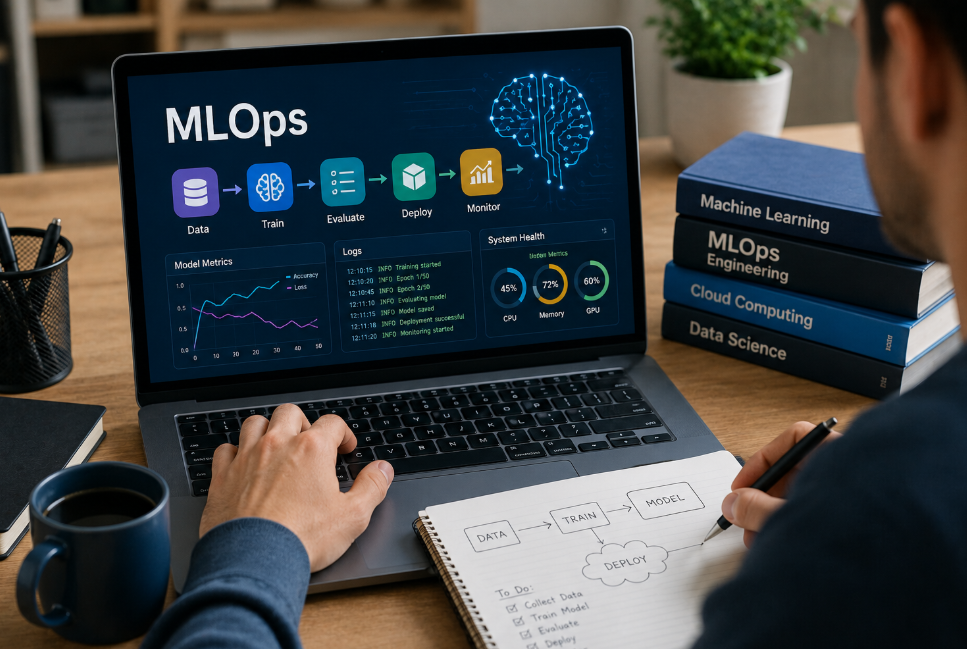
The demand for machine learning and operational AI skills continues growing rapidly across industries. As businesses adopt artificial intelligence tools at larger scales, companies increasingly need professionals who understand both machine learning development and production deployment. That is why MLOps training programs have become essential for engineers, analysts, developers, and IT teams seeking modern AI skills.
Traditional machine learning education often focuses heavily on model creation while overlooking deployment, monitoring, scalability, and automation. However, organizations now need professionals who can manage complete machine learning lifecycles from development to production environments. MLOps bridges this gap by combining machine learning practices with DevOps principles and cloud infrastructure management.
Because the field evolves quickly, selecting the right training provider matters more than ever. Some vendors specialize in cloud-native AI systems, while others focus on enterprise deployment pipelines, automation tools, or real-world project experience. In addition, certification quality, hands-on learning opportunities, and industry recognition vary significantly between providers.
Fortunately, several respected organizations now offer high-quality educational pathways for professionals at different skill levels. Understanding the strengths of leading MLOps vendors helps learners choose programs aligned with their career goals, technical background, and preferred learning style.
Why MLOps Skills Matter in Modern AI Development
Machine learning projects often fail when organizations cannot deploy or maintain models effectively in real production environments. Building a model represents only one part of the process. Companies also need systems for automation, monitoring, version control, retraining, security, and scalability.
MLOps helps solve these operational challenges by introducing structured workflows for machine learning systems. Teams use automation and deployment pipelines to move models from experimentation into production more reliably.
Businesses increasingly prioritize these skills because operational AI environments grow more complex every year. Large datasets, cloud infrastructure, model governance, and compliance requirements all demand specialized operational knowledge.
As a result, professionals with both machine learning and deployment expertise often gain strong career opportunities. Employers frequently seek engineers capable of handling infrastructure, workflow automation, and AI lifecycle management together.
Cloud adoption further increases demand. Many organizations now deploy AI systems through platforms like AWS, Azure, and Google Cloud, which require additional operational understanding.
Because of this industry shift, MLOps training programs have become highly valuable for professionals looking to stay competitive within artificial intelligence and data engineering careers.
Coursera and DeepLearning.AI
Coursera remains one of the most accessible platforms for machine learning and MLOps education. Through partnerships with universities and industry experts, the platform offers flexible online learning paths suitable for beginners and experienced professionals alike.
DeepLearning.AI courses, created by Andrew Ng and other AI specialists, stand out particularly well for practical machine learning education. Several programs introduce learners to machine learning engineering, deployment workflows, and operational AI concepts.
Many courses combine video instruction, coding labs, quizzes, and hands-on assignments. This structure helps students apply theoretical concepts in practical environments rather than relying entirely on lectures.
Coursera also supports self-paced learning, which benefits working professionals balancing study with full-time jobs. Learners can complete programs gradually while still gaining recognized certificates.
Some MLOps-focused specializations explore TensorFlow Extended, model deployment, monitoring pipelines, and workflow automation. These skills align closely with real production environments used in modern companies.
Pricing usually remains more affordable than enterprise bootcamps, which makes Coursera attractive for independent learners or early-career professionals.
For people seeking flexible and beginner-friendly MLOps training programs, Coursera and DeepLearning.AI provide strong foundational learning opportunities.
Google Cloud Skills Boost
Google Cloud offers specialized AI and MLOps education through its Skills Boost platform. Because Google remains deeply involved in modern AI infrastructure, its training programs often reflect current industry practices closely.
Many courses focus heavily on cloud-native machine learning operations using Vertex AI, Kubernetes, TensorFlow, and scalable deployment systems. Learners gain exposure to real tools commonly used in enterprise environments.
Hands-on labs represent a major strength of Google’s training ecosystem. Instead of only studying concepts theoretically, students interact directly with cloud infrastructure and machine learning pipelines.
Google Cloud certifications also carry strong recognition within the technology industry. Employers frequently value candidates with practical cloud AI deployment experience, especially as organizations migrate operations toward cloud platforms.
Programs typically cover automation, monitoring, feature engineering, model serving, and CI/CD pipelines for machine learning workflows. In addition, learners explore infrastructure management and production scaling challenges.
Technical depth varies depending on course selection. Some pathways support beginners, while others target experienced cloud engineers or data scientists.
For professionals interested in cloud-based MLOps training programs, Google Cloud provides highly practical and infrastructure-focused educational options.
AWS Machine Learning and MLOps Training
Amazon Web Services continues dominating cloud infrastructure markets, which makes AWS-based AI education extremely valuable for many technical careers.
AWS offers machine learning and operational AI courses through AWS Skill Builder and official certification pathways. These programs emphasize scalable cloud deployment, automation workflows, and production-ready AI systems.
Courses frequently explore SageMaker, automated pipelines, monitoring systems, model hosting, and infrastructure orchestration. Because many organizations rely heavily on AWS infrastructure, these skills often translate directly into enterprise job requirements.
Hands-on labs allow learners to build real workflows inside cloud environments. This practical exposure improves technical confidence while helping students understand operational challenges more realistically.
AWS certifications also strengthen resumes for professionals seeking roles involving AI infrastructure or cloud engineering. Many employers recognize AWS credentials as indicators of technical capability.
The platform offers both free introductory content and advanced paid programs. Therefore, learners can gradually build expertise depending on their current experience level.
For professionals pursuing scalable cloud-focused MLOps training programs, AWS provides highly relevant infrastructure and deployment education.
Microsoft Azure AI Learning Paths
Microsoft Azure has become a major player in enterprise AI infrastructure. As organizations increasingly adopt Azure cloud services, demand for Azure-focused AI professionals continues growing steadily.
Microsoft Learn provides structured educational pathways covering machine learning operations, deployment automation, and AI lifecycle management. Many programs integrate Azure Machine Learning tools directly into practical training environments.
One advantage of Microsoft’s ecosystem involves enterprise integration. Azure training often emphasizes collaboration, governance, security, and large-scale business operations alongside machine learning workflows.
Courses commonly explore topics such as automated ML pipelines, model monitoring, containerization, DevOps integration, and responsible AI practices.
The learning platform includes free modules, guided labs, and certification preparation resources. Learners can progress gradually while building hands-on experience within Microsoft’s cloud environment.
Organizations already using Microsoft products often prefer Azure-trained professionals because of ecosystem compatibility. Consequently, Azure certifications may create strong opportunities in enterprise technology environments.
Among enterprise-focused MLOps training programs, Microsoft Azure offers particularly strong integration between AI development and operational infrastructure management.
DataCamp for Practical Skill Building
DataCamp provides interactive and beginner-friendly technical education focused heavily on hands-on coding practice. Its MLOps-related learning paths often appeal to data analysts, developers, and early-career professionals transitioning into machine learning operations.
Unlike heavily lecture-based platforms, DataCamp emphasizes short exercises and practical projects. Learners write code directly within browser-based environments while receiving immediate feedback.
The platform covers Python, machine learning pipelines, deployment workflows, version control, and automation concepts in accessible formats. While not always as enterprise-focused as cloud vendor programs, DataCamp remains excellent for foundational skill development.
Many learners appreciate the lower barrier to entry. Courses often explain technical concepts clearly without overwhelming beginners with excessive infrastructure complexity immediately.
Project-based learning also helps students build portfolios demonstrating operational AI skills. Practical examples improve understanding while strengthening resume quality for entry-level roles.
DataCamp works especially well for professionals who prefer learning by doing rather than consuming long theoretical lectures.
For accessible and coding-focused MLOps training programs, DataCamp offers strong beginner-friendly pathways into operational machine learning.
Udacity Nanodegree Programs
Udacity has built a strong reputation for career-focused technical education. Its nanodegree programs often emphasize industry-ready skills and project-based learning rather than academic theory alone.
Several AI and machine learning tracks include operational deployment concepts, cloud workflows, and real-world infrastructure projects. Students frequently build deployable systems that resemble practical business applications.
Mentorship support remains one of Udacity’s stronger features. Many programs include project reviews, technical guidance, and career assistance that help learners improve portfolio quality.
Courses often explore Docker, Kubernetes, CI/CD pipelines, model deployment, and scalable production systems alongside machine learning fundamentals.
The platform generally targets intermediate learners more than complete beginners. While foundational knowledge helps significantly, motivated newcomers can still progress successfully through structured study.
Tuition costs typically exceed simpler learning platforms. However, many students value the career-oriented structure and practical project experience included.
For professionals seeking intensive and project-driven MLOps training programs, Udacity remains a respected and career-focused option.
Pluralsight for IT and DevOps Professionals
Pluralsight serves many IT professionals, software engineers, and DevOps specialists seeking technical upskilling. Its MLOps content often integrates well with infrastructure engineering and cloud operations education.
Unlike beginner-focused platforms, Pluralsight frequently assumes some technical background. Courses explore automation pipelines, infrastructure management, deployment workflows, and operational best practices in greater technical depth.
Many learners appreciate the platform’s role-based learning paths. These curated pathways help professionals focus on skills aligned with specific career goals.
Cloud infrastructure, Kubernetes, Python automation, containerization, and CI/CD workflows receive substantial attention throughout the platform’s technical libraries.
Because MLOps combines machine learning with operational engineering, DevOps professionals often transition effectively into these learning tracks.
Skill assessments and analytics also help learners measure progress more clearly while identifying technical gaps.
For technically experienced learners exploring infrastructure-heavy MLOps training programs, Pluralsight offers valuable operational depth and engineering-focused instruction.
Enterprise Vendors Offering Corporate MLOps Education
Several enterprise-focused vendors now provide specialized corporate MLOps education for organizations implementing AI at scale.
Databricks offers strong data engineering and machine learning operations training centered around large-scale analytics environments. Its certification programs focus heavily on collaborative AI workflows and cloud-native data systems.
DataRobot provides automated machine learning and operational AI education for enterprise teams managing large deployment environments. Courses frequently emphasize governance, monitoring, and production management.
Kubeflow training providers focus specifically on Kubernetes-based machine learning orchestration systems. These programs often target advanced engineers responsible for containerized deployment pipelines.
NVIDIA also offers AI infrastructure and operational training focused on GPU acceleration, enterprise AI deployment, and scalable model optimization.
Corporate-focused education often includes customized workshops, team training, and consulting support alongside technical instruction.
For businesses implementing large AI systems internally, enterprise-centered MLOps training programs provide highly specialized operational expertise aligned with production environments.
How to Choose the Right Training Program
Choosing the right educational provider depends largely on career goals, technical background, and preferred learning style.
Beginners often benefit from structured platforms like Coursera or DataCamp because these environments explain concepts gradually and accessibly.
Cloud engineers may prefer AWS, Azure, or Google Cloud pathways because these programs align directly with enterprise deployment systems used professionally.
Hands-on learners frequently succeed with project-heavy platforms like Udacity because practical implementation improves confidence and portfolio quality.
Budget also matters. Some platforms offer affordable subscription models, while others involve premium tuition costs for mentorship and certification support.
Certification recognition may influence decisions too. Cloud provider credentials often carry strong employer recognition, especially for infrastructure-focused positions.
Learners should also evaluate curriculum freshness carefully because AI tooling evolves rapidly. Updated content reflecting modern deployment workflows provides greater long-term value.
The best MLOps training programs combine technical depth, practical experience, and industry relevance while matching individual learning goals appropriately.
Conclusion
As artificial intelligence adoption accelerates, operational machine learning skills continue becoming more valuable across industries. Organizations increasingly need professionals who can manage deployment pipelines, monitoring systems, automation workflows, and scalable AI infrastructure successfully.
Because of this demand, high-quality MLOps training programs now play an essential role in career development for engineers, developers, analysts, and cloud professionals.
Platforms like Coursera, AWS, Google Cloud, Microsoft Azure, Udacity, DataCamp, and enterprise vendors each provide unique strengths depending on technical focus and learning style. Some emphasize beginner-friendly foundations, while others deliver advanced infrastructure and production-level deployment expertise.
Choosing the right provider depends on individual career goals, current technical background, and preferred learning methods. However, practical hands-on experience remains one of the most important factors across all programs.
Professionals who invest in modern MLOps education position themselves strongly for the future of AI-driven technology environments. As machine learning systems continue expanding into production across industries, operational AI expertise will likely remain one of the most valuable technical skill sets for years to come.
FAQ
1. What is the difference between machine learning and MLOps?
Machine learning focuses on building models, while MLOps manages deployment, monitoring, automation, and operational workflows.
2. Are cloud certifications useful for operational AI careers?
Yes, AWS, Azure, and Google Cloud certifications often improve opportunities in machine learning infrastructure roles.
3. Which platform is best for beginners?
Coursera and DataCamp usually work well for beginners because they provide structured and accessible learning paths.
4. Do MLOps roles require coding experience?
Yes, most MLOps positions involve programming, automation scripting, and infrastructure management skills.
5. Can self-paced programs prepare learners for real jobs?
Yes, practical project-based courses often provide valuable experience that supports entry-level AI and MLOps careers.


Leave feedback about this