

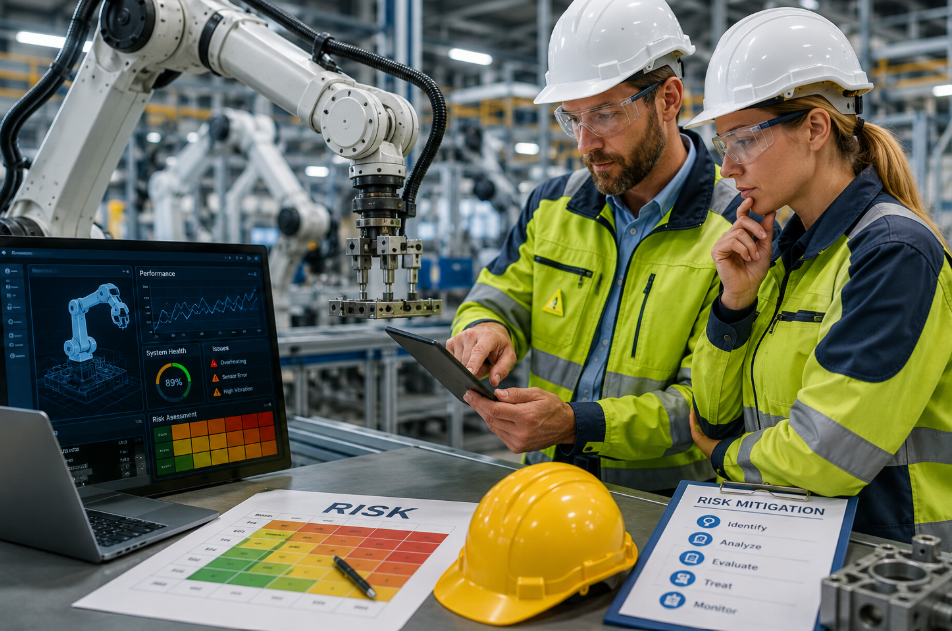
Modern businesses increasingly rely on automation to improve efficiency, reduce labor costs, and increase operational accuracy. However, robotics integration risks can create major financial, technical, and operational problems when companies fail to plan carefully. While robotics systems offer significant long-term advantages, successful implementation requires much more than simply installing machines on a production floor.
Many organizations underestimate the complexity involved in integrating robotics into existing workflows. Compatibility issues, software failures, employee resistance, cybersecurity threats, and operational disruptions may all appear during deployment. In some cases, poorly managed projects lead to expensive delays, reduced productivity, or complete system failure.
Fortunately, most automation challenges become manageable with proper planning, realistic expectations, and structured risk management strategies. Businesses that prepare thoroughly often achieve smoother implementation and stronger long-term returns from robotic systems.
Understanding the most common integration risks allows decision-makers to identify problems early and develop practical solutions before serious disruptions occur. In addition, companies that prioritize communication, training, testing, and scalability often reduce operational uncertainty significantly.
As robotics adoption expands across industries, organizations must learn how to manage robotics integration risks effectively to ensure successful automation outcomes and sustainable operational growth.
Why Robotics Integration Projects Often Become Complex
Robotics systems rarely operate independently. Instead, they interact with software platforms, production equipment, data systems, sensors, networks, and human operators simultaneously. Because of this interconnected structure, even small compatibility issues may affect entire workflows.
Legacy infrastructure often creates major complications. Older manufacturing systems or outdated software may not communicate properly with modern robotic platforms. As a result, businesses sometimes face unexpected upgrade costs during implementation.
Operational disruption also becomes a concern. Integrating automation into active facilities may temporarily interrupt production schedules, inventory management, or logistics operations.
Customization requirements increase complexity further. Many robotics systems require adjustments tailored to specific production environments. Generic solutions rarely fit perfectly without configuration and testing.
Cross-department coordination creates additional challenges as well. Engineering, IT, operations, cybersecurity, and management teams often need close collaboration throughout deployment stages.
Timeline expectations sometimes become unrealistic too. Businesses may assume integration happens quickly, only to discover lengthy testing and troubleshooting periods are necessary.
Understanding why robotics integration risks develop during complex automation projects helps organizations prepare more realistic implementation strategies from the beginning.
Financial Risks During Robotics Deployment
Cost management represents one of the largest concerns in automation projects. Many organizations initially focus only on equipment pricing while underestimating long-term implementation expenses.
Installation costs frequently exceed expectations. Infrastructure modifications, software integration, employee training, and system customization may significantly increase overall project budgets.
Unexpected downtime can also create major financial pressure. If robotic systems disrupt production longer than anticipated, businesses may experience revenue losses alongside rising operational costs.
Maintenance expenses sometimes surprise organizations too. Robotics systems require ongoing software updates, replacement components, calibration, and technical support to maintain performance reliability.
Scalability problems may increase financial risk further. Some businesses purchase systems that fail to adapt effectively as operational needs expand. As a result, additional reinvestment becomes necessary sooner than expected.
Vendor dependency creates another challenge. Companies relying heavily on proprietary systems may face expensive licensing fees or limited flexibility when future upgrades become necessary.
Poor return-on-investment planning occasionally leads to unrealistic expectations as well. While automation often improves efficiency long term, many projects require extended periods before delivering measurable financial gains.
Managing robotics integration risks carefully helps organizations protect budgets while improving automation investment stability over time.
Technical Compatibility Challenges
Technical compatibility remains one of the most common causes of robotics project delays. Many businesses attempt to connect modern automation systems with older operational infrastructure that was never designed for advanced robotics integration.
Software incompatibility frequently creates communication failures between machines and enterprise systems. Production management platforms, warehouse systems, or analytics tools may struggle to exchange data correctly with robotic equipment.
Network reliability becomes extremely important too. Robotics systems often depend on stable connectivity for monitoring, updates, and real-time communication. Weak network infrastructure may reduce performance or create operational instability.
Sensor calibration issues occasionally interfere with robotic accuracy as well. Small positioning errors may cause quality control problems or workflow disruptions in manufacturing environments.
Hardware integration challenges can also emerge unexpectedly. Conveyor systems, scanners, cameras, and robotic arms must operate together seamlessly to maintain productivity.
Cybersecurity risks increase with interconnected automation environments too. Poorly secured systems may expose operational networks to unauthorized access or data breaches.
Thorough testing helps reduce many technical robotics integration risks before full-scale deployment begins. Controlled pilot programs often reveal compatibility problems early enough for safer adjustments.
Workforce Resistance and Human Factors
Technology adoption affects employees just as strongly as operational systems. Workforce resistance sometimes becomes one of the biggest hidden challenges during robotics integration projects.
Employees may fear job loss, reduced responsibilities, or unfamiliar technology. Without proper communication, uncertainty can create low morale and resistance to operational changes.
Training gaps also create risk. Workers responsible for operating or monitoring robotics systems need sufficient education to use equipment confidently and safely.
Management communication plays a critical role during transitions. Organizations that explain automation goals clearly often reduce anxiety while improving employee cooperation.
Some businesses make the mistake of introducing robotics without involving frontline workers in planning discussions. However, employees often possess valuable workflow knowledge that improves implementation decisions significantly.
Human-machine collaboration requires adjustment too. Workers must learn how to interact safely and efficiently alongside automated systems within shared environments.
In addition, skill requirements frequently change after automation deployment. Employees may shift from manual tasks toward monitoring, troubleshooting, or process optimization responsibilities.
Addressing human-related robotics integration risks proactively helps organizations improve adoption success while maintaining stronger workplace confidence and collaboration.
Cybersecurity and Data Protection Risks
As robotics systems become increasingly connected, cybersecurity risks continue growing rapidly. Modern industrial robots often communicate through cloud platforms, wireless networks, sensors, and enterprise software systems simultaneously.
Poor security practices may expose operational systems to cyberattacks, unauthorized access, or ransomware threats. In manufacturing environments, even brief disruptions can create major production losses.
Data privacy concerns also increase with automation adoption. Robotics platforms frequently collect operational analytics, production metrics, and system performance information that businesses must protect carefully.
Outdated software creates additional vulnerabilities. Organizations that delay updates or rely on unsupported systems may face higher cybersecurity exposure over time.
Third-party vendors can also introduce risks. External integrations, remote maintenance access, or cloud-based services sometimes expand attack surfaces unintentionally.
Employee training remains important for cybersecurity protection too. Human error often contributes to security incidents involving passwords, phishing attempts, or unsafe network behavior.
Strong cybersecurity frameworks help reduce robotics integration risks significantly. Access controls, encrypted communication, regular audits, and continuous monitoring all strengthen operational protection.
As industrial automation expands, cybersecurity management has become essential for safe and sustainable robotics integration projects.
Operational Downtime and Productivity Disruptions
Many businesses adopt robotics to improve efficiency, yet poorly managed deployments may temporarily reduce productivity instead. Operational downtime often becomes one of the most expensive integration challenges.
Installation periods may interrupt manufacturing schedules, warehouse operations, or logistics workflows. If planning remains inadequate, delays sometimes extend far beyond original projections.
Testing phases frequently slow production too. Robotics systems require calibration, troubleshooting, and workflow adjustments before reaching stable performance levels.
Unexpected technical failures may also create temporary shutdowns after launch. Sensors, software, or communication systems sometimes behave unpredictably during early operational stages.
Supply chain disruptions can increase risk further. Delayed components or unavailable replacement parts may prevent timely repairs or system adjustments.
Backup planning becomes very important during implementation. Businesses that maintain contingency workflows often reduce financial losses during transition periods.
Gradual deployment strategies usually work better than sudden full-scale automation shifts. Phased integration allows teams to identify operational weaknesses before broader rollout begins.
Careful operational planning helps reduce robotics integration risks while protecting productivity during automation transitions.
Vendor Selection and Support Concerns
Choosing the wrong technology vendor may create long-term operational problems. Since robotics systems often involve substantial financial investment, vendor reliability becomes extremely important.
Some providers offer strong hardware but weak technical support. Others may lack scalable solutions capable of adapting to future business growth.
Poor communication during implementation frequently increases project delays too. Businesses need vendors capable of responding quickly to technical issues and operational concerns.
Long-term maintenance support matters just as much as initial installation. Robotics systems require ongoing updates, repairs, calibration, and optimization to maintain performance reliability.
Training resources also vary significantly between vendors. Companies offering detailed onboarding and educational support often improve implementation success substantially.
Compatibility flexibility should remain another priority. Businesses may eventually integrate additional systems or platforms, so avoiding overly restrictive proprietary environments helps preserve operational flexibility.
Before selecting vendors, organizations should evaluate experience, customer reviews, industry specialization, and support responsiveness carefully.
Strong vendor partnerships reduce robotics integration risks while supporting smoother implementation and long-term operational stability.
The Importance of Pilot Testing
Pilot testing allows organizations to evaluate robotics systems within controlled environments before committing to full deployment. This stage often reveals hidden problems that would become far more expensive during large-scale implementation.
Small-scale testing helps identify compatibility issues, workflow inefficiencies, and employee training gaps early. In addition, pilot programs allow technical teams to optimize system settings gradually.
Testing periods also improve operational confidence. Employees become more comfortable interacting with automation systems before broader rollout begins.
Data gathered during pilot phases supports better decision-making too. Businesses can evaluate productivity improvements, maintenance requirements, and integration performance more accurately.
Risk exposure decreases significantly when organizations avoid rushing directly into complete deployment. Controlled testing creates opportunities for adjustment without disrupting entire operations.
Pilot projects may also reveal whether expected return-on-investment goals remain realistic. Some workflows benefit more from automation than others, and testing helps clarify where robotics provide the strongest value.
Using phased implementation strategies helps organizations manage robotics integration risks more effectively while improving long-term project success rates.
Scalability and Future Expansion Challenges
Many businesses initially implement robotics systems for specific operational needs. However, future growth often creates additional complexity if scalability planning remains inadequate.
Systems that function well for small operations may struggle under larger production volumes. As businesses expand, automation infrastructure must support increased workloads without sacrificing reliability.
Software flexibility becomes especially important. Businesses often integrate additional analytics platforms, AI systems, or cloud tools over time. Inflexible systems may limit future innovation opportunities.
Facility design also affects scalability. Robotics layouts should allow room for equipment expansion, workflow adjustments, and future automation upgrades.
Vendor limitations may create problems too. Some providers offer solutions that become difficult or expensive to expand later.
Organizations should evaluate long-term operational goals before deployment begins. Scalable planning often reduces reinvestment costs and operational disruption in the future.
Preparing for growth helps businesses reduce robotics integration risks while building more sustainable automation strategies that remain effective long term.
Building a Strong Risk Management Strategy
Successful robotics integration requires structured planning from the earliest project stages. Businesses that approach automation strategically often experience fewer disruptions and stronger long-term outcomes.
Comprehensive risk assessments should happen before implementation begins. Identifying technical, financial, operational, and human-related risks early improves decision-making significantly.
Cross-functional collaboration strengthens planning as well. Engineering, IT, operations, cybersecurity, and leadership teams all provide valuable perspectives during deployment preparation.
Clear communication remains equally important. Employees should understand project goals, expected changes, and training opportunities before implementation starts.
Continuous monitoring also improves long-term performance. Robotics systems require regular maintenance, software updates, and operational evaluation to maintain reliability.
Documentation helps reduce future complications too. Recording system configurations, workflows, and troubleshooting procedures supports smoother maintenance and employee onboarding later.
Organizations that prioritize preparation, flexibility, and ongoing optimization usually manage robotics integration risks more successfully than businesses focused only on rapid deployment.
Conclusion
Robotics integration offers powerful opportunities for efficiency, productivity, and long-term operational growth. However, automation projects also introduce significant technical, financial, operational, and human-related challenges that businesses must manage carefully.
Compatibility problems, workforce resistance, cybersecurity threats, downtime, and vendor limitations all represent common risks during deployment. Without proper planning, these issues may delay projects and reduce return on investment significantly.
Fortunately, organizations can reduce many challenges through structured implementation strategies, phased testing, employee training, strong vendor partnerships, and proactive risk management practices.
As robotics adoption continues expanding across industries, businesses that prepare thoughtfully will likely achieve stronger automation outcomes and greater operational stability over time.
Understanding and managing robotics integration risks effectively helps organizations protect investments while building smarter, safer, and more scalable automation environments for the future.
FAQ
1. What are the biggest challenges in robotics integration?
Technical compatibility, downtime, employee resistance, cybersecurity, and budgeting often create major implementation challenges.
2. Why is pilot testing important before deployment?
Pilot testing helps identify technical and operational problems before large-scale implementation begins.
3. Can automation projects increase cybersecurity risks?
Yes, connected robotics systems may create additional exposure to cyberattacks if security remains weak.
4. How can businesses reduce employee resistance to automation?
Clear communication, proper training, and involving employees early often improve acceptance significantly.
5. Why do robotics projects sometimes exceed budgets?
Unexpected infrastructure upgrades, customization, maintenance, and operational delays frequently increase total costs.





Leave feedback about this