

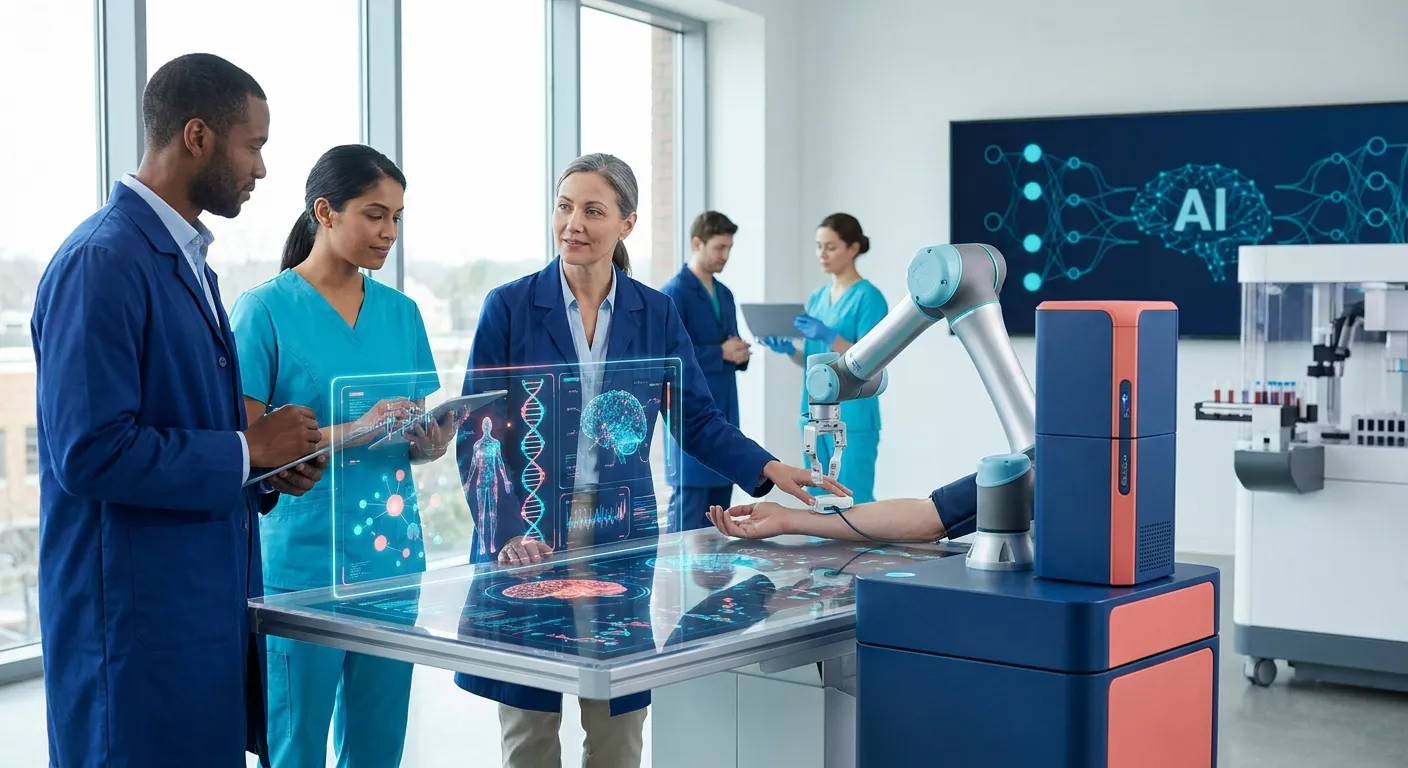
The landscape of healthcare is undergoing a profound transformation, driven by the advent of artificial intelligence. One of the most impactful applications is in AI Personalized Medicine, where individual patient data—including genomics, lifestyle, medical history, and real-time biometric information—is analyzed by AI to tailor prevention strategies, diagnoses, and treatments. This shift from a one-size-fits-all approach to highly individualized care promises to revolutionize patient outcomes, reduce adverse drug reactions, and optimize resource allocation within healthcare systems.
Healthcare has traditionally relied on generalized approaches. However, human biology is remarkably diverse. Consequently, a treatment effective for one patient might prove ineffective or even harmful for another. This inherent variability underscores the necessity for more individualized care models. Artificial intelligence offers a robust solution to this complex challenge. It processes vast quantities of data, identifying subtle patterns that human analysts might miss. This analytical capability is fundamental to the progression of bespoke medical interventions.
AI Personalized Medicine: Tailoring Treatments to Individuals
AI Personalized Medicine leverages sophisticated machine learning algorithms to process and interpret vast, complex datasets that would be impossible for humans to analyze efficiently. For example, AI can identify specific genetic markers that predict a patient’s response to certain medications, guiding oncologists to the most effective chemotherapy regimens with fewer side effects. It can also analyze wearable sensor data to detect early signs of chronic diseases, enabling proactive interventions. Furthermore, AI can predict disease progression, helping clinicians to develop highly customized preventative care plans. This level of precision ensures that each patient receives the most appropriate and effective care based on their unique biological and environmental profile.
The integration of artificial intelligence into medical practice represents a paradigm shift. Moreover, it moves healthcare from reactive to proactive. Consider genomics: AI algorithms can rapidly sequence and interpret a patient’s entire genome. This allows for the identification of predispositions to certain diseases or unique drug metabolism profiles. Consequently, physicians can prescribe medications with greater confidence, knowing they are best suited for the individual.
Beyond genomics, AI processes data from electronic health records, imaging scans, and even environmental factors. This holistic view provides a comprehensive understanding of a patient’s health status. In addition, machine learning models can learn from millions of patient cases. This continuous learning enhances their predictive power over time. Therefore, the accuracy of diagnoses and treatment recommendations improves consistently.
The Role of Data in Individualized Treatment
The foundation of effective individualized treatment rests heavily on comprehensive data. Patients generate immense amounts of data daily, from diet choices to sleep patterns. Wearable devices, for instance, collect real-time biometric information such as heart rate variability, activity levels, and sleep quality. This continuous stream of data offers unprecedented insights into an individual’s physiological state. Consequently, AI can detect subtle deviations from a patient’s baseline, often signaling the early onset of a condition before symptoms become apparent. This early detection is crucial for timely and effective intervention.
Furthermore, electronic health records (EHRs) provide a rich history of a patient’s medical journey. This includes past diagnoses, treatments, medication history, and lab results. When combined with genomic data, this information paints a detailed picture of an individual’s health profile. AI algorithms can then sift through these disparate data points, identifying correlations and causal relationships that inform highly specific treatment plans. For instance, in oncology, AI assists in selecting targeted therapies based on the genetic mutations present in a patient’s tumor. This precision minimizes harm to healthy cells while maximizing therapeutic effect.
Data security and ethical considerations are paramount when handling such sensitive information. Robust encryption and anonymization techniques are essential to protect patient privacy. Moreover, clear guidelines and regulations are necessary to govern the collection, storage, and use of health data. Public trust hinges on the responsible management of this data. Therefore, continuous advancements in cybersecurity are critical alongside the development of AI technologies.
Advancements in Predictive Analytics and Diagnostics
Predictive analytics, powered by AI, is revolutionizing disease management. Machine learning models can forecast disease progression, predict the likelihood of recurrence, and even anticipate patient responses to various therapies. For example, in diabetes management, AI analyzes blood glucose levels, diet, and activity data to predict hypoglycemic or hyperglycemic events. This allows patients and clinicians to adjust insulin dosages or lifestyle factors proactively. Such predictive capabilities enable a shift from reactive care to preventative strategies, significantly improving patient outcomes and reducing healthcare costs.
Diagnostic accuracy is another area where AI is making profound contributions. In radiology, AI algorithms can analyze medical images, such as X-rays, MRIs, and CT scans, with remarkable speed and precision. They can detect subtle abnormalities that might be missed by the human eye, assisting radiologists in identifying diseases like cancer, stroke, or neurological disorders earlier. Similarly, in pathology, AI can analyze tissue samples, classifying cells and detecting cancerous markers with high accuracy. These diagnostic aids enhance the efficiency and reliability of medical assessments, leading to more timely and effective treatment initiations.
The integration of AI into diagnostics also extends to rare diseases. Often, diagnosing rare conditions can take years, involving numerous specialists and extensive testing. However, AI can analyze a patient’s symptoms, genetic data, and medical history, cross-referencing them with vast databases of known conditions. This significantly shortens the diagnostic odyssey for patients with rare diseases, allowing for earlier access to appropriate care and support. The ability of AI to process and synthesize complex, multidisciplinary data sets is truly transformative for diagnostic medicine.
AI’s Role in Drug Discovery and Development
The process of drug discovery and development is notoriously long, expensive, and fraught with high failure rates. However, artificial intelligence is streamlining this critical phase of medical advancement. AI algorithms can analyze vast chemical libraries, predict the efficacy and toxicity of potential drug compounds, and even design novel molecules with desired properties. This accelerates the identification of promising drug candidates, reducing the time and resources required for preclinical research.
Furthermore, AI plays a pivotal role in optimizing clinical trials. It can identify ideal patient cohorts for trials based on genetic profiles and disease markers, ensuring that studies are conducted with the most relevant participants. This increases the likelihood of trial success and shortens the overall development timeline. AI also monitors patient responses during trials, detecting adverse events earlier and providing real-time insights into drug performance. Consequently, new treatments can reach patients faster and more efficiently. This advancement in drug development is essential for addressing unmet medical needs and bringing innovative therapies to market.
The application of AI extends beyond identifying new drugs; it also aids in drug repurposing. Many existing drugs, initially developed for one condition, may have therapeutic effects for others. AI can analyze molecular structures and disease pathways to identify potential new uses for approved drugs. This approach can significantly reduce development costs and timelines, as these drugs have already undergone safety testing. The strategic use of AI in drug discovery therefore promises to deliver more effective treatments to patients at a faster pace. For more information on AI in drug discovery, visit IBM Research.
Ethical Considerations and Future Outlook
The implementation of AI Personalized Medicine is already showing remarkable promise in areas like oncology, rare disease diagnosis, and pharmacogenomics. However, its widespread adoption also brings ethical considerations to the forefront. Data privacy and security are paramount, as highly sensitive patient information is at the core of these systems. Ensuring equitable access to these advanced treatments and avoiding algorithmic biases that could exacerbate health disparities are also critical challenges. As AI continues to evolve, ongoing dialogue between technologists, clinicians, policymakers, and patients will be essential to harness the full potential of personalized medicine responsibly. The goal is a healthier future where every treatment is as unique as the individual it serves, with AI Personalized Medicine leading the charge.
Addressing algorithmic bias is particularly crucial. AI models are trained on historical data. If this data reflects existing societal biases or underrepresents certain populations, the AI’s recommendations could perpetuate or even amplify health inequalities. For instance, if a model is predominantly trained on data from one demographic, its diagnostic accuracy might be lower for other groups. Therefore, diverse and representative datasets are essential for training fair and equitable AI systems. Developers and healthcare providers must actively work to identify and mitigate these biases to ensure that the benefits of individualized medical care are accessible to everyone.
Furthermore, the question of accountability in the event of an AI-related error is complex. Who is responsible if an AI system makes a diagnostic mistake or recommends an ineffective treatment? Is it the developer of the algorithm, the clinician who used it, or the hospital? Clear regulatory frameworks and legal guidelines are needed to address these emerging challenges. Transparency in AI decision-making processes, often referred to as ‘explainable AI,’ will also be vital. Clinicians need to understand how an AI system arrived at its recommendation to effectively integrate it into their practice and maintain patient trust.
The future of healthcare is undeniably intertwined with the evolution of artificial intelligence. As these technologies mature, we can expect even more sophisticated applications of individualized medical care. Imagine AI systems that continuously monitor a patient’s health, predicting potential issues before they arise and offering real-time, personalized interventions. Such a future promises not just better treatments, but a fundamental shift towards proactive health management. The potential for AI Personalized Medicine to extend healthy lifespans and improve quality of life on a global scale is immense. However, careful navigation of the ethical and societal implications will be key to realizing this transformative potential responsibly. For further reading on the ethics of AI in healthcare, consult sources like American Medical Association.
In conclusion, AI Personalized Medicine is revolutionizing healthcare by using individual patient data to tailor treatments, promising better outcomes and more efficient care. It moves beyond the traditional one-size-fits-all approach, embracing the unique biological and environmental profiles of each patient. From genomics to predictive analytics, AI is enabling a new era of precision. While challenges remain, particularly concerning data privacy and equitable access, the ongoing advancements in AI technology, coupled with thoughtful ethical considerations, position AI Personalized Medicine as a cornerstone of future healthcare. This innovative field will undoubtedly redefine how we prevent, diagnose, and treat diseases, leading to a healthier and more individualized future for all.
Frequently Asked Questions About Individualized Medical Care
What is individualized medical care?
Individualized medical care, often called precision medicine, tailors prevention, diagnosis, and treatment strategies to each patient’s unique genetic makeup, lifestyle, and environmental factors. It moves away from generalized approaches to provide highly specific interventions.
How does artificial intelligence enhance personalized healthcare?
Artificial intelligence enhances personalized healthcare by analyzing vast, complex datasets—including genomic, clinical, and lifestyle data—to identify patterns and make predictions. This enables more accurate diagnoses, targeted treatments, and proactive health management strategies.
What are the benefits of using AI for personalized treatments?
The benefits include improved patient outcomes, reduced adverse drug reactions, earlier disease detection, more efficient drug discovery, and optimized resource allocation in healthcare systems. It allows for highly specific and effective interventions.
What ethical challenges are associated with AI-driven personalized healthcare?
Key ethical challenges include ensuring data privacy and security, preventing algorithmic biases that could exacerbate health disparities, and ensuring equitable access to advanced treatments. Establishing clear accountability for AI-driven decisions is also crucial.
Will AI replace doctors in delivering personalized medical care?
No, AI is not expected to replace doctors. Instead, it serves as a powerful tool that augments clinicians’ capabilities. AI provides insights and recommendations, allowing doctors to make more informed decisions and deliver more precise and effective patient care. The human element of empathy and complex decision-making remains vital.
Explore more: More from TechZone AI


Leave feedback about this