
Modern factories operate in an environment that demands speed, accuracy, and scalability. As a result, robotics manufacturing workflows have become a core component of efficient production systems.
Manufacturers now rely on robotic automation to handle repetitive tasks, reduce human error, and maintain consistent quality. Moreover, these systems allow companies to operate continuously with minimal downtime.
Because global competition continues to grow, businesses must optimize every stage of production. Consequently, robotic technologies play a critical role in improving efficiency and productivity.
Additionally, automation systems can collect and analyze operational data in real time. This capability helps organizations make smarter decisions and improve workflow management.
In this guide, you will learn how robotics manufacturing workflows transform industrial processes, which technologies drive these systems, and how companies can successfully implement automation strategies.
The Role of Robotics in Modern Manufacturing
Manufacturing has evolved significantly over the past several decades. Initially, factories relied heavily on manual labor and mechanical tools.
However, technological innovation introduced programmable machines that could perform tasks automatically. Today, robotics manufacturing workflows allow factories to complete complex operations with remarkable precision.
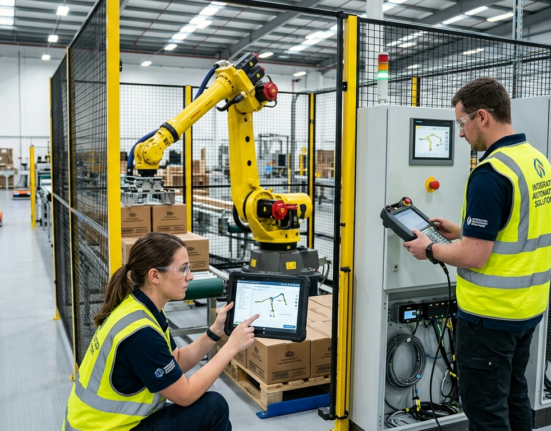
Industrial robots can perform tasks such as assembly, welding, packaging, and inspection. Furthermore, they operate with consistent accuracy regardless of production volume.
Another advantage involves speed. Robots can complete tasks faster than human workers in many cases. Therefore, manufacturers can increase output while maintaining high quality standards.
In addition, automation improves workplace safety. Dangerous or repetitive tasks can be handled by robotic systems instead of human employees.
Because of these benefits, robotics has become an essential component of modern industrial production systems.
Key Components of Robotics Manufacturing Systems
Successful automation requires several integrated technologies working together. These components form the foundation of effective robotics manufacturing workflows.
Industrial Robots
Industrial robots perform the physical tasks within automated systems.
These machines include robotic arms, mobile robots, and specialized automation tools. Each robot is designed to perform specific tasks within the production process.
For example, robotic arms commonly handle assembly and welding operations. Meanwhile, mobile robots transport materials across factory floors.
Because robots can be programmed for different operations, manufacturers gain flexibility in production.
Sensors and Vision Systems
Sensors help robots interact with their environment.
These devices detect position, motion, temperature, and pressure. As a result, robotic systems can adjust operations in real time.
Vision systems add another layer of intelligence. Cameras and image recognition software allow robots to identify objects and inspect products.
These technologies play an important role in advanced robotics manufacturing workflows because they enable precision and adaptability.
Automation Software
Software platforms coordinate robotic activities across production lines.
These systems control scheduling, process monitoring, and performance optimization. Moreover, automation software integrates robotics with other digital manufacturing systems.
This integration ensures smooth communication between machines, sensors, and operators.
Data Analytics Platforms
Modern factories rely on data-driven decision making.
Analytics platforms collect operational data from robotic equipment and production systems. Then, the software analyzes this information to identify inefficiencies.
Manufacturers can use these insights to improve robotics manufacturing workflows and optimize production performance.
Benefits of Robotics in Manufacturing Workflows
Robotic automation provides many advantages for industrial operations.
Organizations that implement robotics manufacturing workflows often experience measurable improvements in productivity and efficiency.
Increased Production Speed
Robots perform repetitive tasks quickly and consistently.
Because they operate without fatigue, production lines can run continuously for extended periods. Consequently, manufacturers increase output while maintaining consistent quality.
Faster production cycles help companies meet growing customer demand.
Improved Quality Control
Robotic systems operate with extremely high precision.
This accuracy reduces defects and ensures consistent product quality. Furthermore, automated inspection systems can detect issues that human workers might miss.
As a result, manufacturers reduce waste and improve customer satisfaction.
Lower Operational Costs
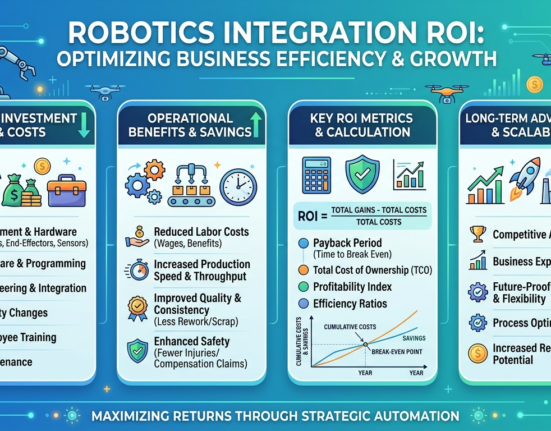
Although automation requires an initial investment, it often reduces long-term operational costs.
Robots require less maintenance than traditional machinery and can work around the clock. Therefore, companies often achieve higher efficiency and lower labor expenses.
Over time, these savings significantly improve profitability.
Enhanced Workplace Safety
Certain manufacturing tasks involve dangerous environments.
Robots can handle hazardous operations such as heavy lifting, chemical exposure, and high-temperature processes. Consequently, employees face fewer workplace risks.
Safer environments lead to improved employee satisfaction and fewer workplace accidents.
Implementing Robotics in Manufacturing Operations
Adopting automation requires careful planning and strategy. Companies must evaluate their production needs before introducing robotics manufacturing workflows.
Assess Current Production Processes
The first step involves analyzing existing manufacturing operations.
Managers should identify repetitive tasks, bottlenecks, and error-prone processes. These areas often represent the best opportunities for automation.
Additionally, evaluating workflow efficiency helps determine where robotics can deliver the most value.
Select Appropriate Robotics Technology
Not every production task requires the same type of robot.
Manufacturers must select machines that match their operational needs. For instance, collaborative robots work well alongside human workers.
Meanwhile, industrial robotic arms perform high-speed manufacturing tasks.
Choosing the right equipment ensures successful integration into robotics manufacturing workflows.
Train Employees and Technical Teams
Automation does not eliminate the need for skilled workers.
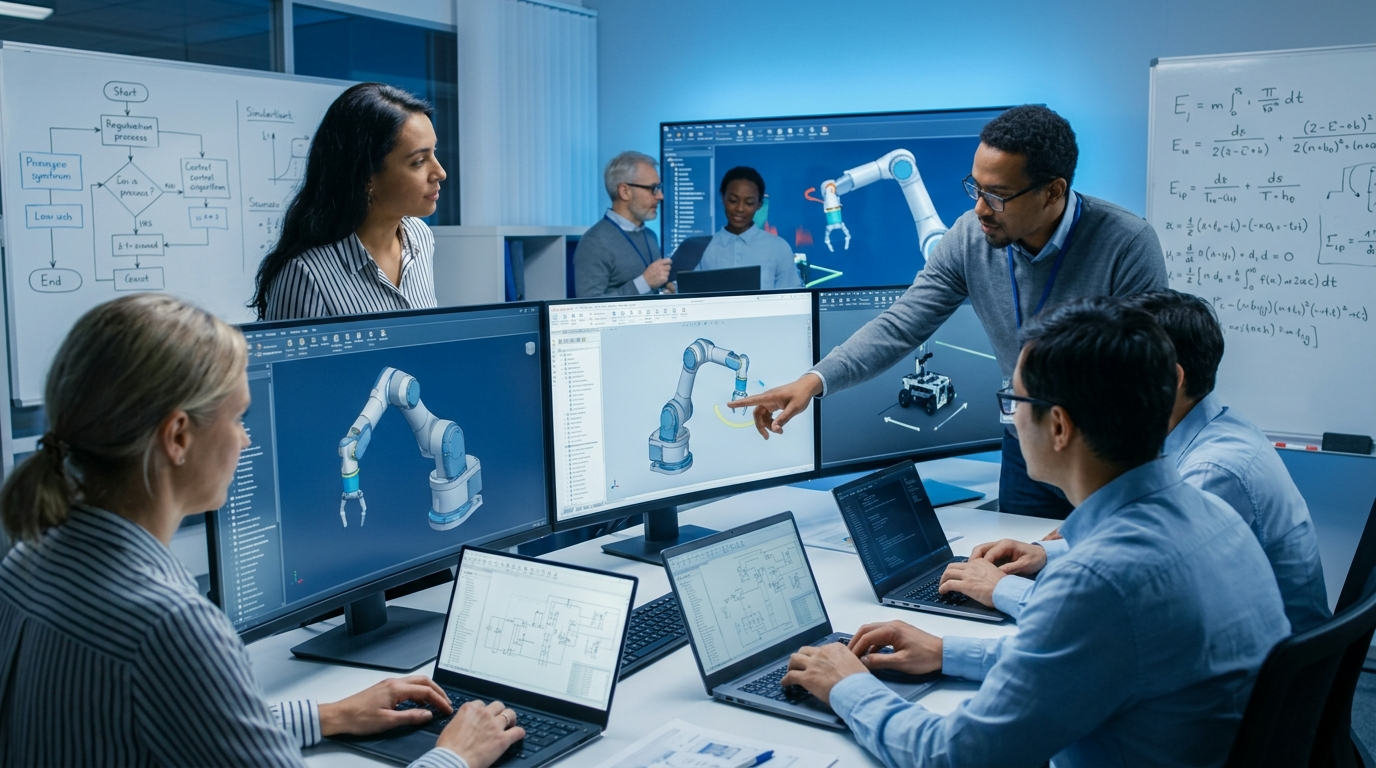
Instead, employees must learn how to operate, monitor, and maintain robotic systems. Training programs help workers develop new technical skills.
Consequently, organizations build stronger teams capable of managing advanced automation systems.
Integrate Robotics with Digital Systems
Modern manufacturing relies on interconnected technologies.
Therefore, robotic systems should integrate with enterprise resource planning software and production monitoring platforms.
This integration improves visibility across operations and enhances overall workflow management.
Challenges of Robotics Adoption
Despite its advantages, automation also presents certain challenges.
Organizations must address these obstacles when implementing robotics manufacturing workflows.
High Initial Investment
Robotic equipment and infrastructure require significant upfront costs.
Small manufacturers may struggle to invest in automation without careful financial planning.
However, many organizations recover these costs through long-term productivity improvements.
Technical Integration Complexity
Integrating robots with existing manufacturing systems can be complicated.
Factories often rely on legacy equipment that was not designed for modern automation.
Therefore, engineers must carefully design integration strategies to ensure compatibility.
Workforce Adaptation
Employees may feel uncertain about automation technologies.
Clear communication and training programs help address these concerns.
By emphasizing collaboration between humans and machines, companies can create a supportive workplace culture.
Future Trends in Manufacturing Robotics
Automation technology continues to evolve rapidly.
As a result, the future of robotics manufacturing workflows will likely involve even more intelligent systems.
One emerging trend involves collaborative robots, often called cobots. These machines work safely alongside human workers and assist with complex tasks.
Another development involves artificial intelligence integration.
AI-powered robots can analyze data, learn from experience, and improve performance over time.
Additionally, mobile robots are transforming material transport within factories.
These autonomous systems move supplies across production floors without human assistance.
Cloud-based manufacturing platforms are also gaining popularity.
They allow companies to monitor robotic operations remotely and manage production data in real time.
Finally, predictive maintenance technologies help manufacturers detect equipment problems before failures occur.
These innovations ensure robotic systems remain reliable and efficient.
Conclusion
Manufacturing companies must continually improve efficiency to remain competitive. Therefore, automation technologies have become essential tools for modern production.
By implementing robotics manufacturing workflows, organizations can increase productivity, improve quality, and reduce operational costs.
Robotic systems handle repetitive tasks with exceptional accuracy and speed. Meanwhile, data-driven insights help managers optimize production processes.
Although automation requires careful planning and investment, the long-term benefits are significant.
Manufacturers that embrace robotics can scale operations, improve safety, and deliver higher-quality products.
As technology continues to evolve, robotics will play an even greater role in industrial innovation.
Companies that adopt these systems early will be better positioned to succeed in the rapidly changing manufacturing landscape.
FAQ
1. How do robots improve factory productivity?
Robots perform repetitive tasks faster and with greater consistency than manual labor. This efficiency allows factories to increase production while maintaining quality standards.
2. Are robotic systems expensive to implement?
Automation requires an initial investment. However, many companies recover these costs through improved productivity and lower long-term operating expenses.
3. What industries benefit most from manufacturing automation?
Industries such as automotive, electronics, food processing, and pharmaceuticals frequently use robotic systems to improve production efficiency.
4. Can robots work safely alongside human workers?
Yes. Collaborative robots are designed to operate safely near people. They assist workers by handling repetitive or physically demanding tasks.
5. What skills do employees need in automated factories?
Workers often need technical skills related to robotics programming, equipment maintenance, and data analysis to support modern manufacturing systems.