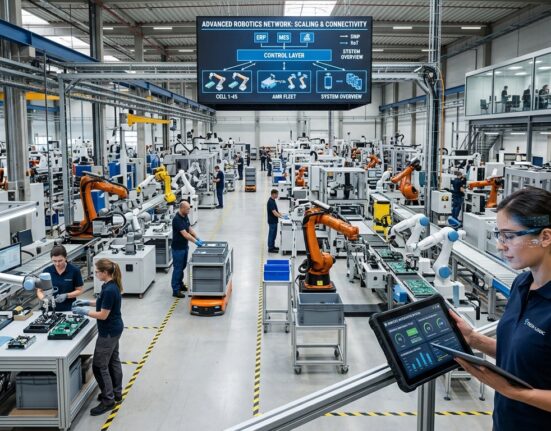

Robotics manufacturing integration is no longer about ripping out old systems and starting over. For most manufacturers, that approach is too risky, too expensive, and too disruptive. Instead, success today depends on integrating robotics seamlessly into what already exists.
Manufacturing environments are complex ecosystems. Machines, software, workflows, and people are tightly connected. A single change can ripple across the entire operation. That is why robotics manufacturing integration must be deliberate, incremental, and deeply aligned with current systems.
This article explores how manufacturers can integrate robotics smoothly into existing operations, avoid costly disruptions, and unlock productivity gains without breaking what already works.
Why Robotics Manufacturing Integration Matters More Than Ever
Manufacturers face mounting pressure. Labor shortages persist. Costs rise. Quality expectations increase. At the same time, downtime has never been more expensive.
Robotics manufacturing integration matters because it allows organizations to modernize without stopping production. Instead of betting everything on a full overhaul, teams can enhance specific processes while maintaining continuity.
Well-executed integration helps manufacturers:
- Improve throughput without major shutdowns
- Reduce reliance on manual labor
- Enhance consistency and quality
- Extend the life of existing assets
Integration is not about speed. It is about stability.
Understanding Existing Manufacturing Ecosystems
Before robots are introduced, environments must be understood.
Manufacturing systems evolve over decades. Legacy equipment, custom software, and informal workarounds coexist. Ignoring this reality leads to integration failure.
Successful robotics manufacturing integration begins with a clear understanding of:
- Current production workflows
- Equipment interfaces and constraints
- Data availability and formats
- Human roles and dependencies
Robots must adapt to the system, not the other way around.
Identifying the Right Processes for Robotics Integration
Not every task should be automated.
The goal is not maximum automation. The goal is meaningful automation. Robotics manufacturing integration works best when focused on tasks that strain people or limit throughput.
Ideal candidates often include:
- Repetitive material handling
- Precision assembly steps
- Quality inspection tasks
- Hazardous or ergonomically difficult work
Starting with the right processes builds confidence and early wins.
Incremental Integration Over Disruptive Change
Big changes feel impressive. Small changes last longer.
Robotics manufacturing integration succeeds when implemented incrementally. Pilots validate assumptions. Lessons are learned early. Risk is contained.
Incremental integration supports:
- Minimal production disruption
- Faster troubleshooting
- Gradual workforce adaptation
- Continuous improvement
This approach turns automation into evolution rather than shock.
Compatibility with Legacy Equipment
Legacy equipment is often the biggest challenge.
Older machines were not designed for robotics connectivity. Interfaces may be limited. Documentation may be outdated.
Robotics manufacturing integration must account for:
- Mechanical compatibility
- Control system integration
- Safety interlocks
- Data exchange limitations
Adapters, sensors, and middleware often bridge these gaps without replacing core assets.
Software and Control System Alignment
Robots do not operate in isolation.
They must coordinate with manufacturing execution systems, quality systems, and scheduling tools. Misalignment creates delays and errors.
Effective robotics manufacturing integration ensures:
- Clear communication between systems
- Synchronized workflows
- Reliable data handoffs
- Unified monitoring and reporting
Software alignment is as critical as mechanical fit.
Data Integration and Visibility
Automation generates data. That data must be usable.
Robotics manufacturing integration should enhance visibility, not fragment it. Disconnected data silos reduce value.
Strong integration supports:
- Real-time performance monitoring
- Traceability across processes
- Predictive maintenance insights
- Continuous optimization
Data turns robots from tools into intelligence sources.
Human-Centered Robotics Manufacturing Integration
People remain central to manufacturing success.
Robots change how work is done. They do not eliminate the need for human judgment. Ignoring the human element undermines adoption.
Human-centered integration focuses on:
- Redesigning roles thoughtfully
- Providing clear training pathways
- Preserving human oversight
- Improving safety and ergonomics
When workers feel supported, integration accelerates.
Training and Skill Development
Unfamiliar systems create hesitation.
Robotics manufacturing integration depends on training that builds confidence, not fear. Teams must understand how robots behave and how to respond when issues arise.
Effective training covers:
- Normal operation and workflows
- Safety procedures
- Basic troubleshooting
- Collaboration between humans and robots
Training transforms automation from mystery into mastery.
Safety as a Core Integration Principle
Safety cannot be compromised.
Robotics manufacturing integration must meet strict safety standards. Collaborative robots, sensors, and barriers play a key role.
Safety-focused integration includes:
- Risk assessments before deployment
- Physical and digital safeguards
- Emergency stop mechanisms
- Ongoing safety audits
Trust in automation begins with safety assurance.
Minimizing Downtime During Integration
Downtime erodes confidence.
Manufacturers cannot afford extended shutdowns. Integration plans must prioritize continuity.
Strategies to reduce disruption include:
- Off-line testing and simulation
- Staged deployment during low-demand periods
- Parallel operation before full transition
- Clear rollback procedures
Preparation prevents costly surprises.
Maintenance and Long-Term Support Planning
Integration does not end at deployment.
Robots require maintenance. Software needs updates. Processes evolve.
Robotics manufacturing integration planning must include:
- Maintenance responsibilities
- Spare parts strategy
- Vendor support agreements
- Internal capability development
Sustainable integration anticipates long-term needs.
Balancing Standardization and Flexibility
Standardization simplifies operations. Flexibility supports adaptation.
Robotics manufacturing integration must balance both. Over-standardization limits innovation. Excessive customization increases complexity.
Balanced integration promotes:
- Reusable automation modules
- Configurable workflows
- Scalable architectures
- Controlled customization
This balance supports growth without chaos.
Measuring Integration Success
Success must be measurable.
Robotics manufacturing integration should be evaluated using clear metrics aligned with business goals.
Common indicators include:
- Throughput improvement
- Defect reduction
- Downtime changes
- Safety incident reduction
- Employee adoption rates
Measurement turns integration into learning.
Common Pitfalls in Robotics Manufacturing Integration
Many failures are preventable.
Common mistakes include:
- Underestimating legacy complexity
- Ignoring workforce concerns
- Rushing deployment
- Focusing on technology over process
Awareness of these pitfalls increases success rates significantly.
Scaling Robotics Integration Across Facilities
Success in one line creates momentum.
Scaling requires consistency without rigidity. Lessons from pilots must transfer effectively.
Successful scaling relies on:
- Standard integration frameworks
- Knowledge sharing between sites
- Central governance with local flexibility
- Continuous feedback loops
Scaling should feel familiar, not disruptive.
The Strategic Value of Seamless Integration
Seamless integration creates resilience.
Manufacturers that integrate robotics thoughtfully adapt faster to demand changes, labor shifts, and market pressure.
Strategic benefits include:
- Faster time to value
- Lower operational risk
- Improved workforce satisfaction
- Sustainable productivity gains
Integration becomes a competitive advantage.
Conclusion
Robotics manufacturing integration is not about replacing existing systems. It is about enhancing them. By respecting legacy environments, prioritizing people, and deploying automation incrementally, manufacturers can modernize without disruption.
Seamless integration transforms robotics from a disruptive force into a reliable partner. When done right, productivity rises, risk falls, and manufacturing systems become stronger, not fragile. The future of automation belongs to those who integrate with intention.
FAQ
1. What is robotics manufacturing integration?
It is the process of introducing robotics into existing manufacturing systems without disrupting current operations.
2. Why is seamless integration important in manufacturing?
Because downtime, safety risks, and workforce resistance can undermine automation benefits.
3. Can robotics be integrated with legacy manufacturing equipment?
Yes. With proper interfaces, sensors, and planning, robots can work alongside legacy systems effectively.
4. How long does robotics integration typically take?
Timelines vary, but incremental integration allows value to be delivered quickly while minimizing risk.
5. What is the biggest risk in robotics manufacturing integration?
Ignoring human, safety, and system compatibility factors often leads to failed adoption.