

Robotics automation workforce upskilling is no longer a future concern. It is a present-day requirement. Robots are entering factories, warehouses, hospitals, and offices faster than most organizations can adapt. Machines arrive ready to work. People often are not.
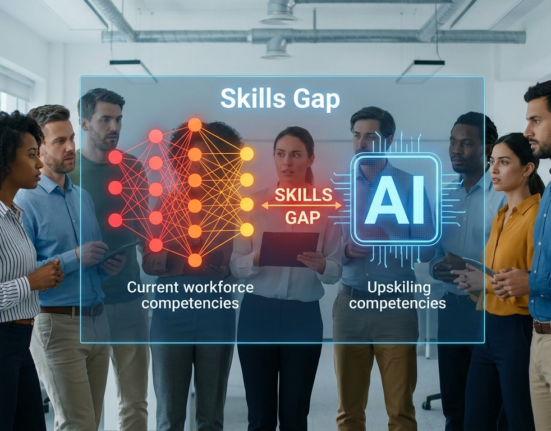
That mismatch creates frustration. Leaders invest heavily in automation, yet productivity gains lag behind expectations. The issue is rarely the technology. More often, it is the skills gap surrounding it.
Upskilling bridges that gap. It turns robotics from an impressive tool into a dependable productivity engine. When people understand, trust, and collaborate with automation, performance improves naturally.
This article explores how workforce upskilling drives robotics automation productivity, why it matters now, and how organizations can build skills without disrupting operations.
Why Workforce Upskilling Matters in Robotics Automation
Automation multiplies output. It also multiplies complexity.
Robots change how work gets done. They alter workflows, decision-making, and responsibility. Without the right skills, employees struggle to keep pace.
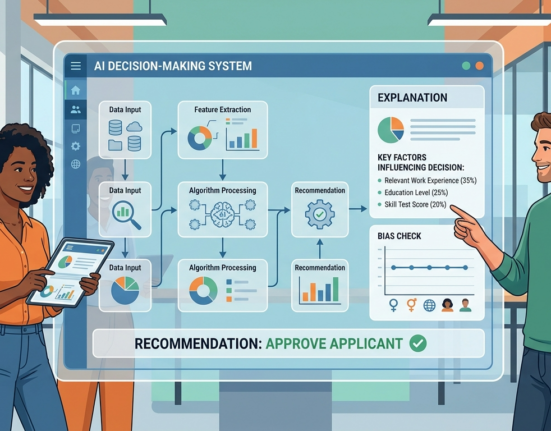
Robotics automation workforce upskilling matters because people remain central to automated systems. Humans configure robots, interpret data, and respond when things change.
When skills lag behind technology, productivity stalls. When skills advance alongside it, automation delivers on its promise.
Upskilling is not about replacing people. It is about enabling them.
Understanding the Productivity Gap in Automation Projects
Many automation initiatives promise efficiency gains. Some deliver less than expected.
The productivity gap often appears after deployment. Robots function correctly, yet output fails to rise. Downtime increases. Errors persist.
Why does this happen? Because productivity depends on human interaction with machines.
Robotics automation workforce upskilling addresses this gap by improving confidence, competence, and collaboration. Skilled teams adapt faster. They troubleshoot effectively. They optimize continuously.
Productivity grows when people grow.
How Robotics Automation Changes Skill Requirements
Automation reshapes roles.
Manual tasks decline. Monitoring, analysis, and decision-making increase. Workers move from hands-on execution to system oversight.
This shift requires new skills. Technical literacy matters. Problem-solving becomes critical. Communication grows more important.
Robotics automation workforce upskilling prepares teams for this transition. It replaces fear with capability.
Skills evolve. Roles transform. Value increases.
Technical Skills Needed for Robotics Productivity
Technical skills form the foundation.
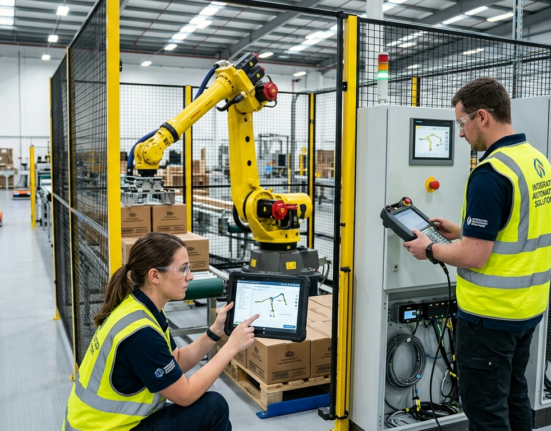
Operators need to understand robot interfaces, safety systems, and basic troubleshooting. Maintenance teams require deeper knowledge of sensors, controllers, and software.
Engineers need integration skills across hardware and digital systems.
Robotics automation workforce upskilling builds these competencies progressively. Training matches role complexity.
Technical confidence reduces downtime and reliance on external support.
Digital Literacy as a Core Upskilling Component
Modern robots generate data.
Performance metrics, logs, and alerts flow continuously. Without digital literacy, data becomes noise.
Upskilling includes teaching teams how to read dashboards, interpret trends, and act on insights.
Robotics automation workforce upskilling transforms data into decisions.
Digital fluency turns information into productivity gains.
Problem-Solving and Critical Thinking Skills
Automation does not eliminate problems. It changes their nature.
Unexpected inputs, edge cases, and system interactions require human judgment. Robots handle routine tasks well. Humans handle ambiguity better.
Upskilling strengthens analytical thinking. Teams learn how to diagnose issues methodically.
Robotics automation workforce upskilling emphasizes reasoning over rote action.
Critical thinking keeps systems resilient.
Soft Skills and Human Collaboration
Productivity is not purely technical.
Communication, teamwork, and adaptability matter deeply. Automation introduces change. Change creates uncertainty.
Upskilling programs that include soft skills prepare teams to collaborate effectively.
Robotics automation workforce upskilling builds trust between people and technology.
Strong collaboration accelerates learning and performance.
Safety Training as a Productivity Enabler
Safety and productivity are linked.
Untrained workers hesitate around robots. Fear slows work. Mistakes increase risk.
Upskilling includes robust safety education. Teams understand boundaries, safeguards, and emergency procedures.
Robotics automation workforce upskilling reduces accidents and anxiety.
Confidence enables speed.
From Task Training to System Thinking
Traditional training focuses on tasks.
Automation demands system thinking. Workers must understand how processes connect end-to-end.
Upskilling shifts perspective from isolated actions to holistic workflows.
Robotics automation workforce upskilling teaches how changes in one area affect the whole system.
System thinking supports optimization.
Upskilling Operators for Day-to-Day Productivity
Operators interact with robots daily.
They start, stop, monitor, and adjust systems. Their skill level directly affects output.
Upskilling programs for operators focus on usability, diagnostics, and basic optimization.
Empowers operators to solve small issues quickly.
Less waiting means more productivity.
Maintenance Upskilling and Reliability Gains
Maintenance teams keep automation running.
Predictive maintenance, diagnostics, and software updates require new skills.
Upskilling reduces reactive fixes. It supports proactive care.
Robotics automation workforce upskilling improves uptime and extends asset life.
Reliability feeds productivity.
Engineering Upskilling for Continuous Improvement
Engineers refine automation over time.
They integrate new processes, update logic, and improve performance.
Upskilling ensures engineers stay current with robotics platforms and standards.
Robotics automation workforce upskilling fuels continuous improvement.
Innovation thrives with capable engineers.
Leadership Skills in Automated Environments
Leaders guide transformation.
They manage expectations, allocate resources, and shape culture. Without understanding automation, leadership decisions suffer.
Upskilling leaders improves alignment between strategy and execution.
leadership levels ensures informed decisions.
Clarity supports momentum.
Change Management and Learning Culture
Automation introduces change. Change triggers resistance.
Upskilling works best within a learning culture. Employees feel supported, not threatened.
integrates change management principles.
Clear communication reduces fear.
Learning becomes normal.
Designing Effective Upskilling Programs
Not all training works.
Effective programs align with real workflows. They combine theory with hands-on practice.
Robotics automation workforce upskilling succeeds when training feels relevant and practical.
Short modules, real examples, and continuous reinforcement matter.
Relevance drives engagement.
On-the-Job Learning and Productivity
Classroom training has limits.
On-the-job learning embeds skills into daily work. Mentorship, shadowing, and guided practice reinforce knowledge.
Robotics automation workforce upskilling benefits from experiential learning.
Doing accelerates understanding.
Experience builds confidence.
Using Simulation and Digital Twins
Simulation tools enhance learning.
Digital twins allow teams to practice without risk. Mistakes become lessons, not incidents.
Upskilling programs that use simulation shorten learning curves.
Robotics automation workforce upskilling becomes safer and faster.
Practice builds mastery.
Upskilling Without Disrupting Operations
Training must respect productivity demands.
Organizations cannot pause operations for months. Flexible learning models help.
Microlearning, blended formats, and phased training reduce disruption.
Robotics automation workforce upskilling integrates into daily work.
Learning and productivity coexist.
Measuring the Impact of Upskilling
Training without measurement wastes effort.
Productivity metrics, downtime reduction, and error rates reveal impact.
Robotics automation workforce upskilling should link learning outcomes to business results.
Measurement guides improvement.
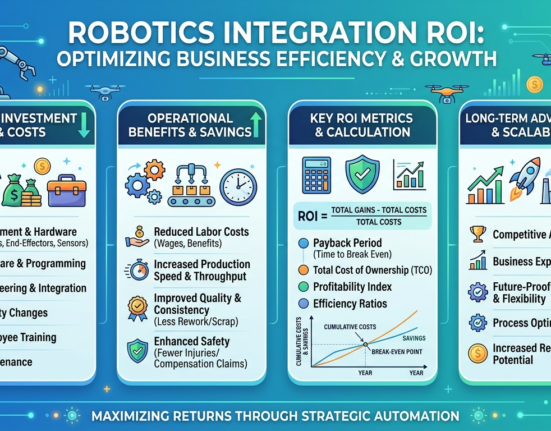
Results justify investment.
Addressing Fear of Job Loss Through Upskilling
Automation anxiety is real.
Employees fear replacement. Fear undermines engagement.
Upskilling reframes automation as opportunity. New skills create new roles.
Robotics automation workforce upskilling builds security through capability.
Confidence replaces fear.
Equity and Access in Upskilling Efforts
Upskilling should be inclusive.
Opportunities must reach all levels, not just specialists. Frontline workers deserve investment too.
Robotics automation workforce upskilling supports equity when designed thoughtfully.
Broad participation strengthens teams.
Inclusion fuels resilience.
Upskilling in Small and Mid-Sized Organizations
Upskilling is not just for large enterprises.
Smaller organizations face tighter budgets. Creative approaches matter.
Partnerships, online learning, and vendor training support smaller teams.
Robotics automation workforce upskilling scales to fit context.
Size does not limit potential.
The Role of Vendors and Partners
Vendors influence skill development.
Training support, documentation, and knowledge transfer matter.
Organizations should evaluate vendors on learning support, not just technology.
Robotics automation workforce upskilling benefits from strong partnerships.
Shared success builds value.
Continuous Learning in a Rapidly Evolving Field
Robotics evolves quickly.
Skills age. New tools emerge. Continuous learning becomes essential.
Upskilling is not a one-time event. It is an ongoing process.
Robotics automation workforce upskilling thrives on adaptability.
Learning keeps pace with change.
The Future of Work and Robotics Productivity
The future of work blends humans and machines.
Productivity will depend on collaboration, not replacement.
Upskilling prepares workers for this reality. It ensures automation enhances human potential.
Robotics automation workforce upskilling defines competitive advantage.
Prepared teams outperform.
Building Long-Term Productivity Through Skills
Short-term gains fade without skills.
Long-term productivity grows from capable, confident teams.
Upskilling investments compound over time.
Robotics automation workforce upskilling delivers sustainable value.
Skills outlast tools.
Conclusion
Robotics automation workforce upskilling is the missing link between advanced technology and real productivity. Robots alone do not create value. People do, when they have the skills to guide, manage, and improve automated systems.
By investing in technical, digital, and human skills, organizations unlock the full potential of robotics. Upskilling reduces downtime, increases confidence, and supports continuous improvement. Most importantly, it ensures automation works for people, not against them.
The future of productivity belongs to teams that learn as fast as their machines.
FAQ
1. What is robotics automation workforce upskilling?
It is the process of training employees to work effectively with robotics and automated systems.
2. Why is upskilling important for automation productivity?
Because skilled workers reduce downtime, improve performance, and adapt systems over time.
3. Does upskilling reduce fear of automation?
Yes. Learning new skills builds confidence and job security.
4. Can small organizations afford workforce upskilling?
Yes. Flexible training models and partnerships make it accessible.
5. Is upskilling a one-time effort?
No. Continuous learning is essential as robotics technology evolves.