
Robotics automation trust is the quiet force behind every successful productivity transformation. Machines may move faster than people, but trust moves organizations forward. Without it, automation stalls, adoption slows, and promised gains never fully materialize.
Across industries, robotics automation is reshaping how work gets done. Repetitive tasks are handled by machines. Precision improves. Output increases. Yet productivity gains do not come from technology alone. They come from people believing that automated systems are reliable, safe, and aligned with human goals.
This article explores how robotics automation trust is built, why it matters for productivity, and what organizations must do to earn confidence from workers, leaders, and stakeholders alike.
Why Robotics Automation Trust Is the Foundation of Productivity
Productivity depends on adoption. Adoption depends on trust.
When teams distrust automation, they hesitate. They override systems. They avoid relying on robotic processes. As a result, productivity gains remain theoretical rather than real.
Robotics automation trust matters because it:
- Encourages consistent system use
- Reduces manual workarounds
- Improves collaboration between humans and machines
- Supports long-term operational stability
Without trust, automation becomes an expensive experiment. With trust, it becomes dependable infrastructure.
Understanding Trust in Robotics Automation
Trust is not blind faith. It is informed confidence.
In automation, trust develops when systems behave predictably, communicate clearly, and align with human expectations. People trust machines that do what they promise and fail safely when problems occur.
Robotics automation trust grows when systems are:
- Transparent in operation
- Reliable over time
- Designed with safety in mind
- Supported by clear governance
Trust is earned gradually through experience, not announcements.
The Human Perception of Automated Systems
People do not resist automation because they dislike technology. They resist uncertainty.
Robotics automation trust depends heavily on perception. Workers ask practical questions.
Organizations build trust by addressing these concerns directly through:
- Clear communication
- Inclusive design processes
- Training and education
- Honest discussion of limitations
When people feel informed, resistance fades.
Robotics Automation Trust and Workplace Safety
Safety is non-negotiable.
In physical environments, robotics automation trust begins with confidence that machines will not cause harm. Safety incidents destroy trust instantly.
Trust is strengthened when organizations prioritize:
- Certified safety standards
- Clear physical safeguards
- Emergency stop mechanisms
- Continuous safety monitoring
When workers feel protected, they engage with automation more confidently.
Transparency as a Driver of Robotics Automation Trust
Opaque systems create fear.
Robotics automation trust improves when systems are understandable. People do not need to know every technical detail, but they need clarity about behavior and boundaries.
Transparency builds trust through:
- Clear system documentation
- Visible operating states
- Understandable performance metrics
- Honest reporting of issues
Transparency turns automation from a black box into a known collaborator.
Reliability and Consistency Build Confidence
Trust grows through repetition.
Robotics automation trust increases when systems perform consistently day after day. Unpredictable behavior erodes confidence quickly.
Reliable automation delivers:
- Stable output quality
- Predictable response times
- Minimal unplanned downtime
- Graceful handling of errors
Consistency reassures users that systems can be depended upon under pressure.
Human-in-the-Loop Design and Trust
Automation should not remove human agency.
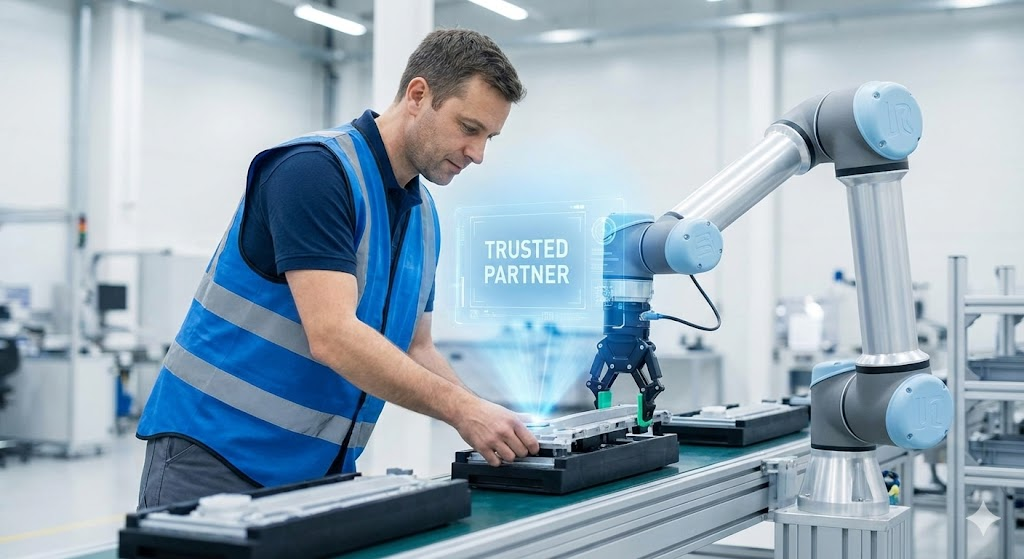
Robotics automation trust strengthens when humans retain oversight and control. Systems that allow intervention feel safer and more respectful.
Human-in-the-loop design supports trust by:
- Allowing manual overrides
- Supporting supervision and review
- Escalating uncertain decisions
- Preserving accountability
Shared control builds confidence and reduces fear.
Training as a Trust Accelerator
Unfamiliar systems feel threatening.
Robotics automation trust grows faster when teams are trained properly. Training reduces uncertainty and builds competence.
Effective training focuses on:
- System purpose and limitations
- Normal and abnormal operation
- Safety procedures
- Troubleshooting basics
When people understand automation, they stop fearing it.
Leadership’s Role in Building Robotics Automation Trust
Trust starts at the top.
Leaders shape perception through words and actions. If leadership treats automation as disposable or secretive, teams follow suit.
Strong leadership builds robotics automation trust by:
- Communicating clearly and consistently
- Involving employees early
- Addressing concerns openly
- Demonstrating commitment to safety and fairness
Trust flows downward through behavior, not slogans.
Ethics and Fairness in Automated Productivity
Productivity should not come at the cost of dignity.
Robotics automation trust depends on ethical deployment. Surveillance-heavy systems, unfair monitoring, or opaque performance scoring undermine morale.
Ethical automation prioritizes:
- Respect for worker privacy
- Fair performance measurement
- Transparency in data use
- Responsible workforce transitions
Ethics protects trust as much as technology does.
Robotics Automation Trust and Job Security Concerns
Fear of displacement is real.
Even when automation improves productivity, workers worry about their future. Ignoring this fear undermines trust.
Organizations build trust by:
- Communicating workforce plans honestly
- Investing in reskilling
- Redefining roles rather than eliminating them
- Sharing productivity gains fairly
Trust grows when people see opportunity instead of threat.
Measuring Trust Alongside Productivity
What gets measured gets managed.
Organizations often track output and efficiency but ignore trust indicators. That imbalance creates blind spots.
Trust can be assessed through:
- Adoption rates
- Manual override frequency
- Incident reports
- Employee feedback
Robotics automation trust is measurable and manageable.
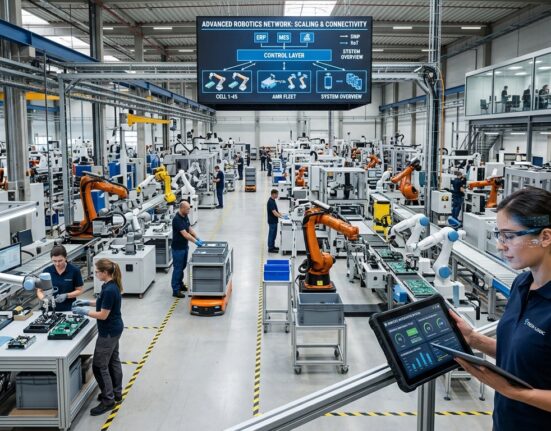
Scaling Automation Without Losing Trust
Early pilots often succeed. Scaling introduces risk.
As automation expands, maintaining trust becomes harder. Systems grow complex. Communication gaps appear.
Trust is preserved during scaling by:
- Standardizing safety practices
- Maintaining transparency
- Updating training continuously
- Monitoring system behavior closely
Scaling responsibly protects long-term productivity gains.
Resilience and Trust During Failures
Failures are inevitable. Responses matter.
Robotics automation trust is tested most during incidents. Systems that fail safely and recover quickly preserve confidence.
Trust-preserving responses include:
- Clear incident communication
- Fast remediation
- Honest root-cause analysis
- Visible improvement actions
Handled well, failures can actually strengthen trust.
The Link Between Trust and Long-Term Productivity
Short-term gains are easy. Sustainable productivity is hard.
Robotics automation trust enables long-term productivity by reducing friction, resistance, and rework. Teams collaborate with systems instead of fighting them.
Over time, trusted automation delivers:
- Higher utilization
- Lower error rates
- Faster improvement cycles
- Stronger organizational resilience
Trust multiplies productivity gains.
Robotics Automation Trust as a Competitive Advantage
Trust is hard to copy.
Competitors can buy similar robots. They cannot easily replicate culture, governance, and confidence.
Organizations that invest in robotics automation trust gain:
- Faster adoption
- Lower operational risk
- Higher employee engagement
- Sustainable performance
Trust becomes strategic.
Conclusion
Robotics automation trust is not a soft concept. It is a hard requirement for real productivity gains. Without trust, automation remains underused and misunderstood. With trust, it becomes a reliable partner in daily work.
By prioritizing transparency, safety, human oversight, and ethical deployment, organizations unlock the full value of robotics automation. Productivity rises not because machines work harder, but because people work confidently alongside them. In the future of automation, trust is the true engine of progress.
FAQ
1. What is robotics automation trust?
It is the confidence that automated systems are reliable, safe, transparent, and aligned with human goals.
2. Why does trust matter for automation productivity?
Without trust, people avoid or override automation, limiting real productivity gains.
3. How can organizations build trust in robotics automation?
Through transparency, training, safety standards, human oversight, and ethical deployment.
4. Does automation trust reduce resistance from workers?
Yes. Trust reduces fear, improves adoption, and strengthens collaboration.
5. Can trust be measured in automation systems?
Yes. Adoption rates, system usage, incident data, and employee feedback provide trust indicators.