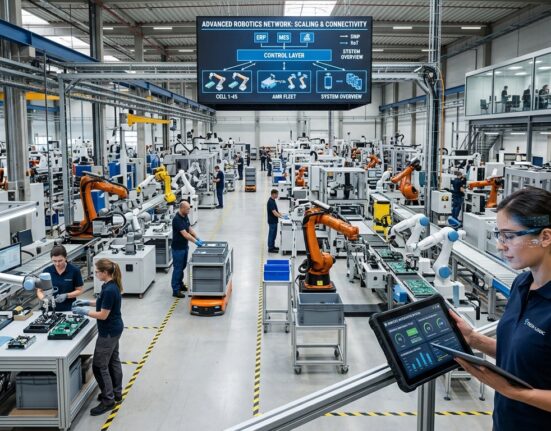

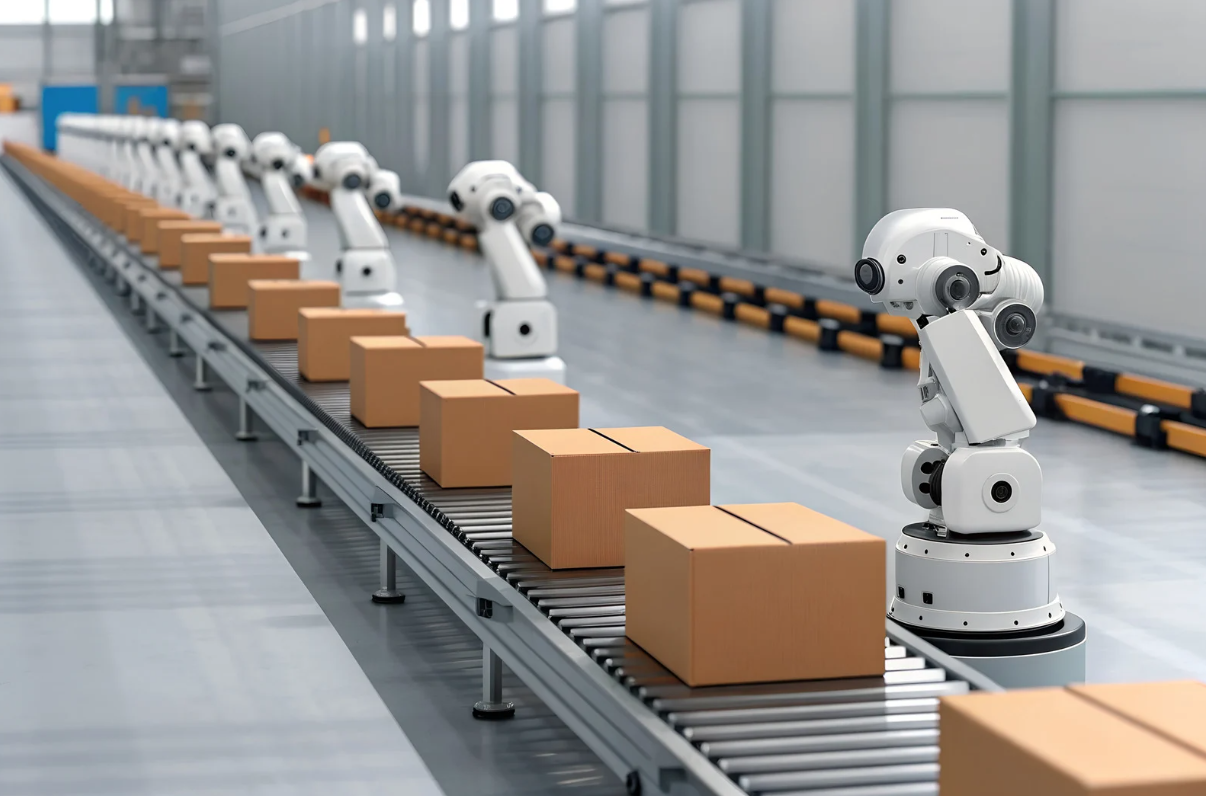
Manufacturing has always been the beating heart of industrial progress. From the steam-powered machines of the 18th century to today’s AI-driven assembly lines, every leap in technology has redefined what’s possible. But in the 21st century, nothing has reshaped factories more profoundly than robotics automation in manufacturing.
It’s not just about machines working faster. It’s about smarter systems that collaborate with humans, learn from data, and continuously improve performance. This revolution is bridging the gap between precision and productivity, enabling manufacturers to do more—with less.
Let’s dive deep into how robotics is transforming productivity on the factory floor and why it’s no longer a futuristic luxury but a competitive necessity.
The Evolution of Robotics in Manufacturing
The concept of using robots in production isn’t new. The first industrial robot, Unimate, debuted in a General Motors factory in 1961, performing repetitive and dangerous tasks with consistency. It was revolutionary—but primitive by today’s standards.
Fast forward to now, and robotics automation in manufacturing has evolved into a sophisticated ecosystem of autonomous systems, artificial intelligence, and real-time analytics. Modern robots don’t just follow instructions—they adapt, predict, and optimize.
From robotic arms assembling microchips to autonomous guided vehicles (AGVs) delivering materials, today’s factories operate like living organisms—dynamic, connected, and constantly learning.
This evolution marks the shift from manual efficiency to intelligent productivity.
How Robotics Automation Drives Manufacturing Productivity
So, what makes robotics such a game-changer for productivity? It’s not one single innovation—it’s the convergence of precision, speed, and consistency. Robots don’t get tired, distracted, or injured. They perform flawlessly, 24 hours a day.
Here’s how robotics automation directly enhances manufacturing productivity:
1. Eliminating Repetitive and Time-Consuming Tasks
Human workers are prone to fatigue and error, especially during monotonous tasks like assembling components or packaging products. Robots thrive on repetition.
By automating routine operations, companies free their human workforce to focus on higher-value activities such as design, supervision, and quality innovation. It’s the perfect partnership—robots handle the grind, humans handle the genius.
For example, car manufacturers use robotic arms for welding and painting, processes that demand precision and consistency but offer little creative value to humans. The result? Faster production with fewer defects.
2. Enhancing Precision and Quality Control
Precision is the backbone of manufacturing. A single error in assembly can lead to costly recalls or customer dissatisfaction. Robotics minimizes these risks.
Equipped with advanced sensors and computer vision, robots inspect products at microscopic levels of accuracy. They can detect imperfections invisible to the human eye, ensuring consistent quality throughout production.
In sectors like electronics or aerospace, where tolerances are measured in microns, robotic precision ensures perfection at scale—something human labor alone could never achieve.
3. Boosting Speed Without Compromising Safety
Productivity isn’t just about output—it’s about speed and safety working hand in hand. Robots excel at both.
Modern collaborative robots, or “cobots,” can work safely alongside humans without protective barriers. They take on physically demanding or hazardous tasks, reducing workplace injuries while maintaining continuous operation.
In industries such as metal fabrication or chemical processing, robots handle dangerous materials and high-heat environments where human workers would face serious risks. The outcome? Faster workflows and a safer workforce.
4. Enabling 24/7 Continuous Production
Unlike humans, robots don’t need breaks, vacations, or sleep. They can run around the clock with minimal supervision, maximizing output.
Factories equipped with robotic systems can operate in multiple shifts without increasing labor costs. This “lights-out manufacturing” concept—factories that operate autonomously with minimal human presence—is becoming increasingly common in advanced economies.
Continuous production means companies can meet rising global demand faster while maintaining consistent quality.
5. Reducing Waste and Operational Costs
Efficiency isn’t just about speed—it’s also about sustainability. Robotics automation minimizes material waste by optimizing resource usage and reducing errors.
With precise control over cutting, assembling, and packaging, robots ensure that raw materials are used efficiently. Fewer defects mean fewer reworks and less scrap.
Moreover, automation helps reduce energy consumption through predictive algorithms that schedule machines for optimal performance, reducing downtime and idle energy use.
In short, robotics doesn’t just make factories faster—it makes them greener and leaner.
The Key Technologies Powering Robotics Automation
Modern robotics is built on an interconnected foundation of emerging technologies. Together, they make today’s automation smarter, safer, and more adaptable.
1. Artificial Intelligence (AI)
AI gives robots the ability to learn and make decisions. Instead of following static commands, AI-powered robots analyze data in real time, predict potential issues, and adjust their behavior accordingly.
In predictive maintenance, for instance, AI analyzes sensor data to identify machinery wear before it leads to breakdowns. This reduces downtime and keeps productivity high.
2. Machine Vision
Through high-definition cameras and image processing algorithms, robots can “see” their environment. This allows them to detect objects, perform inspections, and navigate complex layouts autonomously.
Machine vision is particularly transformative in quality control, where robots identify defects faster and more accurately than humans.
3. The Internet of Things (IoT)
IoT connects robots, machines, and systems into a single digital ecosystem. Data flows seamlessly across the production line, enabling synchronization and efficiency.
Imagine a robotic arm that automatically adjusts its speed based on real-time data from nearby sensors or assembly stations. That’s the power of IoT in robotics automation.
4. Cloud and Edge Computing
With cloud-based robotics, manufacturers can analyze vast amounts of production data remotely. Edge computing, meanwhile, brings computation closer to the robots themselves, enabling faster decision-making without latency.
Together, these technologies ensure smart factories operate with both agility and reliability.
The Human-Robot Collaboration: A Productivity Powerhouse
Despite popular myths, robotics automation doesn’t eliminate human workers—it elevates them.
The most productive factories are those where humans and robots collaborate seamlessly. Cobots assist workers by handling strenuous tasks, while humans contribute strategic thinking and problem-solving.
This synergy not only increases output but also boosts employee satisfaction. When workers are freed from repetitive labor, they can focus on learning new skills and engaging in creative or supervisory roles.
For example, in modern automotive plants, technicians program and maintain robots rather than manually assembling each part. The result? A workforce that’s safer, more skilled, and more motivated.
Real-World Examples of Robotics Automation in Manufacturing
1. Automotive Industry
No industry embodies robotics better than automotive manufacturing. Robots weld, paint, and assemble cars with precision, speed, and consistency.
Companies like Toyota and Tesla rely on automation to produce vehicles faster and more accurately while maintaining high safety and quality standards.
2. Electronics Manufacturing
From smartphones to semiconductors, electronics production demands micro-level accuracy. Robotics ensures flawless assembly and inspection, drastically reducing defects.
AI-driven robots can handle delicate components, solder circuits, and even test devices—all with near-perfect consistency.
3. Food and Beverage Industry
Automation in food production is booming. Robots handle packaging, sorting, and even cooking in large-scale operations.
By minimizing human contact, robotic automation ensures higher hygiene standards and faster throughput—critical in a sector where precision and safety are paramount.
4. Pharmaceutical Manufacturing
In pharma, robotics plays a crucial role in precision dosing, sterile packaging, and quality inspection. Automated systems maintain the highest levels of accuracy and hygiene, reducing the risk of contamination.
Economic and Environmental Benefits of Robotics Automation
1. Cost Efficiency
While initial investments can be high, robotics automation delivers long-term savings. Reduced labor costs, lower defect rates, and minimal downtime all contribute to higher ROI.
Many companies recover their investment within two to three years of implementation.
2. Consistent Quality Output
Robots don’t deviate from standards. This ensures uniform product quality, reducing returns and enhancing brand reputation.
3. Sustainability Gains
Automation minimizes waste and optimizes energy use. Sustainable production isn’t just ethical—it’s profitable.
Factories that adopt robotics often report reduced carbon footprints due to lower material waste and energy-efficient systems.
Challenges in Implementing Robotics Automation
Of course, adopting robotics comes with its own challenges.
- High Initial Costs: The upfront expense can be daunting, especially for small manufacturers.
- Workforce Reskilling: Workers must adapt to new roles involving robot maintenance, programming, and oversight.
- Integration Complexity: Merging new automation systems with legacy infrastructure requires planning and expertise.
- Cybersecurity Risks: Connected robots can become targets for cyberattacks, making data protection essential.
However, with the right strategy, these hurdles can be overcome. Many manufacturers start small—automating specific processes first—before scaling up gradually.
The Future of Robotics Automation in Manufacturing
The next phase of robotics automation will focus on intelligence and adaptability.
Future factories will feature self-learning robots that collaborate seamlessly, anticipate production needs, and make autonomous adjustments. With AI and IoT integration, manufacturing will evolve into a predictive, self-optimizing ecosystem.
Moreover, advancements in soft robotics—flexible robots that mimic human touch—will make automation viable in even more delicate tasks, such as handling food or textiles.
As robotics continues to advance, productivity gains will multiply, creating a new era of “smart manufacturing.”
Conclusion
Robotics automation in manufacturing is no longer just about replacing human labor—it’s about amplifying human potential. It transforms factories into intelligent ecosystems where machines handle precision, and people handle progress.
By boosting productivity, improving safety, and reducing waste, robotics has become the cornerstone of modern industry. The factories of tomorrow aren’t just automated—they’re adaptive, data-driven, and deeply human at their core.
In the end, it’s not man versus machine—it’s man with machine that defines the future of productivity.
FAQ
1. What is robotics automation in manufacturing?
It refers to the use of robots and automated systems to perform manufacturing tasks, improving efficiency, quality, and safety.
2. How does robotics increase productivity?
Robots perform repetitive tasks faster and more accurately, enabling continuous production with fewer errors and less downtime.
3. Are robots replacing human workers?
Not entirely. Robots handle repetitive tasks, while humans focus on creativity, supervision, and strategic decision-making.
4. What industries benefit most from robotics automation?
Manufacturing, electronics, automotive, pharmaceuticals, and food production benefit most due to precision and scalability demands.
5. What is the future of robotics in manufacturing?
The future involves AI-driven, self-learning robots that collaborate with humans to create smarter, more efficient production systems.