
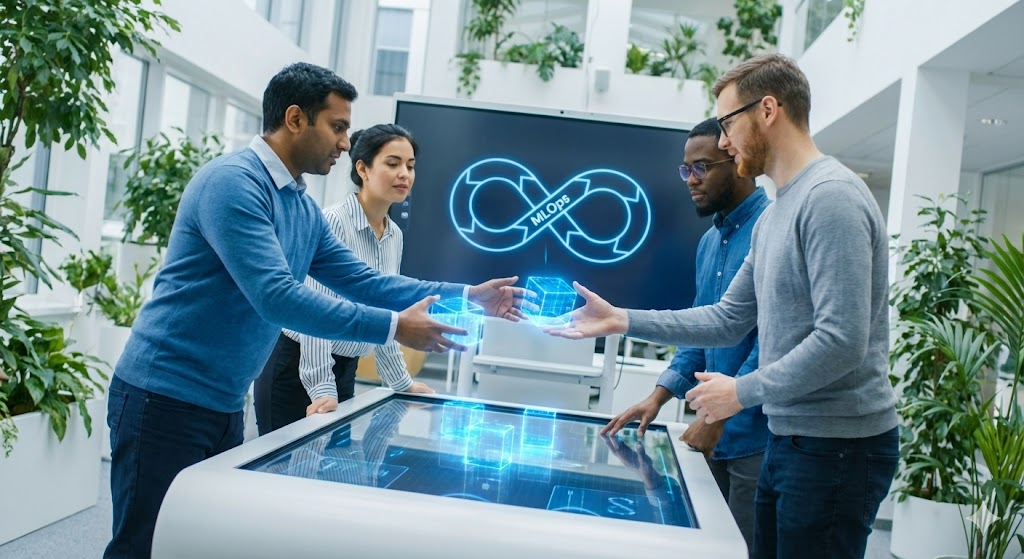
MLOps team reskilling is no longer optional. Machine learning evolves too fast for static skill sets to survive. Tools change. Frameworks mature. Regulations tighten. What worked last year may already be outdated.
Organizations that rely on machine learning are discovering a hard truth. Models do not fail first. Teams do. When skills lag behind systems, performance degrades quietly. Eventually, trust breaks. Continuous learning is the only way forward.
This article explores why MLOps team reskilling matters, how to approach it strategically, and what happens when organizations treat learning as infrastructure rather than an afterthought.
Why Continuous Learning Is Critical in MLOps
Machine learning does not stand still. Neither can the people managing it.
MLOps blends software engineering, data science, infrastructure, and governance. Each domain evolves independently. When teams fail to keep pace, gaps appear. Those gaps turn into operational risk.
Continuous reskilling matters because:
- Tooling ecosystems change rapidly
- Security threats evolve constantly
- Compliance expectations increase
- Model complexity grows over time
Without ongoing learning, teams rely on outdated practices. Over time, systems become fragile instead of scalable.
The Expanding Skill Surface of Modern ML Teams
Early machine learning teams focused mainly on model accuracy. That era is over.
Today’s ML professionals must understand far more than algorithms. They must manage production systems, monitor performance, and respond to real-world failures.
Key skill areas now include:
- Data engineering and pipeline design
- Cloud infrastructure and orchestration
- Model monitoring and drift detection
- CI/CD for machine learning systems
- Security and access control
- Regulatory and ethical considerations
MLOps team reskilling ensures these competencies grow together rather than in isolation.
Why One-Time Training No Longer Works
Traditional training models assume stability. MLOps exists in constant change.
A single certification or workshop quickly loses value. Knowledge decays as tools update and best practices shift. Teams trained once often struggle months later.
Continuous reskilling works better because it:
- Reinforces learning through repetition
- Adapts to evolving toolchains
- Responds to real production challenges
- Builds long-term confidence
Learning becomes a habit rather than an event.
Aligning Reskilling With Business Outcomes
Reskilling efforts fail when they feel disconnected from real work. Training must align with outcomes teams care about.
Effective MLOps team reskilling focuses on:
- Reducing deployment failures
- Improving model reliability
- Shortening incident response time
- Increasing system transparency
When learning solves visible problems, engagement rises naturally.
Embedding Learning Into Daily Workflows
The best learning does not interrupt work. It enhances it.
High-performing teams embed skill development into daily routines. Learning becomes part of delivery rather than a separate task.
Practical approaches include:
- Pairing engineers across disciplines
- Reviewing incidents as learning opportunities
- Rotating ownership of pipeline components
- Documenting lessons learned from failures
This approach keeps skills current without overwhelming teams.
Reskilling for Cross-Functional Collaboration
MLOps sits at the intersection of multiple roles. Siloed learning creates friction.
Continuous reskilling encourages shared understanding across functions. Data scientists learn deployment realities. Engineers understand model behavior. Compliance teams grasp technical constraints.
This shared knowledge leads to:
- Faster decision-making
- Fewer handoff errors
- Better system design
- Stronger accountability
Teams that learn together operate more smoothly.
Addressing Tool and Platform Sprawl
Modern ML stacks are crowded. New tools appear constantly. Old ones fade quickly.
Without structured learning, teams become reactive. They chase trends instead of mastering fundamentals.
MLOps team reskilling helps teams:
- Evaluate tools critically
- Standardize where possible
- Avoid unnecessary complexity
- Maintain institutional knowledge
Learning creates clarity in a noisy ecosystem.
Security and Compliance Require Ongoing Education
Security threats evolve faster than most organizations expect. Regulations follow closely behind.
Teams must stay current on:
- Secure deployment practices
- Access control models
- Data protection requirements
- Audit and documentation standards
Continuous learning reduces exposure. It also builds confidence when facing audits or incidents.
Preventing Burnout Through Structured Growth
Ironically, lack of learning often increases burnout. When systems break and teams lack skills, stress rises.
Reskilling programs help by:
- Increasing problem-solving confidence
- Reducing firefighting cycles
- Providing career growth paths
- Reinforcing a sense of progress
Learning becomes a form of support rather than pressure.
Measuring the Impact of Reskilling Efforts
Reskilling should be measurable. Otherwise, it becomes guesswork.
Useful indicators include:
- Reduced incident frequency
- Faster deployment cycles
- Improved model stability
- Higher team retention
These outcomes demonstrate that learning investments pay off operationally.
Leadership’s Role in MLOps Team Reskilling
Learning cultures do not emerge accidentally. Leadership sets the tone.
Effective leaders support reskilling by:
- Allocating dedicated learning time
- Encouraging experimentation
- Rewarding knowledge sharing
- Treating mistakes as learning signals
When leadership models curiosity, teams follow.
The Long-Term Advantage of Adaptable ML Teams
Technology will keep changing. That is guaranteed.
Organizations that commit to MLOps team reskilling gain a durable advantage. Their systems evolve smoothly, teams adapt confidently, and their risks remain manageable.
Adaptability becomes part of the organization’s identity.
Conclusion
MLOps team reskilling is not about keeping up with trends. It is about building resilient, confident teams that can sustain machine learning systems over time. When learning becomes continuous, systems remain reliable, teams stay engaged, and innovation becomes sustainable.
In machine learning, the most important infrastructure is human capability. Invest in it continuously, and everything else follows.
FAQ
1. What is MLOps team reskilling?
It is the continuous process of updating technical and operational skills required to manage machine learning systems in production.
2. Why is continuous learning important in MLOps?
Because tools, risks, and regulations evolve rapidly, making static skills obsolete.
3. How often should MLOps teams reskill?
Learning should be ongoing, integrated into daily work rather than scheduled occasionally.
4. Does reskilling slow down delivery?
No. It reduces long-term delays by preventing failures and rework.
5. What is the biggest risk of not reskilling ML teams?
Skill gaps lead to fragile systems, higher incidents, and loss of trust over time.