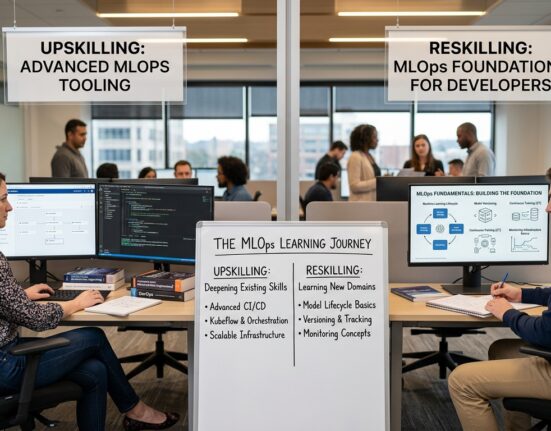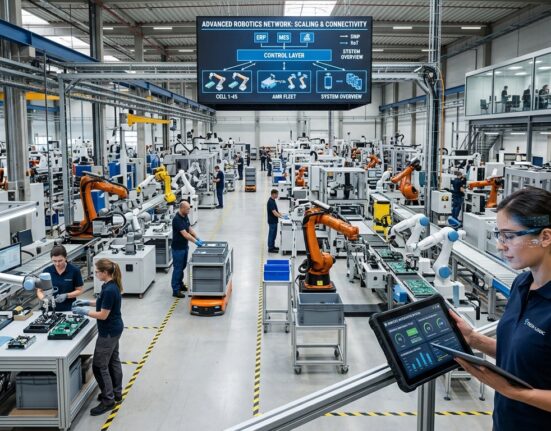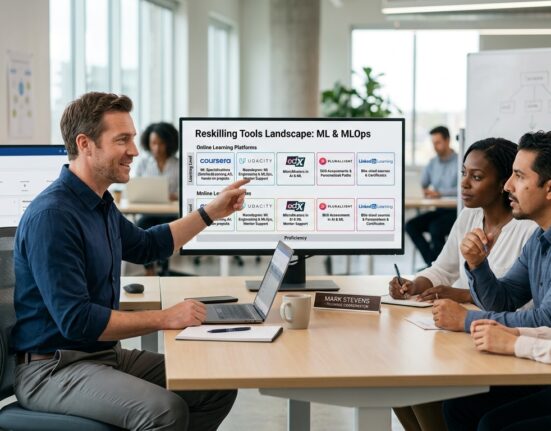


Machine learning team skills have become the true differentiator between AI success and stalled initiatives. Algorithms matter. Data matters. Infrastructure matters. Yet none of these deliver value on their own. Teams do.
Many organizations invest heavily in tools, platforms, and models. Still, projects fail quietly. Pipelines break. Models drift. Trust erodes. In most cases, the root cause is not technology. It is missing or uneven skills across the team.
Machine learning is no longer a research experiment. It is operational software that must perform reliably in real-world conditions. That reality demands a broader and deeper skill set than ever before.
This article explores the essentia team skills every organization must develop to build scalable, trustworthy, and sustainable AI systems.
Why Machine Learning Team Skills Matter More Than Tools
Tools evolve quickly. Skills endure.
A new framework can be adopted in weeks. Building judgment, collaboration, and system awareness takes far longer. Machine learning team skills determine how well tools are used, maintained, and improved over time.
Strong teams succeed because they can:
- Diagnose problems early
- Adapt to changing requirements
- Balance speed with reliability
- Align technical work with business goals
Without these skills, even the best platforms become liabilities.
Foundational Data Skills for Machine Learning Teams
Data is the raw material of machine learning. Poor data skills undermine everything else.
They must include a deep understanding of data quality, structure, and lifecycle. Teams need to know not only how to train models, but how data behaves in production.
Essential data-related skills include:
- Data collection and validation
- Feature engineering and selection
- Handling missing or biased data
- Data versioning and lineage
Strong data skills prevent silent failure and unreliable predictions.
Model Development Skills Beyond Accuracy
Accuracy is only the beginning.
Models must generalize, adapt, and remain stable over time. Machine learning team skills must extend beyond training metrics to real-world performance.
Critical model development skills include:
- Model selection and evaluation
- Bias detection and mitigation
- Interpretability and explainability
- Robustness testing
These skills ensure models remain trustworthy after deployment.
Software Engineering Skills for ML Systems
Machine learning systems are software systems.
Yet many ML teams lack core engineering discipline. This gap creates fragile pipelines and unmaintainable code.
Machine learning team skills must include:
- Version control and code quality
- Modular system design
- Testing strategies for ML components
- Documentation and reproducibility
Engineering skills turn experimental models into dependable systems.
MLOps and Deployment Skills
Deployment is where most ML projects fail.
Getting a model into production requires coordination, automation, and monitoring. Without MLOps capabilities, teams rely on manual processes that break easily.
Essential deployment-related machine learning team skills include:
- CI/CD for machine learning
- Automated model validation
- Deployment strategies and rollback
- Environment management
These skills reduce friction between experimentation and production.
Monitoring and Observability Skills
Most ML failures happen quietly.
Data distributions change. User behavior shifts. Performance degrades slowly. Without observability, teams discover problems too late.
Machine learning team skills must include monitoring expertise such as:
- Defining meaningful performance metrics
- Detecting data and concept drift
- Setting alert thresholds
- Investigating anomalies
Observability transforms surprises into manageable events.
Cloud and Infrastructure Skills
Modern ML systems rely on scalable infrastructure.
Teams must understand how compute, storage, and networking affect performance and cost. Infrastructure ignorance leads to inefficiency and instability.
Key infrastructure-related include:
- Cloud service fundamentals
- Resource optimization
- Cost awareness and forecasting
- Scalability planning
Infrastructure skills support sustainable growth.
Security and Privacy Awareness
Machine learning systems often handle sensitive data.
Security failures damage trust quickly. Compliance violations carry legal and reputational risk. Teams must understand these responsibilities.
Essential security-related skills include:
- Secure data handling practices
- Access control and identity management
- Audit logging and traceability
- Privacy-preserving techniques
Security-aware teams protect both systems and stakeholders.
Ethical Reasoning and Responsible AI Skills
Ethics is not optional.
Machine learning decisions affect people’s lives. Bias, opacity, and misuse erode trust and trigger backlash.
Machine learning team skills must include ethical awareness such as:
- Identifying potential harm
- Evaluating fairness impacts
- Designing transparent systems
- Escalating ethical concerns
Responsible AI requires skill, not just intention.
Domain Knowledge and Contextual Understanding
Models do not exist in a vacuum.
Without domain understanding, teams optimize the wrong outcomes. They misinterpret signals. They miss constraints.
Machine learning team skills improve when teams understand:
- Business objectives
- Industry regulations
- User behavior
- Operational constraints
Context transforms technical output into real value.
Communication and Collaboration Skills
Machine learning is a team sport.
Data scientists, engineers, product managers, and stakeholders must collaborate effectively. Poor communication creates misalignment and rework.
Essential collaboration skills include:
- Translating technical concepts clearly
- Managing expectations
- Documenting decisions
- Working across disciplines
Strong communication accelerates delivery and builds trust.
Problem Framing and Critical Thinking
Good models solve the right problems.
Machine learning team skills must include strong problem-framing ability. Teams need to question assumptions and clarify objectives.
Key thinking skills include:
- Defining measurable goals
- Evaluating trade-offs
- Challenging biased assumptions
- Recognizing when ML is unnecessary
Critical thinking prevents wasted effort.
Change Management and Adaptability
Machine learning systems evolve constantly.
Requirements shift. Data changes. Models age. Teams must adapt without disruption.
includes:
- Managing iterative change
- Handling system updates gracefully
- Learning from failures
- Staying resilient under pressure
Adaptability keeps systems relevant.
Project Management and Prioritization
ML projects often sprawl.
Without structure, experimentation never ends. Deadlines slip. Value remains unrealized.
Machine learning team skills must include:
- Scope management
- Prioritization frameworks
- Incremental delivery
- Stakeholder alignment
Project discipline turns progress into outcomes.
Learning How to Learn
The most important skill is meta-skill.
Tools will change. Frameworks will evolve. What matters is the ability to learn continuously.
High-performing machine learning teams cultivate:
- Curiosity
- Knowledge sharing
- Continuous improvement
- Skill renewal
Learning becomes part of daily work.
Leadership and Ownership Skills
Leadership is not limited to titles.
Machine learning team skills include ownership at every level. Someone must care deeply about system health and outcomes.
Leadership skills include:
- Taking responsibility
- Mentoring others
- Raising risks early
- Driving quality standards
Ownership prevents diffusion of responsibility.
Balancing Speed and Stability
Pressure for results is constant.
Teams must move fast without breaking systems. That balance requires judgment.
Machine learning team skills support this balance by:
- Knowing when to experiment
- Knowing when to stabilize
- Managing technical debt
- Protecting long-term value
Speed without stability creates fragility.
Conclusion
Machine learning team skills are the foundation of scalable, trustworthy AI. Tools and models change, but skilled teams endure. By developing strong data, engineering, operational, ethical, and collaborative capabilities, organizations transform machine learning from fragile experimentation into dependable infrastructure.
The future of AI belongs to teams that invest in people as seriously as they invest in technology. When skills grow together, machine learning delivers value that lasts.
FAQ
1. What are machine learning team skills?
They are the combined technical, operational, and collaborative capabilities required to build and maintain ML systems.
2. Why are ML team skills more important than tools?
Because tools change quickly, while skills determine how effectively systems are built, operated, and improved.
3. Which skills are most often missing in ML teams?
MLOps, monitoring, communication, and production engineering skills are commonly lacking.
4. Can one person cover all machine learning team skills?
No. These skills are distributed across roles and require strong collaboration.
5. How can organizations improve machine learning team skills?
Through continuous training, cross-functional collaboration, and hands-on production experience.