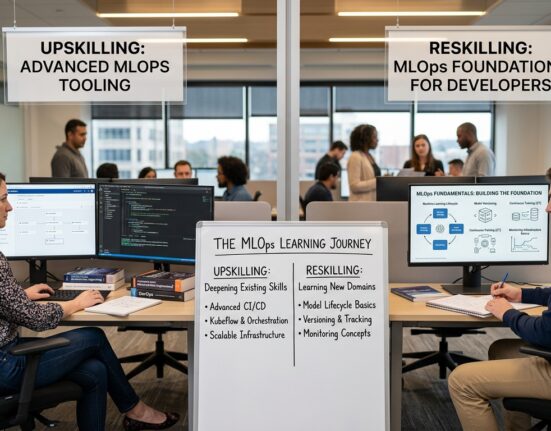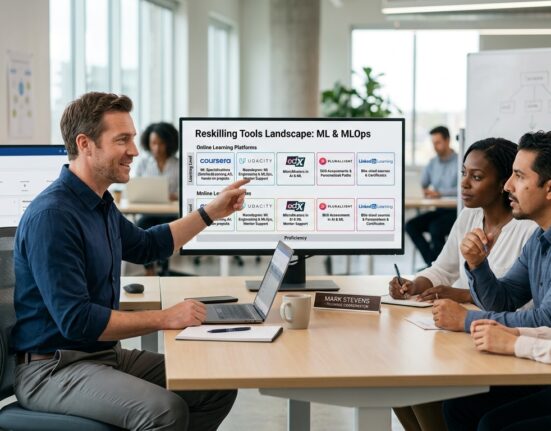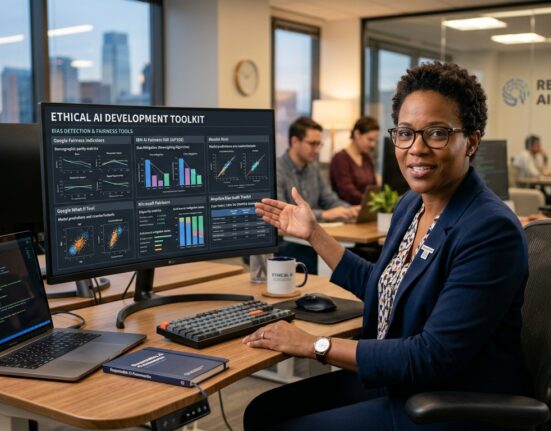

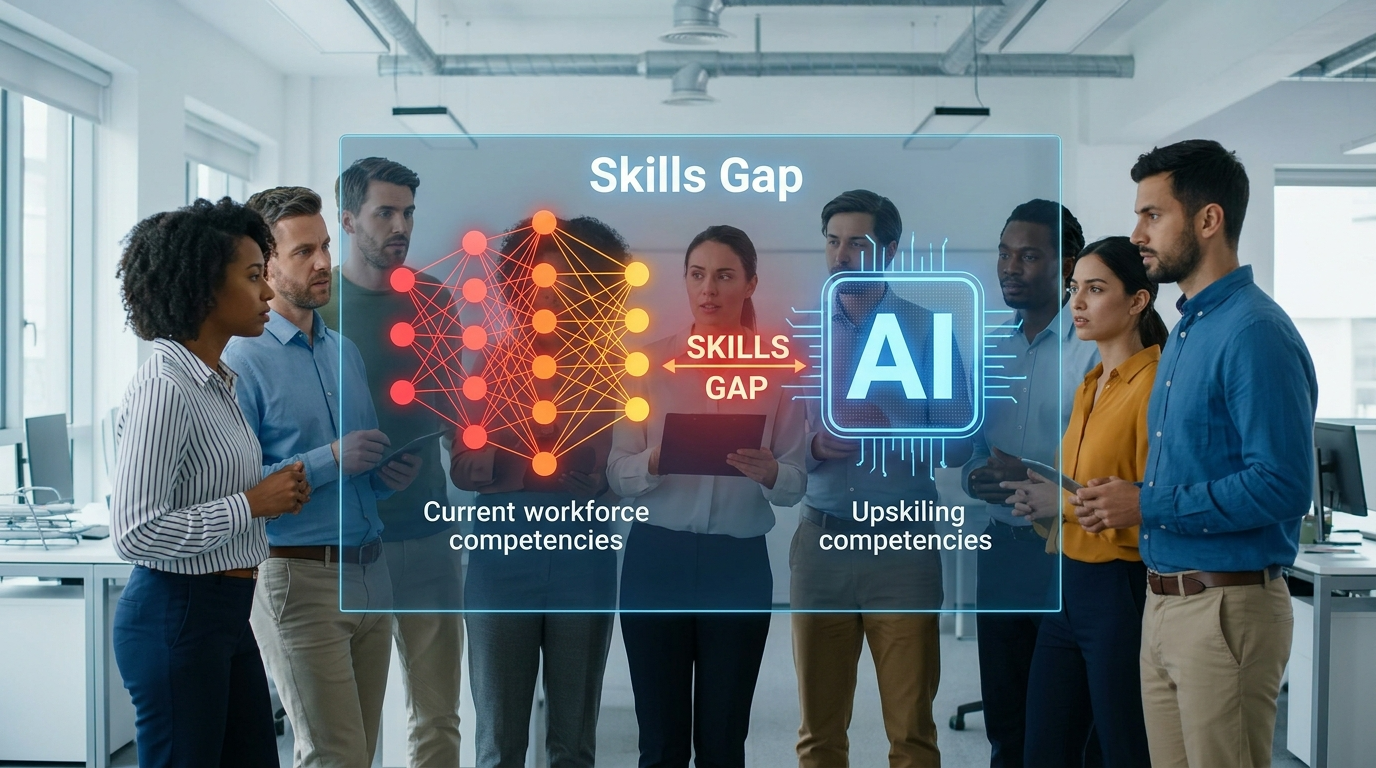
Artificial intelligence is rapidly transforming the modern workplace. Organizations increasingly rely on machine learning systems to improve efficiency, automate tasks, and gain insights from large datasets. However, adopting these technologies requires skilled employees who understand machine learning workflows and MLOps practices. As a result, many companies are investing in continuous ML workforce reskilling to prepare their teams for evolving technological demands.
Unlike one-time training programs, continuous learning initiatives focus on long-term skill development. Employees receive ongoing education as technologies evolve.
This strategy ensures that workers remain capable of supporting modern AI systems.
Moreover, companies that invest in continuous ML workforce reskilling gain a competitive advantage. Skilled employees can develop, deploy, and maintain machine learning models more effectively.
Several organizations have already implemented successful reskilling programs.
By examining these examples, businesses can learn how to build effective training strategies for machine learning and MLOps roles.
Why Continuous Reskilling Is Necessary for AI Teams
Machine learning technologies evolve quickly. New frameworks, algorithms, and tools appear frequently. Consequently, employees must update their skills regularly.
This reality makes continuous ML workforce reskilling essential for organizations that rely on artificial intelligence.
Traditional training programs often provide only short-term knowledge. However, AI development requires long-term learning strategies.
Employees must understand both technical skills and operational processes.
For example, machine learning engineers must collaborate with data scientists, operations teams, and software developers.
Continuous training programs help employees adapt to these interdisciplinary environments.
Furthermore, companies benefit from stronger internal expertise.
Instead of constantly hiring new specialists, organizations can grow talent internally.
Therefore, continuous ML workforce reskilling strengthens both workforce stability and innovation capacity.
Case Study: Technology Company Building Internal AI Talent
A global technology company faced a shortage of machine learning engineers. Hiring experienced specialists proved difficult and expensive.
Therefore, the organization launched a continuous ML workforce reskilling program to train existing employees.
First, the company assessed workforce capabilities. Managers identified software engineers interested in machine learning development.
Next, the organization introduced structured learning pathways.
Employees completed online courses covering data science fundamentals and machine learning algorithms.
After theoretical training, participants worked on internal AI projects.
Mentors guided employees through real-world model development.
Over time, the company successfully transformed several software engineers into machine learning specialists.
Through continuous ML workforce reskilling, the organization built internal expertise while reducing recruitment costs.
Case Study: Financial Institution Advancing MLOps Skills
A major financial institution adopted machine learning models to detect fraud and analyze risk.
However, the organization lacked employees with MLOps expertise.
To address this gap, leadership implemented a continuous ML workforce reskilling initiative focused on operational AI skills.
The program introduced employees to model deployment techniques and monitoring tools.
Participants learned how to maintain machine learning systems in production environments.
Training included hands-on exercises using real financial datasets.
Additionally, cross-functional teams collaborated on projects that integrated AI models into existing banking systems.
Over time, employees gained the technical knowledge required to manage machine learning infrastructure.
This continuous ML workforce reskilling effort improved system reliability and strengthened the institution’s AI capabilities.
Case Study: Manufacturing Company Expanding AI Capabilities
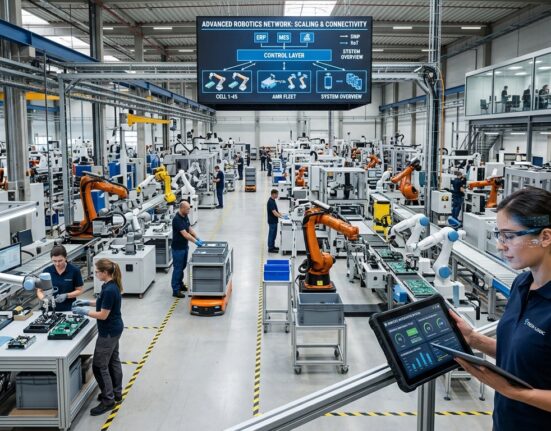
A manufacturing company began adopting predictive maintenance systems powered by machine learning.
These systems analyzed sensor data to identify potential equipment failures.
However, the organization lacked data science expertise.
To overcome this challenge, leadership launched a continuous ML workforce reskilling initiative.
The program focused on training engineers and technicians in machine learning concepts.
Employees learned how to collect sensor data and analyze patterns.
They also developed skills related to data preprocessing and model evaluation.
Practical training sessions allowed participants to build predictive maintenance models.
As a result, the company successfully deployed AI-driven monitoring systems.
Through continuous ML workforce reskilling, the organization improved equipment reliability and reduced maintenance costs.
Lessons Learned from Successful Reskilling Programs
Organizations implementing continuous ML workforce reskilling initiatives often follow several best practices.
These lessons provide valuable insights for companies planning similar programs.
Align Training with Business Goals
Successful programs connect learning objectives with organizational priorities.
Employees understand how machine learning skills contribute to business success.
Clear alignment strengthens motivation and engagement.
Provide Practical Experience
Hands-on learning helps employees apply theoretical knowledge.
Projects that simulate real AI workflows improve learning outcomes.
This approach enhances the effectiveness of continuous ML workforce reskilling strategies.
Encourage Collaboration
Machine learning projects require teamwork across multiple departments.
Reskilling programs should promote collaboration between technical and business teams.
Collaborative learning environments strengthen problem-solving skills.
Support Ongoing Education
AI technologies evolve constantly.
Organizations must provide ongoing learning opportunities.
Continuous training ensures that employees remain prepared for emerging technologies.
Challenges Organizations Face During Reskilling
Although continuous ML workforce reskilling offers many advantages, organizations may encounter several challenges.
One common challenge involves time management.
Employees must balance training with existing responsibilities.
Companies should provide flexible learning schedules to support workforce development.
Another challenge involves technical complexity.
Machine learning concepts can be difficult for beginners to understand.
Training programs must simplify complex topics through structured learning modules.
Leadership support also plays a critical role.
Without strong executive backing, reskilling programs may struggle to secure sufficient resources.
Despite these obstacles, organizations that commit to continuous ML workforce reskilling often achieve significant long-term benefits.
Future Trends in Workforce Reskilling
As artificial intelligence adoption continues expanding, continuous ML workforce reskilling will become increasingly important.
Several trends are shaping the future of workforce development.
One trend involves AI-powered learning platforms.
These systems personalize training experiences based on individual skill levels.
Another trend includes simulation-based learning environments.
Employees can practice deploying machine learning models in realistic scenarios.
Additionally, partnerships with universities and research institutions are growing.
Organizations collaborate with academic institutions to provide advanced training opportunities.
These developments will strengthen the effectiveness of continuous ML workforce reskilling programs.
Companies that embrace these innovations will remain competitive in the evolving AI landscape.
Conclusion
Artificial intelligence continues transforming industries and redefining workforce requirements. Organizations must develop employees who understand machine learning systems and operational processes.
Through continuous ML workforce reskilling, companies build sustainable AI capabilities while empowering employees to grow professionally.
Case studies across technology, finance, and manufacturing demonstrate the benefits of long-term training strategies.
Successful programs combine structured learning pathways, hands-on projects, and collaborative environments.
Although challenges exist, organizations that prioritize workforce development gain stronger internal expertise.
Furthermore, continuous learning improves employee engagement and supports innovation.
As machine learning technologies continue advancing, reskilling programs will remain essential for organizational success.
Companies that invest in employee education today will be better prepared for the future of artificial intelligence.
FAQ
1. What does continuous reskilling mean in machine learning?
It refers to ongoing training programs that help employees develop and update machine learning skills over time.
2. Why do organizations need ongoing AI training programs?
AI technologies evolve quickly, so employees must regularly update their knowledge to stay effective.
3. Which industries benefit most from ML workforce development?
Technology, finance, healthcare, manufacturing, and retail frequently invest in machine learning training.
4. How long do reskilling programs typically last?
Programs vary widely, but many run for several months and include continuous learning afterward.
5. Can employees without technical backgrounds learn ML skills?
Yes. With structured training and mentorship, many employees transition successfully into AI-related roles.