

Computer vision systems are becoming essential across industries such as manufacturing, healthcare, logistics, and retail. These systems analyze images and video streams to detect patterns, automate inspections, and improve decision-making. However, integrating computer vision models with existing software platforms can be complex. Therefore, computer vision middleware architectures provide a critical solution for connecting visual AI systems with enterprise infrastructure.
Middleware acts as an intermediary layer between machine learning models and operational systems. It enables communication between applications that otherwise might not interact easily.
Furthermore, middleware helps organizations deploy computer vision solutions without redesigning their entire technology stack.
Through scalable architecture, businesses can integrate image recognition tools with databases, automation systems, and cloud platforms.
As organizations expand their AI capabilities, computer vision middleware architectures become essential for ensuring reliable and flexible integration across complex technology environments.
Understanding Middleware in Computer Vision Systems
Middleware refers to software that connects different applications, enabling them to communicate and share data efficiently.
In computer vision deployments, middleware connects visual AI models with other operational systems. Consequently, computer vision middleware architectures simplify integration between machine learning pipelines and enterprise platforms.
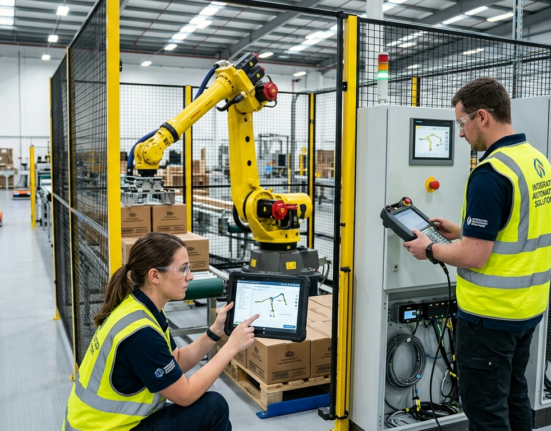
For example, a manufacturing system may use cameras to inspect products on an assembly line. Middleware ensures that the inspection results reach quality management systems or production dashboards.
Additionally, middleware can manage communication between edge devices, cloud services, and data processing pipelines.
This connectivity allows organizations to scale computer vision solutions without disrupting existing systems.
Another important advantage involves flexibility. Middleware layers isolate machine learning models from business applications.
As a result, engineers can update models or infrastructure without affecting other parts of the system.
Because of these benefits, middleware plays a vital role in modern computer vision deployment strategies.
Why Middleware Is Essential for Computer Vision Integration
Deploying computer vision technology involves more than building machine learning models. Organizations must also integrate these models with production systems.
Therefore, computer vision middleware architectures enable seamless interaction between AI services and enterprise applications.
First, middleware improves interoperability. Computer vision models often operate in specialized environments, while business applications use different technologies.
Middleware bridges these differences, ensuring systems communicate effectively.
Second, middleware enhances scalability. As organizations add more cameras or data sources, middleware manages increasing data volumes.
Third, middleware improves reliability. Integration layers monitor communication between systems and handle errors automatically.
Finally, middleware simplifies deployment. Developers can implement computer vision services without modifying existing software platforms.
Consequently, organizations achieve faster and more efficient AI integration.
Core Components of Middleware Architectures
Successful computer vision middleware architectures include several key components that enable reliable system integration.
These components support communication, data processing, and automation across distributed systems.
API Gateways
Application programming interfaces allow software systems to communicate.
API gateways serve as entry points for computer vision services within enterprise environments.
These gateways manage requests from applications and direct them to appropriate services.
Additionally, they handle authentication, monitoring, and traffic management.
Through API gateways, organizations simplify communication within computer vision middleware architectures.
Message Queues
Message queues manage asynchronous communication between applications.
Instead of sending data directly between systems, applications place messages in queues.
Other services then process these messages when resources become available.
This approach improves system resilience and supports high-volume data processing.
Message queues are particularly useful when handling large streams of visual data.
Data Processing Pipelines
Computer vision systems generate significant data volumes from cameras and sensors.
Middleware architectures often include pipelines that process, filter, and analyze this information.
These pipelines transform raw visual data into structured insights that enterprise systems can use.
Efficient pipelines ensure that computer vision middleware architectures deliver results quickly and reliably.
Edge Computing Interfaces
Many computer vision systems operate on edge devices such as cameras or embedded processors.
Middleware must support communication between these devices and central servers.
Edge interfaces allow organizations to process visual data locally before sending results to cloud platforms.
This capability reduces latency and improves system performance.
Common Middleware Patterns for Computer Vision
Organizations use different architectural patterns when designing computer vision middleware architectures.
The choice of architecture depends on system complexity, scalability requirements, and infrastructure constraints.
Service-Oriented Architecture
Service-oriented architecture divides systems into independent services.
Each service performs a specific function, such as image processing or object detection.
Middleware coordinates communication between these services.
This modular approach improves system flexibility and scalability.
Event-Driven Architecture
Event-driven systems respond to specific triggers or events.
For example, a camera may capture an image when motion occurs.
Middleware then processes the image and triggers automated actions.
Event-driven computer vision middleware architectures enable real-time responses to visual data.
Microservices Architecture
Microservices architectures divide applications into small, independent components.
Each microservice performs a specialized task.
For instance, one service may handle image preprocessing, while another runs machine learning models.
Middleware coordinates these services, ensuring efficient communication and workflow management.
Benefits of Middleware for Computer Vision Deployments
Organizations that implement computer vision middleware architectures gain several operational advantages.
These benefits support scalable and reliable AI integration across complex environments.
Improved System Flexibility
Middleware separates computer vision models from business applications.
This separation allows engineers to update or replace models without disrupting other systems.
Consequently, organizations maintain flexibility as technologies evolve.
Enhanced Scalability
As computer vision deployments grow, organizations must process increasing volumes of visual data.
Middleware architectures manage these workloads by distributing tasks across multiple services.
This capability ensures stable performance even during high demand.
Faster Deployment Cycles
Middleware simplifies the integration process.
Developers can deploy new vision models quickly because middleware manages system communication.
Therefore, organizations accelerate innovation and experiment with new AI capabilities.
Better Monitoring and Maintenance
Integration layers often include monitoring tools that track system performance.
Engineers can detect issues quickly and resolve problems before they affect operations.
Effective monitoring strengthens the reliability of computer vision middleware architectures.
Challenges in Designing Middleware Systems
Although middleware provides significant advantages, organizations must address certain challenges.
Designing effective computer vision middleware architectures requires careful planning and technical expertise.
High Data Volume
Computer vision systems process large image and video datasets.
Middleware must handle high data throughput without creating bottlenecks.
Efficient data pipelines and scalable infrastructure help manage these demands.
Latency Requirements
Some applications require near real-time responses.
For example, manufacturing inspection systems must detect defects instantly.
Engineers must design middleware that processes visual data quickly.
Edge computing solutions often reduce latency in these environments.
System Compatibility
Legacy systems may use outdated technologies or communication protocols.
Integrating modern computer vision models with these systems can be challenging.
Middleware must support multiple data formats and communication standards.
Security and Privacy
Visual data often contains sensitive information.
Organizations must implement strong security controls within middleware layers.
Encryption, authentication, and access management protect system integrity.
Future Trends in Computer Vision Integration
As artificial intelligence continues evolving, new technologies will influence computer vision middleware architectures.
One emerging trend involves serverless computing.
Serverless platforms allow organizations to run computer vision services without managing infrastructure.
Another development includes AI-powered middleware.
These systems automatically optimize data pipelines and system performance.
Additionally, edge AI technologies are expanding rapidly.
Edge computing enables visual data processing directly on devices such as cameras or industrial sensors.
This approach reduces network traffic and improves response times.
Cloud-native architectures will also shape future integration strategies.
These platforms provide scalable resources that support large-scale computer vision deployments.
As organizations adopt advanced AI technologies, middleware will continue playing a central role in system integration.
Conclusion
Computer vision technologies offer powerful capabilities for analyzing images, automating inspections, and improving operational efficiency. However, integrating these systems with existing infrastructure requires specialized architectural approaches.
Through well-designed computer vision middleware architectures, organizations connect machine learning models with enterprise applications and operational platforms.
Middleware enables reliable communication, scalable data processing, and flexible system management.
Additionally, integration layers allow organizations to deploy computer vision solutions without disrupting legacy systems.
Although designing middleware requires careful planning, the benefits are significant.
Companies that implement effective middleware architectures can scale computer vision technologies more easily while maintaining operational stability.
As artificial intelligence adoption continues to expand, middleware will remain a cornerstone of successful computer vision integration strategies.
FAQ
1. What role does middleware play in computer vision systems?
Middleware connects computer vision models with enterprise applications, enabling data exchange and automation across different systems.
2. Why do organizations use integration layers for AI systems?
Integration layers allow AI models to interact with existing infrastructure without requiring major software redesign.
3. Can computer vision systems run on edge devices?
Yes. Many systems process visual data on cameras or embedded devices before sending results to centralized platforms.
4. What industries benefit from visual AI integration?
Manufacturing, healthcare, retail, logistics, and security industries commonly use computer vision technologies.
5. How do developers ensure scalable visual AI deployments?
Scalable architectures use distributed services, data pipelines, and cloud platforms to handle increasing workloads.