
AI-assisted diagnostics healthcare solutions are no longer limited to brand-new hospitals with cutting-edge equipment. In reality, most healthcare facilities still rely on legacy infrastructure built years, sometimes decades, ago. These systems are familiar, trusted, and deeply embedded in daily clinical workflows. However, they often lack the analytical power required to keep pace with modern diagnostic demands.
This is where AI-assisted diagnostics healthcare integration becomes transformative. Instead of replacing legacy systems, artificial intelligence enhances them. Existing imaging devices, monitoring tools, and clinical software gain a layer of intelligence that interprets data faster and more consistently than manual processes alone.
Think of it like upgrading eyesight with corrective lenses rather than replacing the eyes. The core remains the same. The clarity improves dramatically. As a result, clinicians gain sharper insight while workflows remain intact.
Why legacy healthcare infrastructure still dominates
Legacy infrastructure persists because it works. Hospitals invested heavily in imaging machines, laboratory equipment, and information systems. Staff trained extensively to use them. Regulatory approvals were secured long ago.
Replacing these systems is expensive and disruptive. Downtime affects patient care. Retraining strains already overworked staff. Budget approvals take years.
AI-assisted diagnostics healthcare approaches respect these realities. They extend the life and value of existing assets. Improvement happens incrementally rather than through risky overhauls.
This practical approach accelerates adoption while maintaining stability.
Understanding AI-assisted diagnostics in healthcare
AI-assisted diagnostics use machine learning and pattern recognition to analyze clinical data. Images, signals, lab results, and patient records become inputs.
AI models identify anomalies, compare patterns, and flag risks. Importantly, they do not replace clinicians. They support decision-making.
In legacy environments, AI often operates as a parallel layer. Data flows from existing systems into AI models. Results return as insights, alerts, or visual overlays.
AI-assisted diagnostics healthcare solutions fit quietly into familiar routines.
Clinical accuracy challenges in legacy systems
Legacy diagnostic systems rely heavily on human interpretation. Radiologists review scans. Clinicians interpret signals. Fatigue and workload influence outcomes.
Small details can be missed. Subtle patterns go unnoticed. Variability creeps in across practitioners.
AI-assisted diagnostics healthcare tools improve consistency. Algorithms never tire. They analyze every case with the same attention.
Accuracy improves not because clinicians work harder, but because support systems work smarter.
AI-assisted diagnostics in medical imaging
Medical imaging generates enormous volumes of visual data. X-rays, CT scans, MRIs, and ultrasounds guide countless decisions daily.
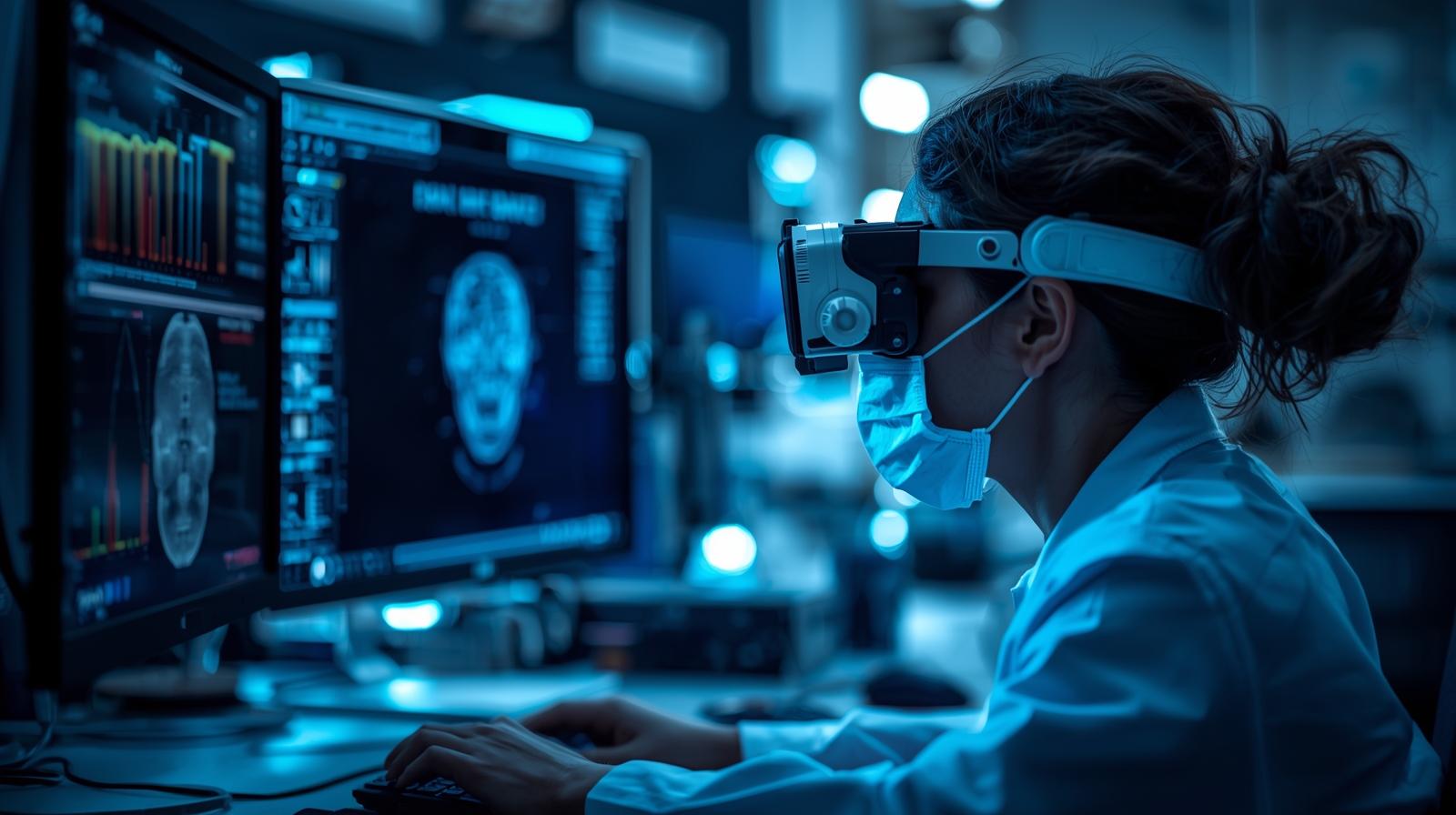
AI-assisted diagnostics healthcare systems analyze these images pixel by pixel. They detect nodules, fractures, hemorrhages, and abnormalities early.
In legacy imaging setups, AI overlays highlight areas of concern. Clinicians retain full control while benefiting from additional insight.
Turnaround times shrink. Confidence grows. Patient outcomes improve.
Enhancing diagnostics without workflow disruption
Disruption kills adoption. Clinicians resist tools that slow them down.
AI-assisted diagnostics healthcare solutions integrate with existing Picture Archiving and Communication Systems and electronic health records. Results appear where clinicians already look.
No extra logins. No complex interfaces. Just clearer information.
Because workflows remain familiar, acceptance rises quickly.
Supporting early disease detection
Early detection saves lives. Yet early-stage disease often hides in subtle signals.
AI excels at recognizing faint patterns. Slight density changes. Minimal shape irregularities. Small deviations from baseline.
Legacy systems capture this data already. AI-assisted diagnostics healthcare tools unlock its hidden value.
Early alerts enable earlier intervention. Outcomes improve without adding burden.
Improving diagnostics in emergency settings
Emergency departments operate under pressure. Time matters. Decisions must be fast and accurate.
AI-assisted diagnostics healthcare systems flag critical findings immediately. Stroke indicators, internal bleeding, and fractures surface faster.
Clinicians prioritize effectively. Delays shrink.
Legacy systems become faster responders with AI support.
AI-assisted diagnostics for cardiology
Cardiology relies on signals, images, and trends. ECGs, echocardiograms, and monitoring streams generate constant data.
AI detects arrhythmias, ischemic changes, and structural abnormalities earlier than manual review alone.
In legacy cardiology systems, AI operates as an intelligent observer. Alerts appear without replacing equipment.
Diagnostic confidence strengthens.
Enhancing pathology diagnostics
Pathology involves detailed visual inspection. Slides reveal cellular patterns that demand precision.
AI-assisted diagnostics healthcare solutions analyze digital pathology images. They count cells, detect anomalies, and quantify markers.
Legacy microscopes paired with digital capture benefit immediately. Objectivity increases.
Pathologists spend more time interpreting results rather than searching for them.
Reducing diagnostic variability
Different clinicians may interpret the same data differently. Experience, bias, and fatigue influence judgment.
AI-assisted diagnostics healthcare tools apply consistent criteria. Variability decreases.
Standardization improves quality across departments and locations.
Consistency supports trust.
Augmenting clinician expertise, not replacing it
Fear of replacement often shadows AI adoption. In practice, AI assists rather than replaces.
Clinicians remain decision-makers. AI provides suggestions, highlights, and confidence scores.
Human judgment incorporates context and empathy. AI handles pattern recognition.
This partnership strengthens care rather than diminishing it.
AI-assisted diagnostics and patient safety
Patient safety improves when errors decline. AI catches what humans may miss.
False negatives decrease. False positives are flagged for review.
Safety nets strengthen without slowing care.
Legacy systems gain new reliability layers.
Data quality challenges in legacy environments
Legacy systems often store data in varied formats. Quality may vary.
AI-assisted diagnostics healthcare integration includes data normalization and validation. Models learn to handle imperfections.
Over time, data quality improves through feedback loops.
Legacy limitations become manageable rather than blocking.
Interoperability with older systems
Interoperability challenges often hinder innovation. Legacy systems use older standards.
Modern AI platforms adapt through integration layers. They communicate without forcing replacements.
This flexibility accelerates deployment.
Compatibility becomes a strength rather than a weakness.
Regulatory considerations for AI-assisted diagnostics
Healthcare regulation demands caution. Diagnostic tools must be validated.
AI-assisted diagnostics healthcare solutions often operate as decision support. Clinicians retain authority.
Regulatory frameworks support this approach. Transparency and auditability matter.
Compliance aligns with innovation when designed thoughtfully.
Building trust among clinicians
Trust drives adoption. Clinicians need to understand how AI reaches conclusions.
Explainable AI techniques reveal reasoning. Visual heatmaps and confidence indicators build confidence.
When clinicians trust tools, they use them consistently.
AI-assisted diagnostics healthcare adoption becomes organic.
Training and skill development
AI integration requires learning. Training focuses on interpretation rather than operation.
Clinicians learn how to weigh AI suggestions appropriately.
Skills evolve. Confidence grows.
Education supports sustainable adoption.
Operational efficiency gains
Diagnostic delays slow patient flow. AI accelerates review.
Turnaround times shorten. Bottlenecks ease.
Efficiency improves across departments.
Legacy infrastructure becomes more productive.
Cost efficiency and return on investment
Replacing diagnostic equipment is expensive. AI augmentation costs far less.
Improved accuracy reduces repeat tests. Early detection lowers treatment costs.
Return on investment appears quickly.
AI-assisted diagnostics healthcare delivers financial as well as clinical value.
Expanding access to quality diagnostics
Smaller facilities often lack specialist expertise. AI bridges that gap.
Legacy systems in rural or underserved areas gain advanced support.
Quality care becomes more equitable.
Technology extends expertise beyond geography.
Ethical considerations in AI-assisted diagnostics
Ethics matter deeply in healthcare. Bias, transparency, and accountability must be addressed.
Diverse training data reduces bias. Oversight ensures fairness.
AI-assisted diagnostics healthcare systems operate within ethical boundaries when designed responsibly.
Trust remains central.
Managing data privacy and security
Patient data must remain protected. AI integration increases data flow.
Encryption, access control, and monitoring protect privacy.
Security complements diagnostics rather than competing with it.
Legacy systems gain modern safeguards.
Continuous learning and improvement
AI models learn continuously. Feedback from clinicians refines performance.
Accuracy improves over time.
Legacy systems evolve rather than stagnate.
Learning becomes embedded.
Future outlook for AI-assisted diagnostics
AI capabilities will expand. Multimodal diagnostics combining images, signals, and records will mature.
Legacy infrastructure will continue benefiting without replacement.
Healthcare systems will become smarter incrementally.
AI-assisted diagnostics healthcare integration will define modernization.
Global impact on healthcare systems
Globally, many healthcare systems rely on aging infrastructure. AI offers scalable improvement.
Resource-limited settings gain diagnostic support.
Healthcare quality improves worldwide.
Technology levels the field.
Organizational readiness and leadership
Leadership commitment drives success. Clear goals guide implementation.
Cross-functional teams collaborate. Clinicians shape deployment.
Organizational alignment ensures lasting value.
Conclusion
AI-assisted diagnostics healthcare solutions unlock powerful improvements within legacy healthcare infrastructure. By enhancing existing systems rather than replacing them, organizations achieve better accuracy, faster decisions, and improved patient outcomes without disruption.
This approach respects clinical expertise, preserves trusted workflows, and delivers modern intelligence where it matters most. As healthcare continues to evolve, AI-assisted diagnostics provide a practical, ethical, and effective path forward.
Legacy systems do not need to be left behind. With AI, they become smarter partners in care.
FAQ
1. What are AI-assisted diagnostics in healthcare?
They are tools that use artificial intelligence to support clinicians in analyzing medical data and images.
2. Can AI-assisted diagnostics work with legacy systems?
Yes, most solutions integrate as an augmentation layer without replacing existing infrastructure.
3. Do AI diagnostics replace doctors?
No, they support clinicians by improving accuracy and consistency while leaving decisions to humans.
4. Are AI-assisted diagnostics regulated?
Yes, they follow healthcare regulations and often function as decision-support tools.
5. What benefits do legacy hospitals gain from AI diagnostics?
They gain improved accuracy, faster workflows, cost efficiency, and extended system value.