

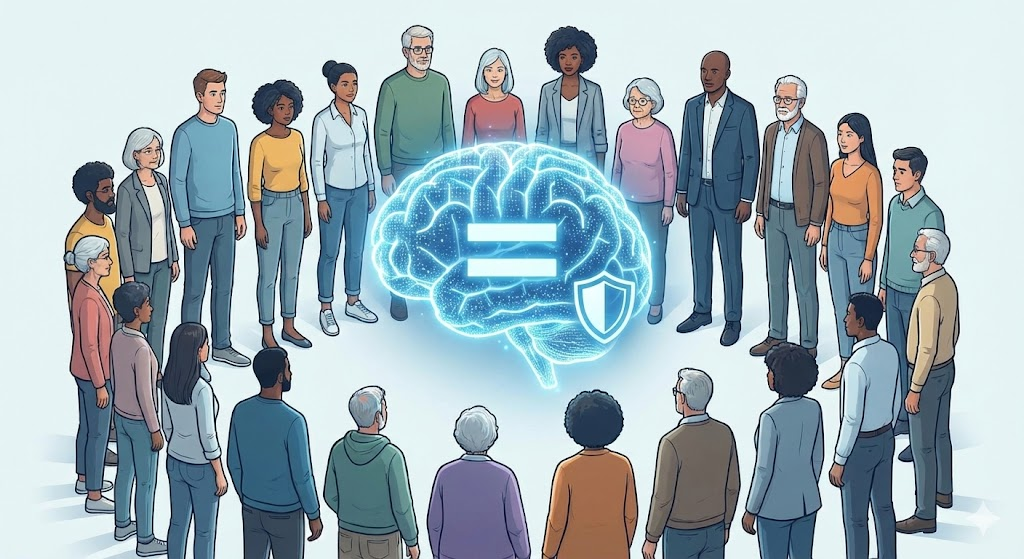
Ethical AI decision-making is no longer a theoretical ideal. It is a practical necessity. As artificial intelligence increasingly shapes hiring, lending, healthcare, policing, and customer experiences, the consequences of automated decisions are becoming impossible to ignore.
Every AI system makes choices. Some are obvious. Others are hidden behind layers of data and code. When those choices affect real people, ethics stops being optional. It becomes foundational.
Organizations that fail to build ethical AI decision-making systems face more than technical risk. They face reputational damage, regulatory scrutiny, and loss of public trust. Meanwhile, organizations that invest in fairness and accountability gain resilience, credibility, and long-term value.
This article explores how to build ethical and unbiased AI decision-making systems, why bias emerges, and what practical steps organizations must take to create AI that people can trust.
Why Ethical AI Decision-Making Matters Now
AI systems scale decisions rapidly. A single flawed model can affect millions of people almost instantly. That scale magnifies both benefit and harm.
Ethical AI decision-making matters because:
- Automated decisions increasingly replace human judgment
- Bias can propagate faster than it can be detected
- Errors impact livelihoods, health, and rights
- Trust determines adoption and legitimacy
Without ethical safeguards, AI systems reinforce inequality rather than reduce it. As a result, organizations face backlash that innovation alone cannot fix.
Understanding Bias in AI Decision-Making Systems
Bias is not always intentional. Often, it is inherited.
AI systems learn from data. That data reflects historical patterns, social inequalities, and human decisions. If left unchecked, models reproduce those patterns faithfully.
Common sources of bias include:
- Skewed or incomplete training data
- Proxy variables that encode sensitive traits
- Historical decisions shaped by discrimination
- Feedback loops that reinforce outcomes
Ethical AI decision-making begins with acknowledging that bias is a systemic risk, not a rare anomaly.
Ethical AI Decision-Making Starts with Problem Framing
Bias often enters before a model is built.
How a problem is defined determines what outcomes are optimized. If success metrics ignore fairness, models will do the same.
Ethical AI decision-making requires teams to ask:
- Who is affected by this decision?
- What harm could occur if the system fails?
- Which outcomes matter beyond accuracy?
- When should humans intervene?
Thoughtful framing reduces downstream risk dramatically.
Data Practices That Support Ethical AI Decision-Making
Data is the foundation of AI behavior. Ethical systems begin with ethical data practices.
Teams building ethical AI decision-making systems must focus on:
- Collecting representative datasets
- Auditing data for imbalance and exclusion
- Documenting data sources and limitations
- Removing or carefully managing sensitive attributes
Data transparency makes ethical evaluation possible. Without it, bias remains invisible.
Fairness Metrics and Evaluation Methods
Accuracy alone is not enough.
Ethical AI decision-making requires fairness metrics tailored to context. Different industries and use cases demand different definitions of fairness.
Common evaluation approaches include:
- Comparing error rates across groups
- Measuring disparate impact
- Testing outcomes under simulated conditions
- Reviewing edge cases manually
Fairness must be measured continuously, not just during development.
Transparency and Explainability in Ethical AI Systems
Opaque systems undermine trust.
People affected by AI decisions want explanations. Regulators increasingly demand them. Transparency bridges the gap between automation and accountability.
Ethical AI decision-making systems prioritize:
- Interpretable model designs where possible
- Explainable outputs for high-impact decisions
- Clear documentation of decision logic
- Accessible communication for non-technical audiences
Explainability supports both trust and governance.
Human Oversight and Ethical AI Decision-Making
Automation should not eliminate accountability.
Ethical AI decision-making systems include humans in the loop, especially when uncertainty or high impact is involved.
Human oversight enables:
- Review of ambiguous cases
- Escalation of ethical concerns
- Continuous learning from outcomes
- Preservation of responsibility
Shared control prevents blind reliance on automation.
Reducing Bias Through Model Design Choices
Model architecture influences behavior.
Complex models may offer higher accuracy but lower transparency. Simpler models may be easier to audit. Ethical trade-offs must be considered explicitly.
Ethical AI decision-making benefits from:
- Choosing models appropriate to risk level
- Avoiding unnecessary complexity
- Regularly validating assumptions
- Stress-testing models against edge cases
Design choices reflect ethical priorities.
Monitoring Bias in Production Systems
Bias does not stop at deployment.
Data distributions change. User behavior evolves. Models drift. Ethical AI decision-making requires continuous monitoring.
Ongoing oversight includes:
- Tracking performance across demographic groups
- Monitoring input data changes
- Reviewing decision outcomes regularly
- Updating models responsibly
Ethics is a lifecycle commitment, not a launch checklist.
Governance Structures for Ethical AI Decision-Making
Ethics requires ownership.
Organizations must define who is responsible for ethical oversight. Without governance, good intentions fade under pressure.
Effective governance includes:
- Clear ethical guidelines
- Cross-functional review committees
- Documented decision processes
- Escalation and remediation paths
Ethical AI decision-making systems thrive under structured accountability.
Regulation and Ethical AI Alignment
Regulation is accelerating worldwide.
Laws increasingly reflect ethical principles such as fairness, transparency, and accountability. Ethical AI prepares organizations for compliance rather than reaction.
Alignment with regulation includes:
- Proactive risk assessment
- Documentation for audits
- Consistent monitoring practices
- Clear consent and privacy controls
Ethics and compliance reinforce each other.
Ethical AI Decision-Making Across Industries
Ethical expectations vary by context.
Healthcare prioritizes safety. Finance emphasizes fairness. Public sector AI demands accountability. Retail focuses on consent and transparency.
Ethical AI decision-making adapts principles to industry needs while maintaining core values.
One-size-fits-all ethics frameworks rarely work. Context matters.
Balancing Innovation and Ethical Responsibility
Speed creates pressure. Ethics creates pause.
Organizations often fear that ethical safeguards slow innovation. In reality, they prevent costly rework and reputational damage.
Balanced innovation focuses on:
- Responsible experimentation
- Gradual deployment
- Early stakeholder engagement
- Continuous evaluation
Ethical clarity accelerates sustainable progress.
The Cost of Ignoring Ethical AI Decision-Making
Ethical failures are expensive.
Consequences include regulatory fines, lawsuits, public backlash, and loss of trust. Recovery takes years, not months.
Ethical AI decision-making systems reduce these risks by design. Prevention is far cheaper than remediation.
Building a Culture That Supports Ethical AI
Ethics cannot be enforced by policy alone.
Teams must feel empowered to raise concerns. Leadership must model ethical behavior. Learning must be continuous.
Cultural support includes:
- Ethical training and awareness
- Psychological safety
- Rewarding responsible behavior
- Transparent decision-making
Culture sustains ethics under pressure.
Ethical AI Decision-Making as a Competitive Advantage
Trust differentiates.
Organizations known for ethical AI attract customers, partners, and talent. Trust compounds over time.
Ethical AI decision-making delivers:
- Stronger brand reputation
- Increased user confidence
- Lower regulatory risk
- Long-term resilience
Ethics becomes strategy.
Conclusion
Ethical AI decision-making systems are essential for building fair, trustworthy, and sustainable AI. By addressing bias at every stage, prioritizing transparency, and embedding accountability, organizations protect both people and value.
AI will continue to influence critical decisions. The question is not whether organizations will use it, but whether they will use it responsibly. Those who invest in ethical foundations today will shape a future where innovation and fairness grow together.
FAQ
1. What is ethical AI decision-making?
It is the practice of designing AI systems that make fair, transparent, accountable, and unbiased decisions.
2. Why is bias common in AI systems?
Because AI learns from historical data that often reflects existing inequalities and human bias.
3. Can AI ever be completely unbiased?
No, but bias can be reduced significantly through careful design, evaluation, and monitoring.
4. How do organizations monitor ethical AI in production?
By tracking fairness metrics, monitoring drift, reviewing outcomes, and maintaining human oversight.
5. Is ethical AI required by law?
In many regions, ethical principles are increasingly reflected in AI regulations and compliance requirements.