

AI ethics bias mitigation is no longer a side discussion. It sits at the center of how artificial intelligence will evolve, scale, and earn public trust. As AI systems move deeper into daily life, their influence grows quietly but powerfully. They screen job applications, recommend medical treatments, flag fraud, and guide public policy decisions.
With that influence comes responsibility.
Bias in AI does not always come from malicious intent. More often, it reflects history, data gaps, and unexamined assumptions. Left unchecked, these patterns become automated and amplified. That is why the future of AI depends on how well ethics and bias mitigation are embedded into design, deployment, and governance.
This article explores where AI ethics bias mitigation is headed, why it matters more than ever, and how technology, regulation, and culture will shape the next chapter.
Why AI Ethics Bias Mitigation Is a Defining Issue
Artificial intelligence is scaling faster than social understanding.
New models appear monthly. Capabilities expand rapidly. However, ethical safeguards often lag behind innovation. This gap creates tension.
Matters because it protects people from harm while allowing progress to continue. It ensures that automation does not quietly reinforce inequality. It also reassures users that systems serve human values.
Without ethical grounding, AI risks losing legitimacy. With it, adoption accelerates.
Trust becomes the currency of innovation.
How Bias Shapes AI Outcomes
Bias enters AI through data, design, and deployment.
Historical data reflects past decisions. If those decisions were unequal, models learn those patterns. Feature selection can unintentionally encode sensitive attributes. Deployment contexts may shift meaning.
Addresses these layers systematically. It does not assume neutrality. Instead, it questions inputs and outcomes.
Understanding bias requires humility. Models mirror the world as it was, not as it should be.
From Reactive Fixes to Proactive Ethics
Early approaches to bias focused on correction.
Teams detected disparities after deployment and applied fixes. While helpful, this approach reacts to harm rather than preventing it.
The future of AI ethics bias mitigation emphasizes proactive design. Ethics enters earlier. Risk assessments precede deployment. Fairness metrics guide training.
Prevention costs less than repair.
Proactive ethics builds resilience.
The Role of Regulation in Ethical AI
Regulation is accelerating.
Governments recognize that voluntary guidelines are not enough. Laws increasingly require transparency, accountability, and fairness.
AI ethics bias mitigation will be shaped by regulatory frameworks that define acceptable risk. Compliance becomes a baseline, not a ceiling.
Clear rules provide consistency. They also reduce uncertainty for organizations.
Regulation sets the floor for responsible behavior.
Global Differences in Ethical Standards
Ethics is not universal in practice.
Cultural values influence how societies define fairness, privacy, and accountability. What feels acceptable in one region may feel invasive in another.
AI ethics bias mitigation must adapt to global diversity while maintaining core principles. Flexibility matters.
Global organizations face a balancing act between consistency and localization.
Sensitivity supports trust.
Bias Mitigation as a Continuous Process
Bias does not disappear after deployment.
Data drifts. User behavior changes. Context evolves.
AI ethics bias mitigation becomes a continuous practice rather than a checklist item. Monitoring replaces one-time audits. Feedback loops inform improvement.
Ongoing evaluation sustains fairness.
Static ethics cannot support dynamic systems.
The Growing Importance of Transparency
Transparency builds confidence.
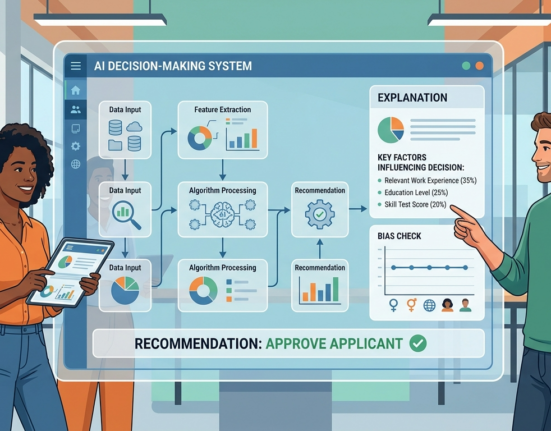
People want to know when AI influences decisions. They want explanations that make sense.
Relies on transparency to reveal how systems behave. Explainable models reduce suspicion.
Opacity breeds mistrust.
Clarity invites acceptance.
Explainability and Ethical Accountability
Explainability supports accountability.
When systems can explain outcomes, responsibility remains traceable. Errors become correctable. Bias becomes visible.
Uses explainability as a bridge between technical systems and human understanding.
Understanding empowers oversight.
Oversight protects users.
Human Oversight in the Age of Automation
Automation does not eliminate human responsibility.
High-stakes decisions demand human review. AI may assist, but people must remain accountable.
AI ethics bias mitigation emphasizes human-in-the-loop design. Judgment complements prediction.
Humans provide context machines lack.
Balance preserves ethics.
Ethical AI Design From the Start
Ethics works best when embedded early.
Design choices shape behavior later. Data sources, objectives, and constraints influence outcomes.
AI ethics bias mitigation starts at conception, not deployment. Teams ask ethical questions before code is written.
Early consideration prevents downstream harm.
Design is destiny.
Bias Mitigation and Model Architecture
Architecture influences fairness.
Some models are easier to interpret. Others offer raw performance but limited transparency.
AI ethics bias mitigation considers architectural trade-offs. Sometimes a simpler model better serves ethical goals.
Accuracy alone is not enough.
Fitness includes fairness.
Data Governance and Ethical Foundations
Data governance underpins ethical AI.
Clear policies define data sourcing, consent, and retention. Governance reduces hidden bias.
AI ethics bias mitigation depends on data discipline. Poor data practices undermine fairness efforts.
Data is not neutral.
Governance gives it direction.
The Role of Bias Detection Tools
Tools support ethical practice.
Bias detection frameworks quantify disparities. Monitoring platforms track fairness over time.
AI ethics bias mitigation relies on tools to scale evaluation. However, tools require interpretation.
Metrics guide, but values decide.
Technology supports judgment.
Ethical Trade-Offs and Decision-Making
Fairness involves trade-offs.
Improving outcomes for one group may affect another. Accuracy may shift. Costs may rise.
AI ethics bias mitigation embraces transparent decision-making. Stakeholders understand choices and consequences.
Silence creates suspicion.
Honesty builds legitimacy.
The Business Case for Ethical AI
Ethics aligns with business interests.
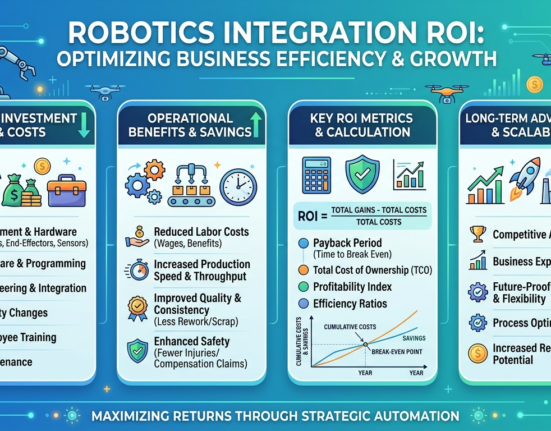
Trust drives adoption. Fair systems reduce legal risk. Responsible brands attract talent.
Protects long-term value.
Short-term shortcuts undermine sustainability.
Ethics pays dividends.
Public Trust and Social Acceptance
Public perception matters.
People accept AI when they feel respected when they feel respected. Resistance grows when systems feel unfair or opaque.
AI ethics bias mitigation shapes social acceptance. It turns fear into cautious optimism.
Trust enables progress.
Progress requires trust.
Education and Ethical Literacy
Ethics requires understanding.
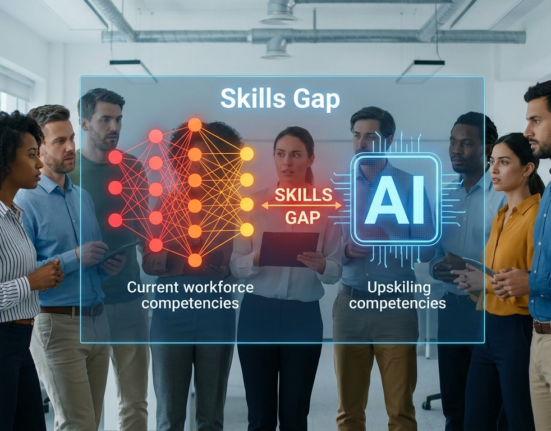
Teams need training to recognize bias and ethical risk. Awareness reduces accidental harm.
AI ethics bias mitigation includes education across roles, not just specialists.
Shared literacy strengthens culture.
Knowledge empowers responsibility.
Ethics Committees and Oversight Structures
Governance structures matter.
Ethics committees provide multidisciplinary review. Diverse perspectives reveal blind spots.
AI ethics bias mitigation benefits from structured oversight rather than ad hoc decisions.
Process supports consistency.
Consistency builds credibility.
Bias Mitigation in High-Stakes Domains
Some domains demand extra care.
Healthcare, finance, law enforcement, and education involve profound consequences.
Iin these areas requires conservative deployment, rigorous testing, and ongoing review.
Higher stakes require higher standards.
Caution saves lives.
The Future Role of Audits and Certification
Audits are evolving.
Independent evaluations assess fairness, transparency, and compliance. Certification may become common.
Will include third-party validation.
External review builds trust.
Accountability becomes visible.
Intersectionality and Complex Bias
Bias rarely affects one dimension alone.
Gender, race, age, and socioeconomic status intersect. Simple metrics miss nuance.
Future tools will address intersectional effects.
Complexity demands sophistication.
Fairness deepens with insight.
Ethical Challenges of Generative AI
Generative AI introduces new risks.
Synthetic content can reinforce stereotypes. Training data opacity complicates bias analysis.
Must adapt to generative systems.
Novel capabilities require novel safeguards.
Adaptation defines progress.
Balancing Innovation Speed With Ethical Care
Speed pressures ethics.
Markets reward rapid deployment. Ethics demands reflection.
AI ethics bias mitigation seeks balance. Innovation continues within ethical guardrails.
Guardrails prevent derailment.
Speed without direction invites harm.
The Role of Public Dialogue
Ethics benefits from dialogue.
Engaging users, communities, and critics improves understanding. Feedback informs improvement.
Grows stronger through conversation.
Listening builds legitimacy.
Dialogue humanizes technology.
Looking Ahead: Ethics as Infrastructure
Ethics will become infrastructure.
Just as security is built into systems, ethics will embed into pipelines. Bias checks become routine.
Transitions from special effort to standard practice.
Normalization signals maturity.
Maturity supports scale.
Conclusion
The future of artificial intelligence depends on how seriously we take ethics and bias mitigation today. AI ethics bias mitigation is not about slowing innovation. It is about steering it responsibly. As systems grow more powerful, the cost of ignoring fairness grows higher.
Organizations that embed ethics into design, governance, and culture will lead the next era of AI. They will earn trust, adapt faster, and create systems that serve society rather than distort it.
The road ahead demands care, humility, and commitment. With thoughtful bias mitigation, AI can become not only smarter, but fairer.
FAQ
1. What is AI ethics bias mitigation?
It is the practice of identifying, reducing, and managing unfair bias in AI systems through design, monitoring, and governance.
2. Why is bias mitigation important for AI’s future?
Because unchecked bias undermines trust, causes harm, and limits adoption.
3. Can bias ever be fully eliminated from AI?
No. Bias can be reduced and managed, but human oversight remains essential.
4. How does regulation influence ethical AI?
Regulation sets minimum standards and encourages accountability and transparency.
5. Will ethical AI slow innovation?
No. Ethical practices often accelerate adoption by building trust and stability.