

Modern industries increasingly rely on visual data to automate inspections, monitor environments, and analyze operations. Cameras and imaging sensors collect large volumes of data every second. However, transmitting all that information to centralized servers can create delays and network congestion. For this reason, edge computer vision systems have become essential for low-latency processing in legacy infrastructure.
Edge-based vision technology processes images directly on local devices rather than sending them to remote data centers. This approach reduces response times and improves operational efficiency.
Moreover, organizations with older infrastructure benefit because edge computing integrates easily with existing systems.
Instead of redesigning entire IT architectures, companies can deploy local processing units near cameras or sensors.
As industries adopt artificial intelligence solutions, edge computer vision systems offer a powerful way to improve performance while maintaining compatibility with legacy platforms.
Understanding Edge-Based Computer Vision
Edge computing refers to processing data close to the source where it is generated. In computer vision applications, this means analyzing images directly on edge devices such as cameras, embedded processors, or industrial gateways.
Through this architecture, edge computer vision systems reduce the need to transmit large image datasets to centralized servers.
This approach significantly decreases network traffic and improves system responsiveness.
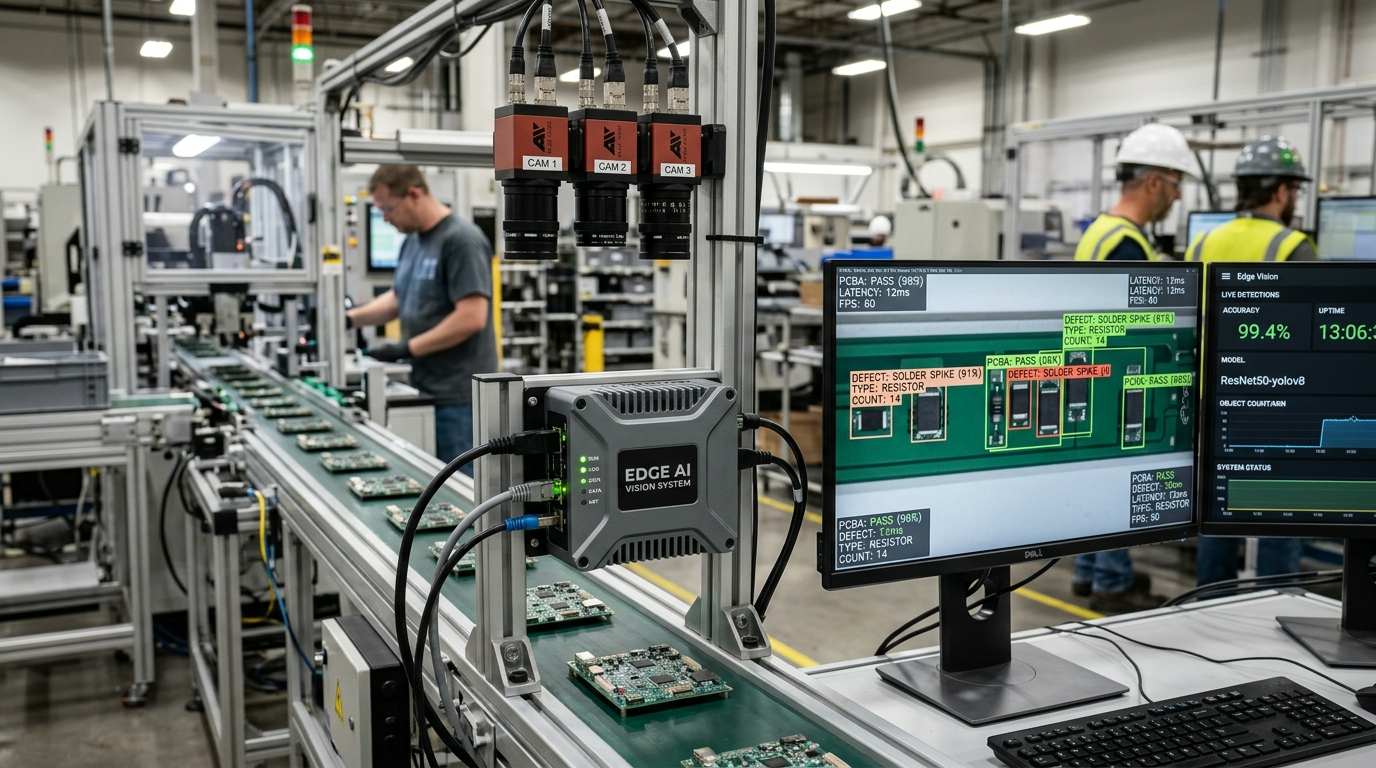
For example, a manufacturing inspection camera can analyze product defects immediately on the factory floor.
Instead of waiting for remote servers to process images, edge devices generate results instantly.
Additionally, edge-based solutions enable continuous operation even when internet connectivity becomes unreliable.
These advantages make edge computing an ideal solution for organizations using legacy infrastructure that may lack modern high-speed networks.
Why Legacy Systems Benefit from Edge Vision
Many organizations still operate legacy systems that were not designed for large-scale data processing. Traditional infrastructures may struggle with bandwidth limitations and outdated hardware.
Therefore, edge computer vision systems provide an effective way to modernize operations without replacing existing equipment.
Edge devices handle image analysis locally, reducing the load on legacy servers.
This setup allows organizations to introduce artificial intelligence capabilities while maintaining current infrastructure.
Furthermore, edge solutions minimize latency. Real-time decisions become possible because data processing occurs directly near the cameras.
Legacy environments often lack the flexibility required for large cloud deployments.
However, edge computing works alongside existing systems, enabling gradual technology upgrades.
As a result, companies achieve improved operational efficiency while preserving investments in their current infrastructure.
Key Technologies Behind Edge Vision Systems
Several technologies enable edge computer vision systems to function effectively in low-latency environments.
These technologies combine hardware and software innovations to deliver real-time visual analysis.
Edge AI Processors
Edge processors include specialized hardware designed to run machine learning models locally.
These chips accelerate image recognition and object detection tasks.
Because processing occurs directly on the device, latency decreases dramatically.
Edge processors allow organizations to implement edge computer vision systems even in resource-constrained environments.
Embedded Cameras with AI Capabilities
Modern smart cameras integrate sensors, processors, and machine learning models within a single device.
These cameras analyze images immediately after capture.
Embedded systems eliminate the need for external computing resources.
This design improves speed and simplifies deployment.
Machine Learning Optimization
Machine learning models used in edge environments must be optimized for efficiency.
Engineers often compress models to reduce memory requirements.
Optimized algorithms allow edge computer vision systems to operate effectively on smaller devices.
These improvements enable real-time analysis without sacrificing accuracy.
Edge Software Frameworks
Software frameworks support the development and deployment of vision models on edge devices.
These platforms manage tasks such as image processing, model inference, and device communication.
Frameworks simplify the integration of edge technologies with existing systems.
Advantages of Edge-Based Vision Processing
Organizations implementing edge computer vision systems gain several important benefits.
These advantages improve both performance and operational reliability.
Low Latency and Faster Decisions
Edge processing eliminates the delay associated with sending data to cloud servers.
Visual analysis occurs immediately after images are captured.
This capability allows organizations to respond to events quickly.
For example, industrial inspection systems can detect defects instantly.
Reduced Network Traffic
Image and video data require significant bandwidth.
Edge systems analyze data locally and transmit only relevant results.
Consequently, network congestion decreases significantly.
This feature is especially beneficial in legacy environments with limited bandwidth.
Improved Reliability
Because edge devices process data locally, systems remain functional even during network outages.
Operations continue without interruption.
Reliable performance strengthens the effectiveness of edge computer vision systems.
Enhanced Data Privacy
Local processing reduces the need to transmit sensitive visual data across networks.
Organizations maintain greater control over information security.
This approach supports compliance with privacy regulations.
Implementing Edge Vision in Legacy Infrastructure
Organizations seeking to adopt edge computer vision systems must develop careful integration strategies.
Successful deployment involves aligning new technologies with existing infrastructure.
Assessing Existing Systems
Engineers should evaluate current hardware, network capabilities, and operational requirements.
This assessment identifies areas where edge computing can provide the most value.
Selecting Appropriate Edge Devices
Different environments require different hardware solutions.
Manufacturing facilities may use industrial edge gateways.
Retail environments may rely on smart cameras with built-in processing.
Choosing the right hardware ensures effective system performance.
Integrating AI Models
Machine learning models must be optimized for edge devices.
Engineers deploy models that balance accuracy and computational efficiency.
These models enable edge computer vision systems to operate smoothly within resource-limited environments.
Monitoring System Performance
After deployment, organizations should monitor device performance continuously.
Monitoring tools track processing speed, accuracy, and system reliability.
This feedback helps engineers refine system configurations over time.
Challenges of Edge Vision Integration
Although edge computing provides many benefits, organizations may encounter challenges when implementing edge computer vision systems.
One challenge involves hardware limitations.
Edge devices often have less computing power than centralized servers.
Engineers must optimize models carefully to ensure efficient performance.
Another challenge involves system management.
Organizations may deploy hundreds of edge devices across multiple locations.
Managing software updates and monitoring performance requires specialized tools.
Additionally, integration with legacy systems can require custom development.
Older systems may use outdated communication protocols.
Despite these challenges, many organizations successfully adopt edge computing strategies.
Careful planning and proper infrastructure design help overcome integration barriers.
Future Trends in Edge-Based Vision Technologies
Technological innovation continues improving edge computer vision systems.
Future developments will further expand their capabilities.
One emerging trend involves more powerful AI chips designed specifically for edge devices.
These processors will enable advanced machine learning models to run locally.
Another trend includes improved connectivity through technologies such as 5G networks.
Faster communication will allow edge devices to collaborate more effectively.
Additionally, software platforms are evolving to simplify edge device management.
These tools help organizations monitor large fleets of distributed AI systems.
Finally, edge-cloud hybrid architectures are gaining popularity.
In these systems, edge devices perform initial processing while cloud platforms handle advanced analytics.
This combination provides both speed and scalability.
Conclusion
Organizations increasingly rely on visual data to drive automation and operational insights. However, traditional computing architectures often struggle to process large volumes of image data quickly.
Through edge computer vision systems, companies can analyze visual information directly at the source.
This approach reduces latency, improves reliability, and minimizes network traffic.
Edge computing also allows organizations to modernize legacy systems without replacing existing infrastructure.
By integrating intelligent devices and optimized machine learning models, businesses achieve real-time visual analysis.
Although implementing edge computing requires careful planning, the benefits are substantial.
As artificial intelligence technologies continue advancing, edge-based vision solutions will play a critical role in future digital transformation strategies.
FAQ
1. What is edge computing in computer vision?
Edge computing processes images locally on devices such as cameras or embedded processors instead of sending data to cloud servers.
2. Why are low-latency systems important for computer vision?
Low latency allows organizations to detect events and respond immediately, which is critical in applications like manufacturing inspection.
3. Can edge AI work with older infrastructure?
Yes. Edge devices can integrate with legacy systems and provide modern AI capabilities without requiring major upgrades.
4. What industries use edge-based vision technologies?
Manufacturing, retail, transportation, healthcare, and security sectors frequently deploy edge vision solutions.
5. How do edge devices reduce network congestion?
Edge systems process images locally and send only relevant results instead of large image files across the network.




Leave feedback about this