

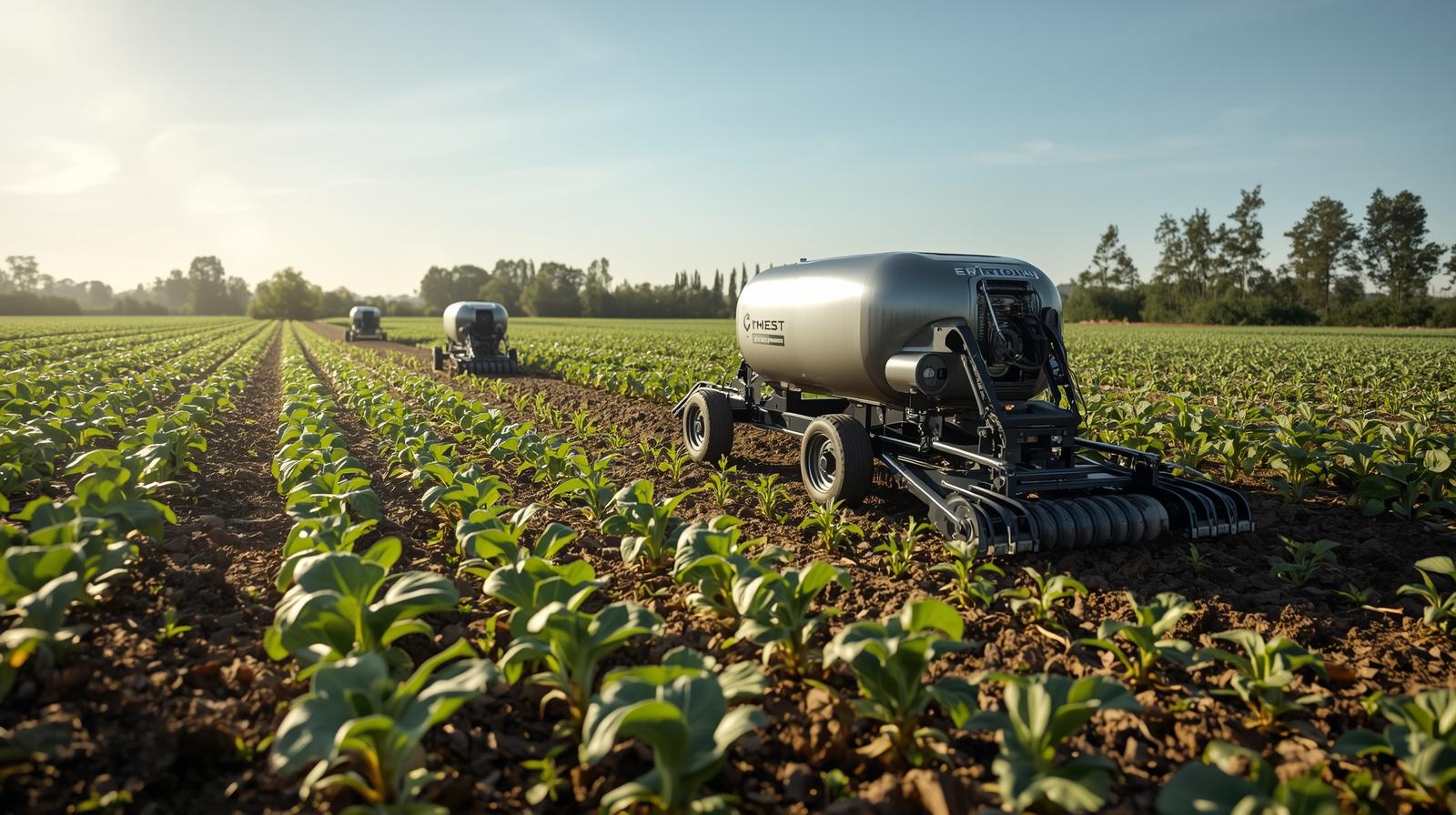
Agriculture has always been a balance between nature and human effort. Farmers watch the weather, tend the soil, and respond to countless variables each day. Yet today, that balance is shifting. Technology has entered the field, not as a replacement for farmers, but as a powerful partner. At the heart of this change sits agricultural robotics automation.
Farming smarter no longer means working harder or longer. It means working with machines that see, learn, and act with precision. Robotics automation brings intelligence into the field, turning traditional farming into a data-driven, efficient operation. As labor shortages rise and climate pressures increase, this transformation becomes not just helpful, but necessary.
Think of agricultural robotics automation as an extra set of tireless hands and eyes. These systems operate day and night, make consistent decisions, and help farmers focus on strategy rather than repetition.
Why productivity matters more than ever in agriculture
Global food demand continues to rise. Meanwhile, arable land shrinks, labor availability declines, and input costs increase. Farmers are expected to produce more with less.
Traditional productivity gains came from larger machinery and chemical inputs. However, those approaches now face limits. Soil health suffers. Costs rise. Efficiency plateaus.
Agricultural robotics automation offers a new path forward. By applying precision instead of brute force, farms improve output while protecting resources. Productivity becomes smarter rather than heavier.
Understanding agricultural robotics automation
Agricultural robotics automation refers to the use of autonomous or semi-autonomous machines guided by software, sensors, and artificial intelligence. These machines perform tasks once handled manually or with conventional equipment.
Robots plant seeds, monitor crops, remove weeds, harvest produce, and manage livestock. Sensors guide decisions. Algorithms adapt behavior.
Unlike traditional machinery, robotic systems respond to conditions in real time. They adjust depth, speed, and action continuously. This adaptability defines smarter farming.
Robotics automation in planting operations
Planting sets the tone for the entire season. Precision matters from the first seed.
Robotic planters place seeds at optimal depth and spacing. Sensors read soil moisture and temperature. Adjustments happen instantly.
As a result, emergence becomes uniform. Germination improves. Seed waste declines.
Agricultural robotics automation ensures each seed has the best possible start, increasing yields before plants even break the surface.
Precision crop monitoring with agricultural robots
Monitoring crops manually is time-consuming and subjective. Fields change daily. Subtle stress often goes unnoticed.
Robotic systems equipped with cameras and sensors patrol fields regularly. They detect nutrient deficiencies, pest damage, and disease early.
Early detection enables targeted intervention. Treatments apply only where needed. Costs decrease. Environmental impact shrinks.
Productivity rises because problems are solved before they spread.
Smarter weed control through automation
Weeds steal nutrients, water, and sunlight. Traditional weed control relies heavily on chemicals or labor.
Agricultural robotics automation offers an alternative. Vision-guided robots identify weeds individually. Mechanical tools or micro-sprayers remove them precisely.
Herbicide use drops dramatically. Crops face less competition. Soil health improves.
Weed control becomes surgical rather than aggressive, benefiting both yield and sustainability.
Automated harvesting for consistent output
Harvest timing determines quality and profit. Manual harvesting struggles with consistency and labor availability.
Robotic harvesters assess ripeness visually. They pick produce gently and accurately. Speed adjusts automatically.
Consistency improves. Waste declines. Harvest windows expand.
Agricultural robotics automation ensures crops are harvested at peak value without exhausting human labor.
Livestock management with robotics automation
Livestock farming benefits equally from automation. Monitoring animal health requires constant attention.
Robotic systems track movement, feeding, and behavior. Changes signal illness or stress early.
Automated milking systems adjust to individual animals. Productivity increases without compromising welfare.
Farmers gain insight rather than replacing care. Animals benefit from consistent routines.
Reducing labor strain and shortages
Labor shortages challenge agriculture worldwide. Physical demands deter new workers. Seasonal needs fluctuate unpredictably.
Agricultural robotics automation fills gaps reliably. Machines perform repetitive or strenuous tasks. Humans focus on supervision and decision-making.
Work becomes safer. Fatigue decreases. Retention improves.
Robotics support farmers rather than replacing them.
Improving input efficiency and cost control
Inputs such as water, fertilizer, and fuel drive costs. Waste erodes margins.
Robotic systems apply inputs precisely. Sensors guide dosage. Variability replaces blanket application.
As a result, less input produces equal or better output. Costs decline. Environmental impact lessens.
Agricultural robotics automation turns efficiency into a competitive advantage.
Data-driven decision-making on the farm
Robotics generate data constantly. Every movement, measurement, and outcome is recorded.
Data analytics reveal patterns. Trends guide planting, irrigation, and harvest decisions.
Farmers move from intuition alone to informed strategy. Decisions become proactive.
Productivity improves through insight, not guesswork.
Autonomous tractors and field operations
Tractors remain central to farming. Autonomy enhances their role.
Autonomous tractors follow precise paths. Overlap disappears. Fuel use drops.
They operate longer hours safely. Human supervision replaces constant operation.
Agricultural robotics automation increases field efficiency while reducing operator fatigue.
Sustainability and environmental benefits
Sustainability matters to consumers and regulators alike. Robotics support both goals.
Precise application reduces runoff. Soil compaction decreases with lighter machines.
Biodiversity benefits from reduced chemical use. Carbon footprints shrink.
Smarter farming aligns productivity with responsibility.
Scalability for farms of all sizes
Robotics were once reserved for large operations. That barrier is fading.
Modular systems allow gradual adoption. Leasing models reduce upfront costs.
Small and medium farms benefit alongside large enterprises.
Agricultural robotics automation democratizes productivity gains.
Integration with existing farm systems
Adoption succeeds when integration is smooth. Modern robotic systems connect with existing equipment and software.
Data flows into farm management platforms. Decisions align across operations.
Integration minimizes disruption. Value appears quickly.
Technology complements tradition rather than replacing it.
Challenges in adopting agricultural robotics automation
Adoption brings challenges. Initial investment concerns arise. Training is required. Infrastructure must support connectivity.
However, these challenges diminish with experience. Pilot programs demonstrate value. Support networks grow.
Most barriers are temporary. Benefits endure.
Managing reliability and maintenance
Reliability matters in agriculture. Downtime during critical periods is costly.
Modern robotics systems include self-diagnostics. Predictive maintenance prevents failures.
Remote support resolves issues quickly.
Agricultural robotics automation improves reliability rather than reducing it.
Farmer skills and the changing workforce
Automation changes skill requirements. Technical literacy becomes valuable.
Training empowers farmers to manage advanced systems confidently.
Younger generations find agriculture more appealing with technology involved.
The workforce evolves alongside tools.
Economic impact and return on investment
Return on investment drives adoption decisions. Robotics reduce labor costs, increase yields, and lower input expenses.
Payback periods shorten as systems mature.
Long-term profitability strengthens. Farms become resilient.
Agricultural robotics automation proves economically viable across contexts.
Global adoption trends
Countries worldwide adopt robotics differently. Labor costs, regulations, and crops influence pace.
However, momentum grows everywhere. Shared innovation accelerates progress.
Global food systems benefit from smarter farming practices.
Ethical considerations in farm automation
Automation raises ethical questions. Job displacement concerns arise.
However, agriculture already faces labor shortages. Robotics fill gaps rather than replace workers.
Ethical deployment focuses on safety, transparency, and shared benefit.
Balance matters.
Future innovations in agricultural robotics automation
Innovation continues rapidly. Swarm robotics may coordinate fleets. AI vision will improve accuracy further.
Energy-efficient designs will expand autonomy. Integration with climate models will guide decisions.
The future of farming looks increasingly intelligent.
Building resilience through automation
Climate volatility challenges agriculture. Weather shifts disrupt schedules.
Robotics adapt quickly. Plans change dynamically.
Resilience grows through flexibility and responsiveness.
Automation becomes a stabilizing force.
Community and collaboration benefits
Technology fosters collaboration. Data sharing improves regional planning.
Farmers learn from each other’s outcomes.
Agricultural robotics automation strengthens communities through shared progress.
Conclusion
Agricultural robotics automation is reshaping farming productivity from the ground up. By combining intelligence with action, it allows farmers to grow more while using fewer resources. Precision replaces guesswork. Efficiency replaces exhaustion.
Smarter farming does not abandon tradition. It enhances it. Robotics support farmers as partners, not replacements. As challenges grow, this partnership becomes essential.
The future of agriculture is not just automated. It is thoughtful, sustainable, and productive by design.
FAQ
1. What is agricultural robotics automation?
It is the use of robotic systems and automation to perform farming tasks with precision and efficiency.
2. How does robotics automation improve farm productivity?
It increases accuracy, reduces labor strain, and optimizes resource use across operations.
3. Are agricultural robots suitable for small farms?
Yes, many systems are scalable and designed for gradual adoption.
4. Does automation reduce farming jobs?
It mainly addresses labor shortages and shifts roles toward supervision and strategy.
5. Is agricultural robotics automation environmentally friendly?
Yes, it reduces chemical use, waste, and resource consumption while supporting sustainability.






Leave feedback about this