

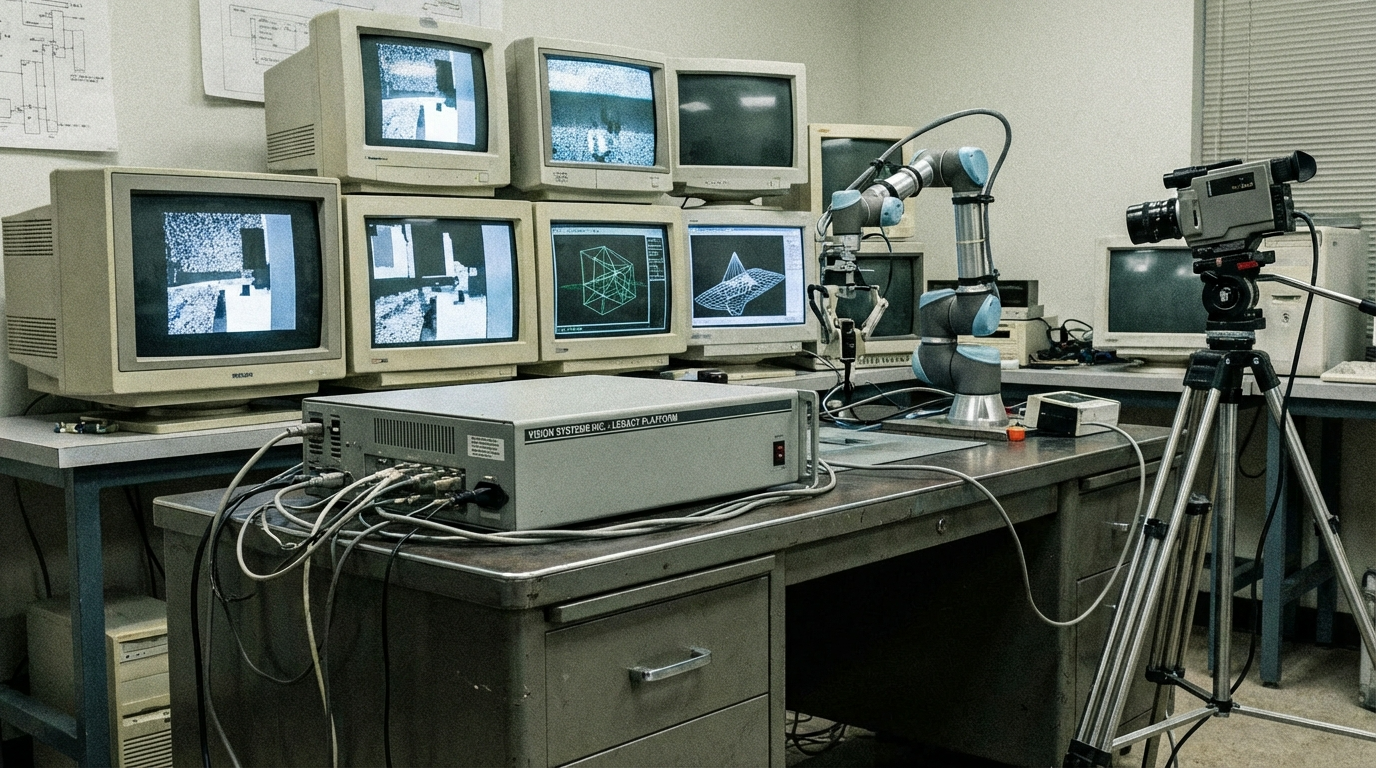
Mission-critical legacy platforms keep the world running. Power grids rely on them. Transportation systems trust them. Healthcare operations depend on them daily. These platforms are stable, proven, and deeply embedded. Yet, they were built long before artificial intelligence became practical.
That gap creates a dilemma.
Leaders want smarter systems. They want awareness, automation, and insight. At the same time, they cannot afford failure. Downtime is unacceptable. Errors carry real consequences.
This is where computer vision legacy platforms integration becomes essential.
Instead of replacing what already works, organizations add intelligence carefully. Vision systems observe. They analyze. They enhance decisions without interfering with core operations.
When done right, integration delivers progress without risk.
Why Mission-Critical Systems Demand a Different Approach
Not all systems are equal. Mission-critical platforms operate under stricter rules.
They prioritize reliability over flexibility. They value predictability over speed. Many have been validated, certified, and regulated.
Because of this, aggressive modernization strategies fail.
Replacing components introduces uncertainty. Updating code triggers revalidation. Even small changes can cascade into major issues.
Computer vision legacy platforms strategies respect these realities. They focus on augmentation rather than alteration.
Vision adds awareness while the core remains untouched.
The Role of Computer Vision in Mission-Critical Contexts
Computer vision gives systems the ability to interpret visual data. That capability matters even more in critical environments.
Visual cues often signal issues before sensors do. Wear, congestion, unsafe behavior, and anomalies appear first to the eye.
By interpreting these cues, vision systems provide early warnings.
In mission-critical legacy platforms, this means problems are detected sooner. Responses improve. Risks shrink.
Importantly, vision operates alongside existing logic, not inside it.
Aligning Vision Integration With Risk Management
Risk management drives every decision in critical environments.
Therefore, vision integration must align with risk frameworks.
Start by defining acceptable risk levels. Determine what vision systems may observe, report, or recommend.
At early stages, vision should inform only. Alerts flow to operators. Humans decide next steps.
As confidence grows, limited automation may be introduced. Even then, manual override remains.
This staged approach keeps computer vision legacy platforms aligned with safety priorities.
Assessing Legacy Platform Constraints
Integration begins with understanding constraints.
Legacy platforms often run on specialized hardware. Interfaces may be limited. Documentation may be incomplete.
Network capacity also matters. Some environments restrict data flow tightly.
Security policies impose additional boundaries.
Assessment clarifies what is possible and what is not.
Rather than forcing change, successful teams design around constraints.
In computer vision legacy platforms projects, realism prevents failure.
Non-Intrusive Architecture as a Foundation
Non-intrusion is the golden rule.
Vision systems should not sit in the control path initially. They should observe outputs, not inputs.
Video feeds are mirrored. Data streams are duplicated. Insights are generated externally.
Legacy platforms continue operating unchanged.
This separation ensures that even if vision fails, core systems remain unaffected.
Trust builds through reliability.
Only later, if appropriate, deeper integration may be considered.
Edge Computing for Mission-Critical Reliability
Latency matters in critical systems. Delays can be dangerous.
Edge computing addresses this concern.
By processing data close to the source, responses remain fast. Network dependency shrinks.
Edge devices can run vision models independently. They continue functioning even if connectivity drops.
For computer vision legacy platforms, edge processing often becomes the default choice.
Cloud resources still play a role, but not in real-time control.
Using the Cloud Without Compromising Safety
Cloud platforms offer scalability and learning.
They excel at model training, aggregation, and analysis.
However, critical decisions rarely belong in the cloud.
Instead, cloud systems support improvement cycles. Data is analyzed offline. Models are refined. Updates are tested thoroughly.
Only validated models reach the edge.
This separation preserves safety while enabling progress.
Selecting Appropriate Vision Use Cases
Not every vision use case suits mission-critical platforms.
Early success depends on careful selection.
Monitoring and detection lead the way.
Examples include identifying safety violations, detecting equipment wear, monitoring congestion, and spotting anomalies.
These applications enhance awareness without triggering direct actions.
As reliability improves, advisory use cases follow.
Automation comes last, if at all.
This sequencing protects mission-critical integrity.
Managing Data Quality in Harsh Environments
Mission-critical environments are rarely ideal.
Lighting varies. Cameras face harsh conditions. Visual noise is common.
Data quality challenges must be expected.
Modern computer vision models handle imperfection well. Training on real conditions improves robustness.
Synthetic data augments limited samples. Continuous learning adapts models over time.
Instead of fighting reality, teams embrace it.
In computer vision legacy platforms, resilience matters more than perfection.
Human Oversight and Operational Trust
Operators are guardians of mission-critical systems.
Their trust matters.
Vision systems should support them, not replace them.
Clear interfaces explain alerts. Confidence scores indicate certainty. Feedback loops allow correction.
Over time, operators learn when to trust vision and when to question it.
This partnership strengthens outcomes.
Automation without trust fails. Collaboration succeeds.
Security Architecture for Vision Integration
Security concerns intensify in critical environments.
Vision systems introduce new components. Each component adds potential risk.
Isolation mitigates exposure.
Vision platforms should be segmented. Access controls must be strict. Authentication should be enforced.
Data encryption protects sensitive information.
Continuous monitoring detects anomalies.
When implemented carefully, computer vision legacy platforms integration strengthens security posture rather than weakening it.
Compliance and Regulatory Considerations
Mission-critical platforms often face regulation.
Changes may require approval. Audits may follow.
Vision integration must respect these processes.
Documentation becomes essential. Validation procedures must be followed.
Fortunately, non-intrusive vision systems often avoid re-certification requirements.
By remaining observational, they stay outside core control logic.
This advantage accelerates adoption.
Ethical and Privacy Responsibilities
With increased visibility comes responsibility.
Vision systems may capture people, behavior, and sensitive environments.
Privacy safeguards must be built in.
Anonymization reduces risk. Data minimization limits exposure. Clear policies define usage.
Transparency builds trust with stakeholders.
Ethical design ensures that progress does not undermine values.
Change Management in Critical Operations
Change management becomes delicate when stakes are high.
Communication must be clear. Objectives must be explained.
Operators should be involved early. Their expertise improves design.
Training reduces anxiety. Pilots demonstrate value.
Gradual rollout minimizes disruption.
In computer vision legacy platforms adoption, patience pays dividends.
Measuring Success Without Compromising Stability
Metrics matter, but not at any cost.
Success should be measured without stressing systems.
Track reductions in incidents, improvements in response time, and enhanced visibility.
Avoid metrics that encourage risky behavior.
Balanced measurement supports continuous improvement while preserving stability.
Scaling Vision Across Mission-Critical Platforms
Scaling must be deliberate.
Standardized architectures simplify replication. Governance ensures consistency.
Central oversight coordinates updates. Local teams maintain control.
Cloud platforms assist with management, not control.
Over time, vision becomes a trusted layer across systems.
Common Pitfalls to Avoid
Several mistakes repeat.
Rushing integration increases risk. Start slowly.
Over-automating undermines trust. Keep humans involved.
Ignoring operator feedback limits effectiveness. Listen actively.
Avoiding these pitfalls preserves mission integrity.
The Strategic Advantage of Vision in Critical Systems
Vision integration does more than improve operations.
It prepares organizations for future challenges.
Data literacy grows. AI capability matures. Confidence increases.
Mission-critical platforms become adaptive rather than static.
That transformation creates long-term advantage.
Conclusion
Mission-critical legacy platforms demand respect. They cannot be treated casually.
Computer vision offers a path to intelligence without disruption. By observing rather than controlling, by augmenting rather than replacing, enterprises evolve safely.
When integrated thoughtfully, computer vision legacy platforms gain awareness, resilience, and foresight.
Progress does not require risk. It requires strategy.
FAQ
1. What are computer vision legacy platforms?
They are existing mission-critical systems enhanced with computer vision without altering core functionality.
2. Is computer vision safe for mission-critical systems?
Yes, when implemented as a non-intrusive, observational layer.
3. Can legacy platforms handle modern vision workloads?
With edge devices and careful architecture, most can.
4. How long does integration usually take?
Initial pilots often show results within a few months.
5. Does vision integration require system re-certification?
Often not, if the vision system remains outside core control logic.


Leave feedback about this