

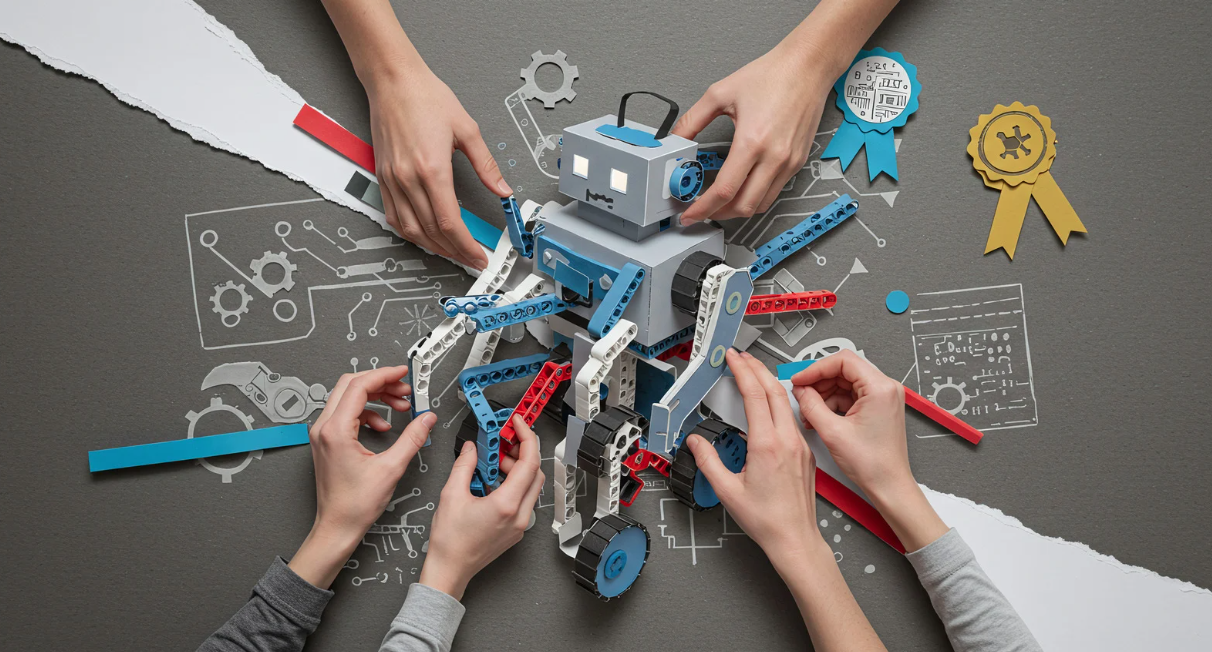
Imagine walking into a workspace where humans and robots work side by side—sharing tasks, complementing each other’s strengths, and moving in perfect harmony. This isn’t science fiction anymore. It’s the reality of today’s evolving industries, powered by collaborative robots, also known as cobots.
Unlike the traditional industrial robots locked away behind safety cages, cobots are designed to safely work alongside humans. Their rise has marked a new era of efficiency, flexibility, and innovation in workplaces around the world. But what exactly makes these machines such productivity powerhouses? And how can they help businesses—big or small—thrive in an increasingly competitive market?
Let’s explore how collaborative robots improve workplace productivity and reshape how work gets done in the 21st century.
What Are Collaborative Robots?
Collaborative robots, or cobots, are advanced machines designed to work in partnership with human workers. They’re not here to replace people but to support them—handling repetitive, dangerous, or physically demanding tasks while allowing humans to focus on creativity, strategy, and problem-solving.
Unlike traditional robots, which are often massive and isolated, cobots are compact, flexible, and easy to program. They come equipped with sensors, cameras, and AI-driven controls that help them detect human presence, avoid collisions, and adjust movements accordingly.
This human-friendly design is what makes them revolutionary. They don’t just automate processes; they collaborate. Cobots can assist in assembly, packaging, quality inspection, logistics, and even customer interaction—transforming operations across manufacturing, healthcare, logistics, and retail sectors.
The Productivity Promise of Collaborative Robots
Productivity has always been the heart of business growth. Every company aims to do more with less—to increase output without overburdening employees. Cobots make this possible by merging the precision of machines with the adaptability of humans.
1. Reducing Repetitive and Monotonous Tasks
Think about how many hours workers spend performing repetitive tasks—assembling components, labeling products, or moving items from one station to another. These activities may not require creativity, but they consume valuable time and can lead to fatigue or injury.
Cobots excel at these types of tasks. Once programmed, they can repeat motions flawlessly and tirelessly. This frees up human workers to focus on higher-value responsibilities such as innovation, quality control, and customer service.
The result? A massive productivity boost without increasing headcount.
2. Enhancing Speed and Accuracy
Humans are incredible, but we get tired, distracted, or inconsistent. Robots don’t. Cobots maintain precision and speed 24/7. When paired with human oversight, they create workflows that are both fast and flawless.
For instance, in electronics manufacturing, cobots can handle delicate components with steady accuracy while workers supervise or perform complex tasks requiring judgment and dexterity. This seamless teamwork minimizes errors and reduces waste, increasing overall efficiency.
3. Enabling Around-the-Clock Operations
One of the biggest advantages of collaborative robots is their endurance. They don’t need breaks, sleep, or vacations. Once integrated into workflows, cobots can run through multiple shifts, ensuring continuous production.
For small businesses, this can be a game changer—allowing them to meet demand without hiring additional staff or working overtime. The ability to maintain 24/7 operations increases capacity, reduces delivery times, and keeps customers satisfied.
4. Improving Worker Safety
Fatigue and repetitive strain are among the top causes of workplace injuries. Cobots help reduce these risks by taking on physically demanding or hazardous tasks—like lifting heavy materials, handling chemicals, or operating near sharp machinery.
Because they’re equipped with sensors and safety protocols, cobots can detect when humans are nearby and stop or slow movement to avoid harm. This collaborative nature fosters a safer environment and reduces accident-related downtime.
5. Supporting Workforce Upskilling
Cobots don’t eliminate jobs—they evolve them. When machines handle the manual work, employees can develop new skills in robotics management, data analysis, and system optimization.
This upskilling not only boosts individual career growth but also improves organizational productivity. A team that understands how to leverage automation effectively will always outperform one that doesn’t.
Real-World Examples of Collaborative Robots in Action
Cobots are already transforming industries across the globe. Here are a few practical examples that highlight their impact on workplace productivity.
Manufacturing
In automotive factories, cobots work alongside assembly workers—tightening bolts, applying adhesives, or handling delicate parts. This reduces production time and improves accuracy. One major automaker reported a 30% increase in output after integrating cobots into its assembly lines.
Logistics and Warehousing
Warehouses use collaborative robots for picking, sorting, and packaging items. Cobots equipped with AI vision can identify and retrieve products faster than humans while maintaining zero error rates.
When humans and cobots work together, productivity can skyrocket. A small warehouse, for example, might see order fulfillment time drop from hours to minutes.
Healthcare
In hospitals, cobots assist medical staff by preparing medications, disinfecting surfaces, or transporting supplies. This allows nurses and doctors to spend more time with patients instead of on repetitive administrative work.
Retail
Cobots in retail handle shelf restocking, inventory management, and even customer service. They free up employees to engage more with shoppers, improving both efficiency and customer satisfaction.
Food and Beverage
Cobots are helping cafes and small kitchens automate repetitive food preparation tasks—like pouring coffee, decorating cakes, or assembling salads. The consistency and speed they bring directly translate into higher throughput and lower labor costs.
The Economic Advantage: How Cobots Pay for Themselves
It’s natural for small and medium-sized businesses to wonder whether investing in robotics is financially feasible. The truth is, cobots often deliver an impressive return on investment (ROI) in just a few years—or even months.
Here’s why:
- Lower upfront cost: Cobots are smaller, simpler, and cheaper than traditional industrial robots.
- Minimal infrastructure changes: They can be installed quickly and work with existing tools.
- Reduced labor costs: By automating repetitive tasks, companies save on overtime and recruitment expenses.
- Fewer errors and waste: Improved precision cuts costs related to rework or product defects.
- Higher output: More efficiency means more revenue.
A packaging company, for example, implemented cobots to assist with palletizing and saw productivity increase by 40%, while labor costs dropped by 25%. Within 18 months, the investment had paid for itself entirely.
That kind of ROI makes cobots not just a luxury—but a necessity for businesses focused on long-term growth.
How to Introduce Collaborative Robots into Your Workplace
Integrating cobots doesn’t have to be overwhelming. The process can be smooth if approached strategically. Here’s how to get started:
1. Identify Pain Points
Start by analyzing your workflow. Which tasks are repetitive, time-consuming, or physically demanding? These are ideal for cobot automation.
2. Set Clear Objectives
Define what success looks like. Are you trying to reduce production time by 20%? Improve accuracy? Increase throughput? Having measurable goals helps evaluate performance later.
3. Choose the Right Cobots
Not all cobots are the same. Some specialize in precision tasks, while others handle heavy loads. Choose machines that align with your operations and goals.
4. Involve Employees Early
Transparency is key. Let your staff know how cobots will help—not replace—them. Offer training sessions to build confidence and encourage collaboration.
5. Start Small
Pilot the technology in one department before expanding. This allows you to fine-tune the setup and address potential issues early.
6. Monitor and Optimize
Once deployed, continuously collect data. Track productivity, efficiency, and employee satisfaction. Use this feedback to optimize workflows and maximize results.
The Human Side of Collaborative Robots
The beauty of cobots lies in their humanity—not in replacing it, but in complementing it. They handle the predictable so humans can handle the exceptional.
Think of them as reliable teammates—steady, consistent, and never complaining about Monday mornings. They don’t drain creativity or ambition; they amplify it by removing the drudgery that often stifles innovation.
Companies that adopt cobots often see not just higher productivity but happier teams. Workers report reduced stress, more control over their work, and greater job satisfaction. That human-robot harmony becomes a competitive advantage—an empowered workforce backed by intelligent automation.
The Future of Work: Humans and Robots Together
As industries evolve, the line between manual labor and automation continues to blur. But instead of fearing this transformation, forward-thinking businesses are embracing it.
Collaborative robots are the bridge between today’s workforce and tomorrow’s innovation. They combine the best of both worlds—the analytical precision of technology and the emotional intelligence of humans.
In the coming years, cobots will become even more capable—learning faster, adapting better, and integrating more seamlessly. They’ll make workplaces safer, leaner, and infinitely more productive.
For small businesses, this evolution levels the playing field. It allows them to compete with larger corporations without sacrificing quality or speed.
Conclusion
In the race to stay competitive, productivity is everything. And collaborative robots are the game-changing partners making it happen. They take on repetitive tasks, improve accuracy, and boost efficiency—all while working safely alongside humans.
Cobots are not about replacing people; they’re about empowering them. When humans and machines collaborate, innovation thrives, quality improves, and businesses grow stronger.
The future of productivity isn’t human versus robot—it’s human and robot, working together toward success.
FAQ
1. What are collaborative robots?
Collaborative robots, or cobots, are designed to safely work alongside humans, performing repetitive or physically demanding tasks.
2. How do collaborative robots improve productivity?
They handle routine tasks with precision, freeing human workers to focus on more complex, creative, and high-value responsibilities.
3. Are cobots expensive for small businesses?
No. Cobots are more affordable than traditional robots and typically deliver ROI within months through labor savings and efficiency gains.
4. Can cobots replace human jobs?
Cobots are meant to support, not replace, humans. They handle repetitive tasks, allowing employees to upskill and take on strategic roles.
5. What industries benefit most from collaborative robots?
Manufacturing, logistics, healthcare, retail, and food services all benefit from cobots due to their flexibility and safety features.






Leave feedback about this