

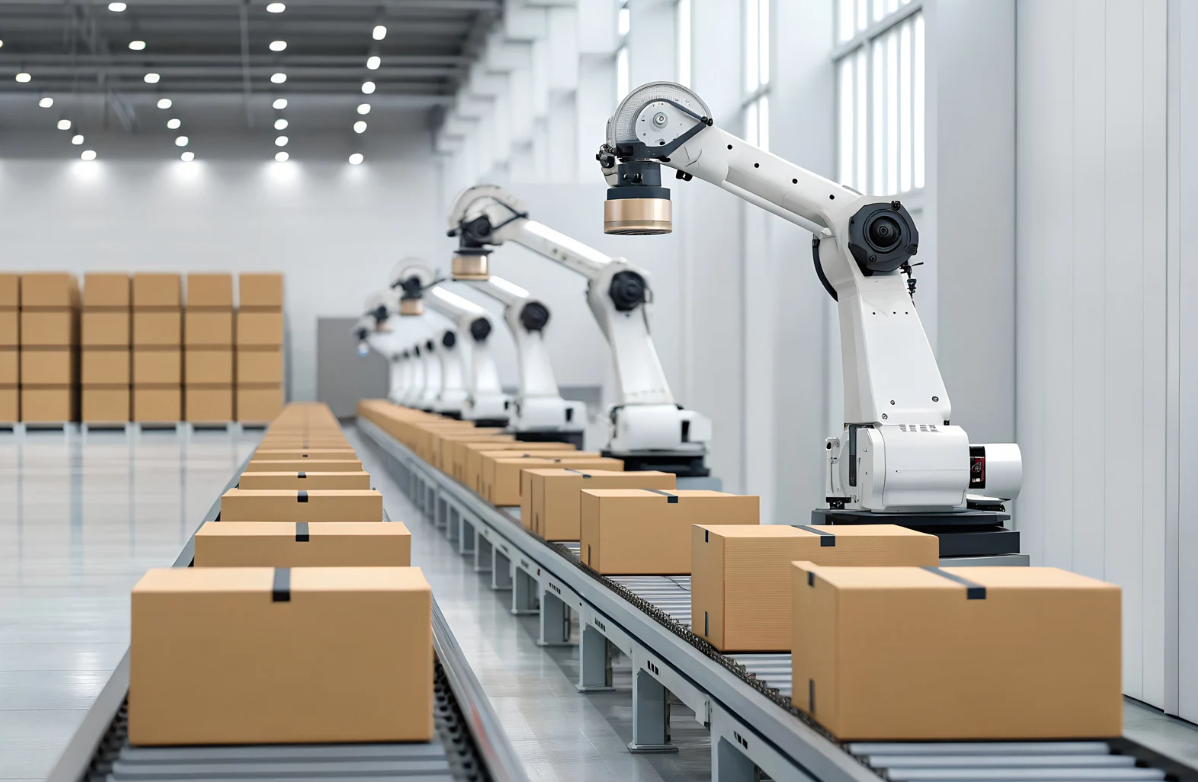
The world of logistics is changing faster than ever before. Once dominated by manual labor and human coordination, warehouses and distribution centers now hum with the precision of robotic systems. The rise of robotics in logistics isn’t just a technological upgrade—it’s a complete reimagining of how goods move, how people work, and how businesses scale efficiently in a connected world.
Automation has always promised efficiency. But in logistics, robotics takes that promise to another level, offering speed, accuracy, and scalability that human-only operations can’t match. From smart conveyor systems and autonomous forklifts to robotic arms sorting parcels, the integration of robotics is turning supply chains into intelligent ecosystems that never sleep.
So, what’s driving this revolution? And how can businesses harness robotics to unlock next-level efficiency without losing the human touch?
The Evolution of Robotics in Logistics
Logistics used to be simple—move items from point A to point B. But as global trade expanded and consumer expectations skyrocketed, the old ways couldn’t keep up. The e-commerce boom, same-day delivery models, and the demand for real-time tracking forced industries to rethink how products are stored, picked, and shipped.
That’s when robotics in logistics began to shine. What started as basic automation for repetitive tasks has evolved into intelligent collaboration between humans and machines. Early robots were limited to predictable, pre-programmed movements. Today’s systems use sensors, AI, and machine learning to adapt on the fly, improving efficiency without sacrificing safety.
For example, Amazon’s fulfillment centers rely on fleets of mobile robots that navigate autonomously to deliver products to human packers. These robots reduce walking time, eliminate unnecessary movement, and optimize workflows dynamically. The result? More throughput, less fatigue, and higher accuracy.
How Robotics Is Transforming Supply Chain Efficiency
When you think about the modern supply chain, think of it as a living organism. Every component—from procurement and storage to delivery and returns—depends on fluid coordination. Robotics acts like the circulatory system, keeping that flow steady, predictable, and resilient under pressure.
Let’s break down the areas where robotics makes the biggest impact.
1. Warehouse Automation
Warehouses are the heart of logistics, and automation has completely transformed their pulse. Robotic arms can sort, lift, and pack items with millimeter precision, reducing human strain and error. Automated guided vehicles (AGVs) and autonomous mobile robots (AMRs) move materials around efficiently, often working 24/7 without breaks.
Modern systems can even coordinate thousands of robots at once. AI algorithms determine the most efficient paths, balancing energy use, congestion, and timing. That’s not just smart—that’s logistics intelligence at scale.
2. Picking and Packing Optimization
Manual picking has always been one of the most time-consuming and error-prone tasks in warehouses. Now, vision-guided robots can recognize products of different shapes and sizes, grasp them delicately, and prepare them for shipment.
By combining robotics with AI, picking accuracy improves drastically. These systems also learn continuously, adjusting to new product types and layouts. For companies handling large product catalogs, robotic picking means higher speed and fewer returns caused by incorrect orders.
3. Autonomous Transportation
Transportation doesn’t end at the warehouse door. Self-driving delivery vehicles and drones are already being tested to handle the “last mile” challenge—the most expensive and unpredictable part of logistics.
Autonomous trucks, for instance, can travel long distances without driver fatigue, optimizing delivery times and fuel consumption. Similarly, delivery drones can navigate urban areas to drop off small parcels faster than traditional couriers. These innovations hint at a future where logistics moves seamlessly from warehouse to doorstep.
4. Sorting and Distribution
High-speed sorting robots have become essential for parcel delivery companies. Systems like those used by FedEx and UPS can process tens of thousands of packages per hour, scanning barcodes, weighing items, and routing them to the correct destinations—all without human intervention.
By automating sorting, logistics companies can handle seasonal spikes, like holiday rushes, without scaling labor proportionally. The result is cost efficiency and reliability, even under extreme demand.
5. Inventory Management
Real-time visibility into inventory levels is crucial. Robots equipped with cameras and RFID scanners can patrol warehouse aisles, scanning shelves to update stock counts automatically. This eliminates human error in inventory records and ensures data accuracy.
Coupled with AI-driven analytics, these systems help managers predict demand, plan replenishment, and reduce overstock or shortages. In essence, robotic inventory systems don’t just count—they think.
The Economic Impact of Robotics in Logistics
The financial advantages of adopting robotics extend far beyond labor savings. In fact, studies show that automation in logistics can cut operational costs by up to 40% while boosting output by 25–35%. But there’s more to it than numbers.
- Reduced Downtime: Robots work continuously, keeping supply chains running around the clock.
- Lower Error Rates: Automation reduces costly human mistakes in order fulfillment.
- Enhanced Scalability: Businesses can easily adjust capacity by adding more robots, rather than hiring and training seasonal workers.
- Improved Safety: Robots handle dangerous or repetitive tasks, reducing workplace injuries.
- Faster ROI: Although the initial investment is significant, the long-term savings often justify it within a few years.
In competitive industries like retail, logistics efficiency can make or break a company’s reputation. Customers expect flawless accuracy and rapid delivery—robotics helps businesses deliver exactly that.
Collaborative Robotics: Humans and Machines Working Together
One of the biggest misconceptions about automation is that it replaces humans entirely. In reality, robotics enhances human capability. Collaborative robots, or cobots, are designed to work safely alongside people.
Cobots handle repetitive or physically demanding tasks, freeing human workers to focus on complex problem-solving, oversight, and creative thinking. This human-machine partnership creates a balanced workflow that improves both productivity and job satisfaction.
For instance, a cobot might lift heavy boxes or bring items to a human worker who then inspects and packages them. Together, they move faster and make fewer mistakes than either could alone. It’s not man versus machine—it’s man with machine.
Data, AI, and the Brain Behind the Bots
What truly powers robotics in logistics isn’t just hardware—it’s intelligence. Artificial intelligence (AI) and machine learning algorithms act as the “brains” of modern robots. They analyze massive amounts of data from sensors, cameras, and logistics systems to make real-time decisions.
These decisions might include optimizing routes, identifying product defects, or predicting when maintenance is needed. Predictive analytics also allows robots to anticipate demand, ensuring that goods move proactively rather than reactively.
Moreover, connected devices—through the Internet of Things (IoT)—enable robots to communicate across the entire logistics ecosystem. This interconnected network ensures every action, from loading to shipping, happens with seamless synchronization.
Challenges in Implementing Robotics in Logistics
Despite its advantages, integrating robotics into logistics isn’t plug-and-play. Businesses often face a few hurdles.
1. High Upfront Costs
The initial investment in robotics infrastructure can be substantial. However, falling technology costs and as-a-service models are making robotics more accessible even for mid-sized businesses.
2. Integration with Legacy Systems
Many logistics companies still operate on outdated software or fragmented data systems. Integrating modern robots into these environments requires careful planning and digital transformation.
3. Workforce Adaptation
Introducing robotics can cause anxiety among employees who fear job loss. Addressing this through reskilling programs and transparent communication helps build confidence in human-robot collaboration.
4. Maintenance and Downtime
Robots, like any machinery, require regular maintenance. Predictive maintenance powered by AI can minimize unplanned downtime and extend equipment life.
By addressing these challenges proactively, organizations can ensure a smoother transition toward automation-driven efficiency.
The Environmental Benefits of Robotic Logistics
Robotics isn’t just good for business—it’s good for the planet. Automation makes logistics greener by reducing waste, optimizing routes, and minimizing energy use.
For example, autonomous systems can plan vehicle routes to cut unnecessary mileage and fuel consumption. Electric-powered robots replace fossil-fueled equipment in warehouses, reducing carbon footprints. Even small optimizations, multiplied across global supply chains, contribute significantly to sustainability goals.
In the long term, eco-efficient logistics powered by robotics could help businesses meet environmental targets while lowering operational costs.
The Future of Robotics in Logistics
Looking ahead, robotics will become the backbone of global supply chains. As technologies like AI, 5G, and edge computing evolve, logistics robots will gain even more autonomy, intelligence, and adaptability.
Imagine warehouses where drones conduct inventory scans every hour, self-repairing robots fix damaged systems in real time, and AI-powered fleets deliver goods faster than any human could coordinate. That future isn’t decades away—it’s unfolding right now.
Companies that invest early in robotics will gain a significant competitive advantage. Those who delay risk falling behind in efficiency, cost management, and customer satisfaction.
Conclusion
Robotics in logistics is no longer a futuristic concept—it’s a necessity. As global demand grows and supply chains stretch across continents, automation becomes the key to resilience, speed, and precision. Robots aren’t replacing humans; they’re empowering them to focus on what truly matters—strategy, creativity, and innovation.
The companies that embrace robotics today are building the supply chains of tomorrow. By combining intelligent machines with human ingenuity, the logistics industry can unlock a new era of efficiency and sustainability.
FAQ
1. What are the main benefits of robotics in logistics?
They include improved efficiency, reduced costs, higher accuracy, enhanced safety, and better scalability for growing operations.
2. How do robots improve warehouse management?
Robots automate tasks like picking, sorting, and inventory tracking, which reduces errors and increases productivity.
3. Are logistics robots replacing human workers?
No, they complement human workers by handling repetitive or dangerous tasks, allowing humans to focus on higher-value work.
4. What types of robots are used in logistics?
Common types include autonomous mobile robots (AMRs), robotic arms, drones, and sorting robots.
5. How can small businesses adopt robotics in logistics?
They can start small with modular systems or use robotics-as-a-service (RaaS) models that lower upfront investment costs.






Leave feedback about this